Wikimedia Commons · Public domain · Hover to magnify, click for fullscreen
Original file
About This Work
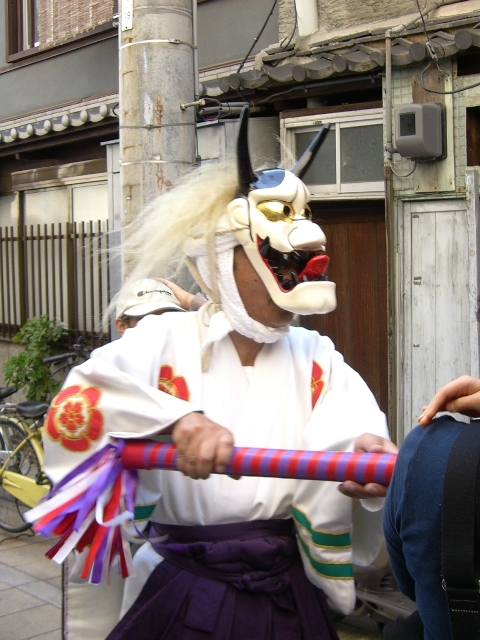
A close-up photograph depicts a person in costume, obscured by a white-and-black Hannya or Oni mask with gold-painted eyes, exposed fangs, and a visible red tongue. The performer wears a white kimono-style top with red floral motifs on the sleeves, a dark purple hakama (wide-legged trousers), and a purple-and-red striped staff with hanging ribbons. The scene takes place on an urban street, with a utility pole and a bicycle visible in the background, suggesting a public festival setting.
The imagery relates to the Japanese folk tradition of the Oni, malevolent demons or ogres in folklore that are exorcised or honored during seasonal Shinto festivals. The mask resembles those used in Noh theater or local religious processionals to ward off misfortune or demonstrate the transition between the human and spirit realms.
Connected Texts
Noh Theater Tradition
The mask type and costume aesthetic are deeply rooted in the iconography of Japanese Noh theater, which frequently portrays Oni and vengeful spirits.
Collections
Provenance & Source
Object
photograph
Heisei period
Japanese
ritual-object
Digital Source
Wikimedia Commons · Public domain
480 × 640 px
Linked Data