Wikimedia Commons · Public domain · Hover to magnify, click for fullscreen
Original fileI modi, Position 1
drawing
Jean Frédéric Maximilien de Waldeck

About This Work
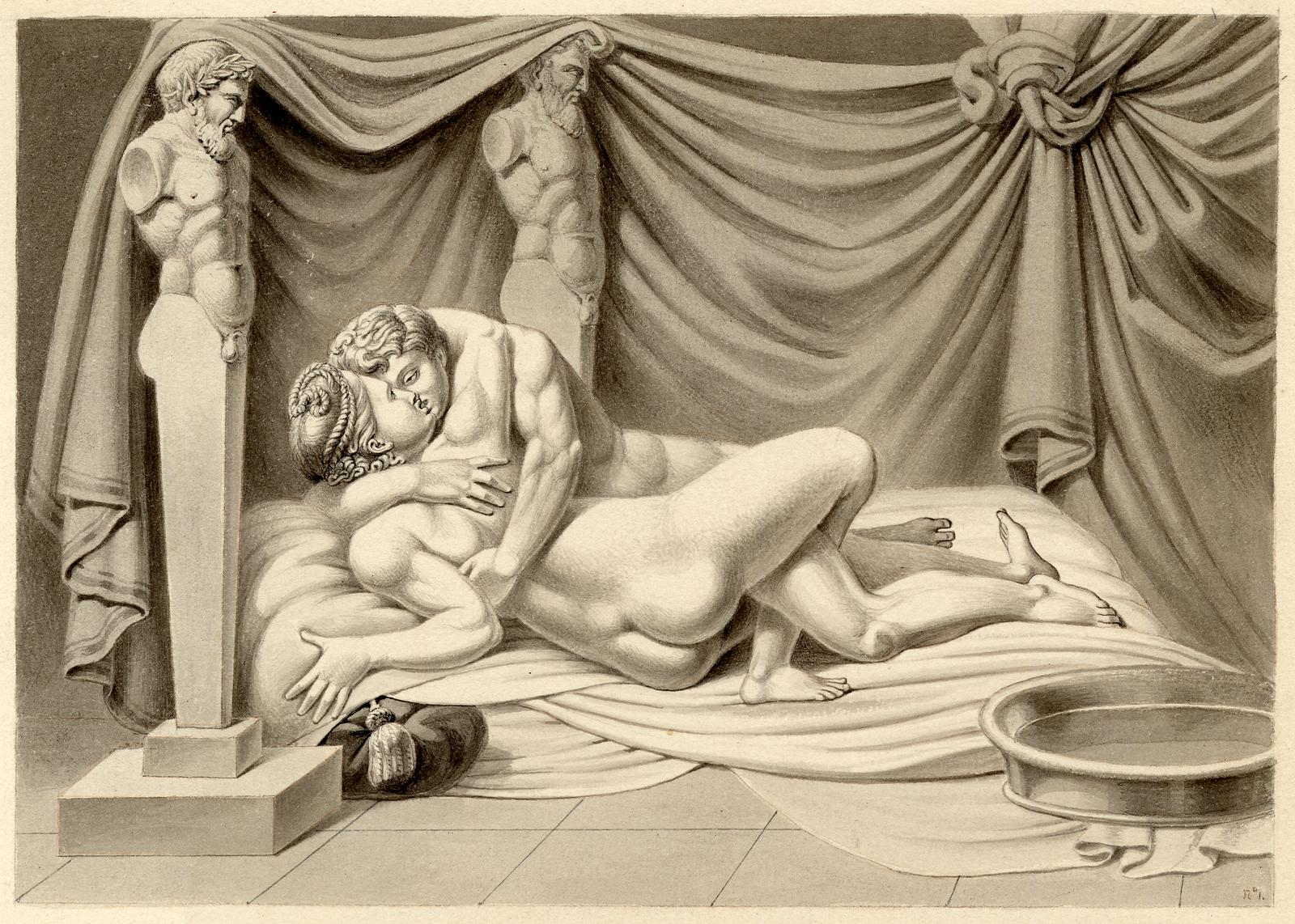
The figures are depicted in a neoclassical style, positioned on a draped bed with a decorative tassel visible near the headboard. The woman’s hair is braided in a classical updo; she leans forward with her hands pressing into the bedspread while the man embraces her from behind, his hands resting on her torso. To the left, two herms (tapered pillars topped with sculpted male heads) frame the scene against a heavy curtain backdrop. A shallow basin sits on the floor to the right of the bed. The composition is rendered in shades of monochromatic grey wash, emphasizing the muscular contours of the figures.
This work is a 19th-century recreation of the Renaissance series 'I modi' (The Ways), originally designed by Giulio Romano and engraved by Marcantonio Raimondi. The original series, depicting various sexual positions, was a landmark in the history of erotic art and sparked significant controversy, leading to the imprisonment of the engraver and the destruction of the original plates by order of Pope Clement VII.
Inscriptions
Nº 1.
Connected Texts
Pietro Aretino
This image belongs to the visual tradition established by the 'I modi' prints, which were famously accompanied by the erotic sonnets of Pietro Aretino.