Wikimedia Commons · Public domain · Hover to magnify, click for fullscreen
Original fileThe Weighing of the Heart (Papyrus of Ani)
Papirus Ani

About This Work
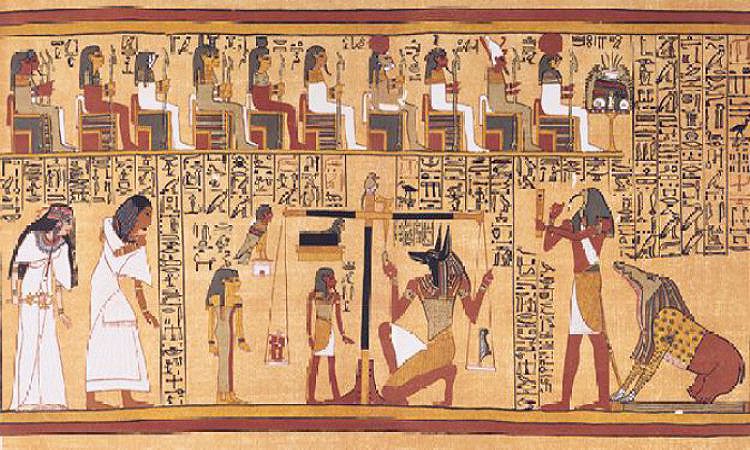
This scene from the Egyptian Book of the Dead is divided into two registers. The upper register shows twelve deities seated in a row, observing the proceedings. The lower register features the central weighing ceremony: Anubis kneels to adjust the balance scale, while a small human figure representing Ani stands to the left, and Thoth, holding a scribe's palette, stands to the right. The crocodile-headed monster Ammit, possessing the forequarters of a lion and hindquarters of a hippopotamus, waits at the far right. The figures are rendered in profile on a papyrus background, with abundant columns of hieroglyphic text integrated into the composition.
This scene is the definitive visualization of the Egyptian afterlife trial, known as the 'Psychostasia' or weighing of the heart, which determined whether a soul was worthy of entry into the Field of Reeds. It is drawn from the funerary literature collectively known as the Book of the Dead, specifically the late 18th-Dynasty papyrus created for the royal scribe Ani.
Inscriptions(Egyptian (Middle Egyptian))
Numerous columns and rows of hieroglyphic spells and liturgical titles covering the top and side borders, as well as the space between the registers.
Translation
Contains excerpts from Spell 125 of the Book of the Dead, including the declaration of innocence ('I have not committed sin against men, I have not robbed the poor...') and the ritual invocation of the deities present.Connected Texts
Book of the Dead (Spells 125)
This image illustrates the crucial 'Negative Confession' and the judgment of the deceased by Osiris.