Wikimedia Commons · Public domain · Hover to magnify, click for fullscreen
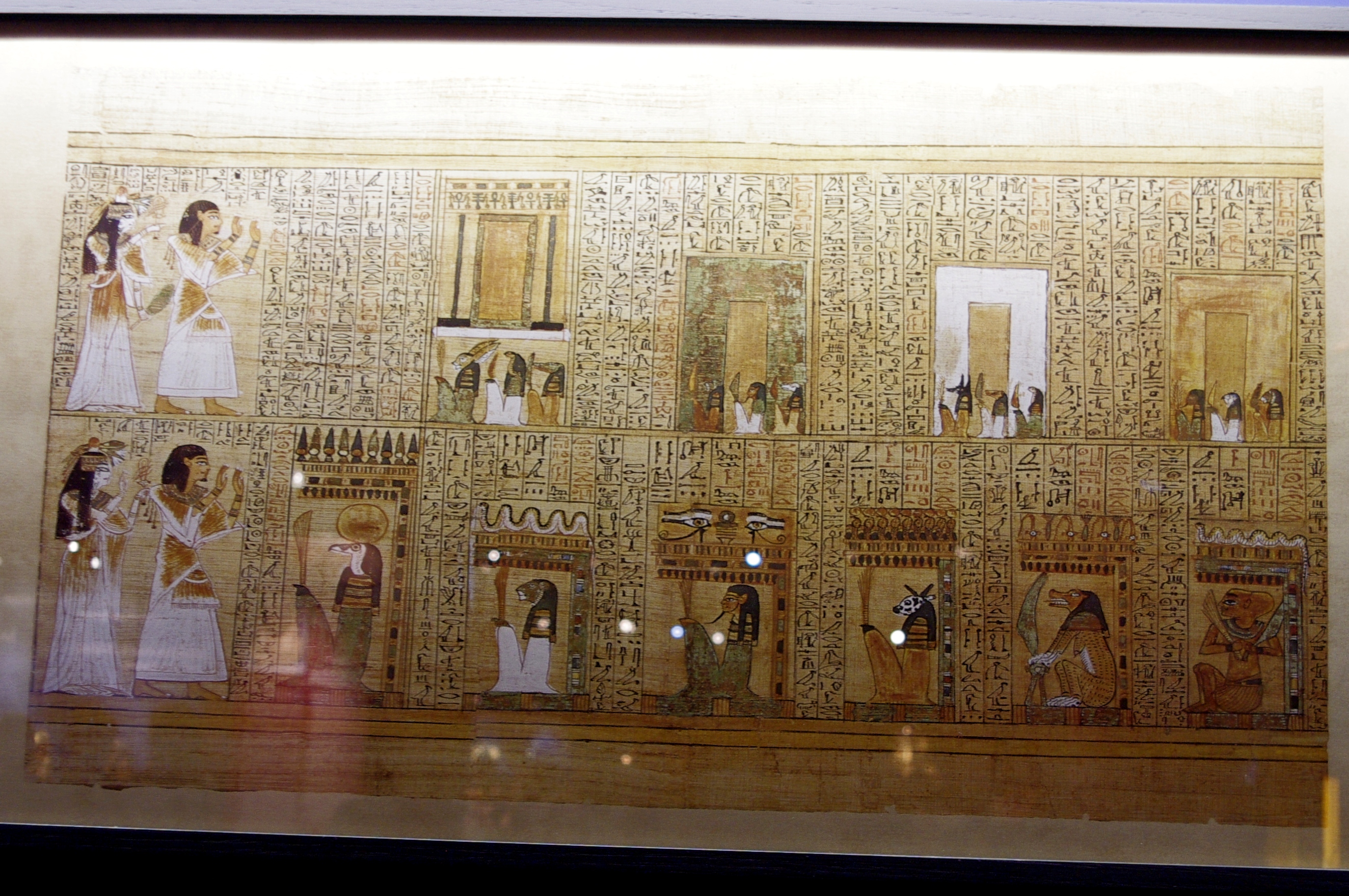
Original filePapyrus of Ani: The Gates of the Duat
Toutankamon-expo 55

About This Work
The papyrus fragment is organized into two horizontal registers. On the left, Ani and his wife are shown in profile, dressed in fine white linen, hands raised in gestures of worship. To the right of these figures are multiple rectangular shrines or portals, each containing a deity with an animal head—including representations of Horus, Anubis, and Thoth—or symbolic elements such as the Eye of Horus. The entire composition is densely packed with vertical columns of hieroglyphic text, characteristic of funerary spells intended to guide the soul through the underworld.
This artwork is a segment of the Papyrus of Ani, a prominent example of the Egyptian 'Book of the Dead' (or 'Spells of Coming Forth by Day'), a collection of mortuary texts designed to ensure the soul's successful navigation of the afterlife.
Inscriptions(Egyptian (Middle Egyptian))
Multiple columns of hieroglyphics containing spells from the Book of the Dead, specifically those relating to the crossing of the gates of the underworld.
Translation
The text consists of various protective incantations and the names of the guardians of the gates of the Duat.
Connected Texts
Book of the Dead
This is a direct excerpt from the funerary corpus used to guide the soul in the Duat.