When we set out to build Source Library, we knew the collection would include texts that had never been translated into English. We did not expect the number to be this large.
As the library has grown to over 5,100 books, systematic AI classification and bibliographic verification have identified nearly 2,000 that appear to be first-ever English translations, with another 388 that are the first complete translations where only fragments had previously appeared in anthologies or scholarly excerpts. Over 900 of these are now fully translated — readable from the first page to the last.
These are not obscure marginalia. They include founding texts of biblical criticism, alchemical laboratory manuals, the writings of women philosophers, radical theological treatises that reshaped Protestantism, one of the earliest attempts to decode Egyptian hieroglyphics, and over 200 works of astrology and divination, mostly Sanskrit jyotish manuscripts that have never existed in any European language.
They were never translated because they fell outside the narrow canon that English-language scholarship chose to preserve. AI translation is now making them readable for the first time.
What “first translation” means here
To be clear about what we are claiming and what we are not: these are AI translations produced by Google's Gemini models, with the original language always preserved alongside for verification. They are working translations — the first time a modern English reader can sit down and read these texts from beginning to end. They are not critical scholarly editions. They have not been reviewed line-by-line by a specialist in Early Modern German or Neo-Latin.
But for the vast majority of these books, the alternative is not a better translation. The alternative is no translation at all. A German sermon from 1618 that has never been rendered into English is simply invisible to anglophone readers — invisible to students, to researchers working outside German studies, to anyone who cannot read 17th-century Fraktur. An imperfect translation that makes the text legible for the first time is, we believe, a genuine scholarly contribution.
The buried stratum of Early Modern thought
The books cluster in ways that reveal systematic gaps in the English-language record. This is not a random sample of untranslated texts. Entire fields of intellectual history have been inaccessible to English readers simply because no one undertook the labour of translation.
Alchemy and chemical philosophy
Nearly 290 of the first translations are alchemical texts — practical laboratory manuals, transmutation treatises, commentaries on Basilius Valentinus, and the Paracelsian medical chemistry that formed the bridge between medieval alchemy and modern chemistry. English-language history of science has long relied on a handful of translated alchemical works (the Turba Philosophorum, the Emerald Tablet, selections from Paracelsus). The vast German-language alchemical literature — hundreds of books published between 1600 and 1750 — has remained almost entirely untouched.
Among these is the work of Dorothea Juliana Walchin, a woman alchemist active in the early 18th century. Her three books — Das mineralische Gluten, Der philosophische Perl-Baum, and Schlüssel zu dem Cabinet — have never appeared in English. They are practical alchemical treatises written by a woman in a field overwhelmingly dominated by men, and their existence is barely noted in the standard histories.
Christian mysticism and radical theology
Over 300 books fall under Christian mysticism, heterodox Protestant theology, and related spiritual traditions. This includes the sermons of Valentin Weigel, Pietist devotional works by Philipp Jakob Spener, Gottfried Arnold's massive church history, and the writings of radical reformers, spiritualists, and Schwenckfelders. These texts shaped the religious landscape of Early Modern Europe, but because they were written in German and aimed at German-speaking congregations, they were never translated for an English audience.
Johann Salomo Semler's Free Investigation of the Canon (1771) is widely recognized as a founding text of modern biblical criticism. Semler argued that the biblical canon was a historical product, assembled by human beings with human motivations. Every course on the history of biblical studies mentions Semler. Yet this specific work — the one that started it all — has never been translated into English.
Students have read about it for 250 years. Now they can read it.
Rosicrucianism and secret societies
Over 115 books relate to Rosicrucianism, Freemasonry, and the Illuminati-era pamphlet wars. The Rosicrucian manifestos themselves have been translated many times, but the vast literature of responses, defences, attacks, and elaborations that they provoked has not. Source Library holds dozens of these pamphlets from the 1610s and 1620s, now readable in English for the first time.
Among the most striking is the Frawen Zimmer des Gottseligen Hocherleuchten Gottesgelehrten (1620) — the “Women's Chamber of the Rosy Cross.” Published just six years after the Fama Fraternitatis, this text addresses women's participation in the Rosicrucian movement at a time when the standard narrative assumes the movement was entirely male. It has never appeared in English.
Cabala, natural philosophy, and the rest
The remaining clusters include over 350 books on natural philosophy and early science, more than 400 on law, politics, and history, and 183 on Paracelsian medicine and alchemical pharmacy. Christian Cabala and Jewish mysticism texts (including Postel's Sefer Yetzirah commentary and Gaffarel's catalogue of Pico's Kabbalistic manuscripts) also appear in the collection. Each cluster represents a body of primary sources that English-language scholarship has discussed at second hand for centuries.
Astrology and divination: 215 first translations
A deep classification of the library's Astrology & Divination collection revealed 215 works that have never been translated into English — one of the largest single-subject clusters in the library.
The majority are Sanskrit jyotish manuscripts: 86 texts on electional astrology (muhurta), horary astrology (prasna), planetary remediation (graha shanti), nakshatras, nadi divination, and geomancy (ramala shastra). These are texts from an Indian astrological tradition that is enormous in its own right but has been almost entirely inaccessible to English-speaking readers.
Beyond Sanskrit, the astrology first translations include:
Of the library's nearly 2,000 first translations, over 1,000 are already 80% or more complete, with 912 fully translated. Many of the Sanskrit manuscripts are fully translated — texts like the Muhurta Ratna of Govinda Bhatta (c. 1420), the Prashna Bhairava, the Pashakavali (a treatise on dice divination from c. 1610), and the Ramala Shastra (Indian geomancy, c. 1700). These are works that scholars of Indian astrology have long known about but could only access in Sanskrit. They are now readable in English for the first time.
The women who wrote
Several of the first translations are by women whose work has been largely inaccessible in English. Beyond Walchin's alchemical treatises:
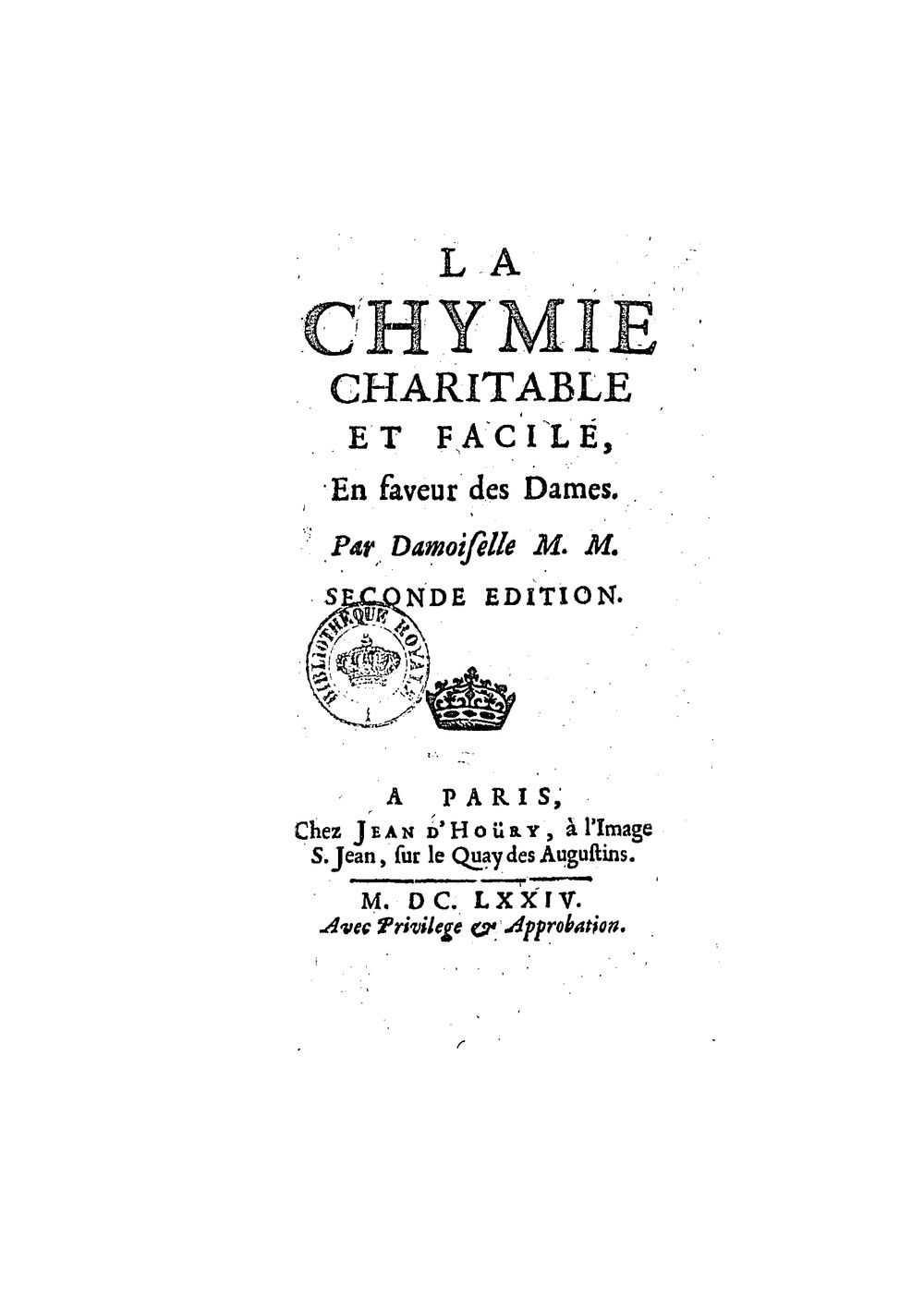
Paris, 1666
One of the earliest chemistry books written by a woman, offering practical chemical recipes and pharmaceutical preparations explicitly addressed to a female audience. Never fully translated into English.
Leiden, 1648
The collected works of “the most learned woman in the world,” as her contemporaries called her. Schurman was a polymath who corresponded with Descartes and wrote in Latin, Greek, Hebrew, and several modern languages. Her Opuscula has never been published in English.
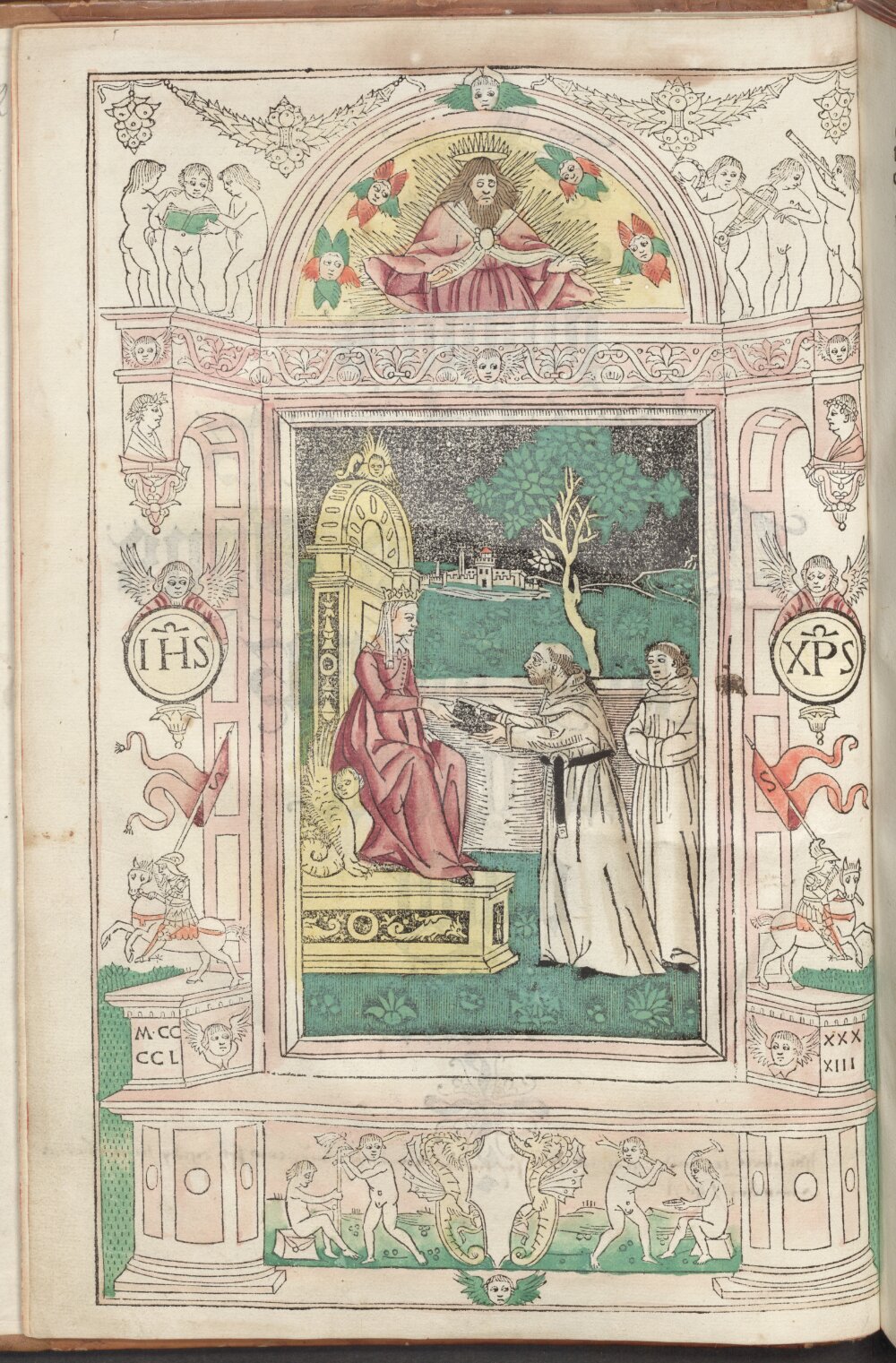
Ferrara, 1497
A Renaissance catalogue of famous women, from antiquity to Foresti's own time. Written in Latin and never translated into English, it offers a 15th-century perspective on women's intellectual and political achievements.
The library holds dozens of books by and about women — from Madame Guyon and Antoinette Bourignon to Jane Lead, Catherine of Siena, Teresa of Ávila, and Marguerite Porete. Many of these are among the first translations in the library.
Two books that should have been translated long ago
Some of the first translations are genuinely surprising — books that are famous, widely discussed in secondary literature, and yet have never been rendered into English.
Rome, 1652–1654 · 581 pages
One of the most ambitious works of 17th-century scholarship: a 581-page attempt to decode Egyptian hieroglyphics, drawing on Coptic, Hebrew, Arabic, Chinese, and virtually every other written tradition Kircher could access. Cited in every history of Egyptology, every study of Baroque intellectual culture. No complete English translation had ever been published. The Latin original is now fully translated and readable.
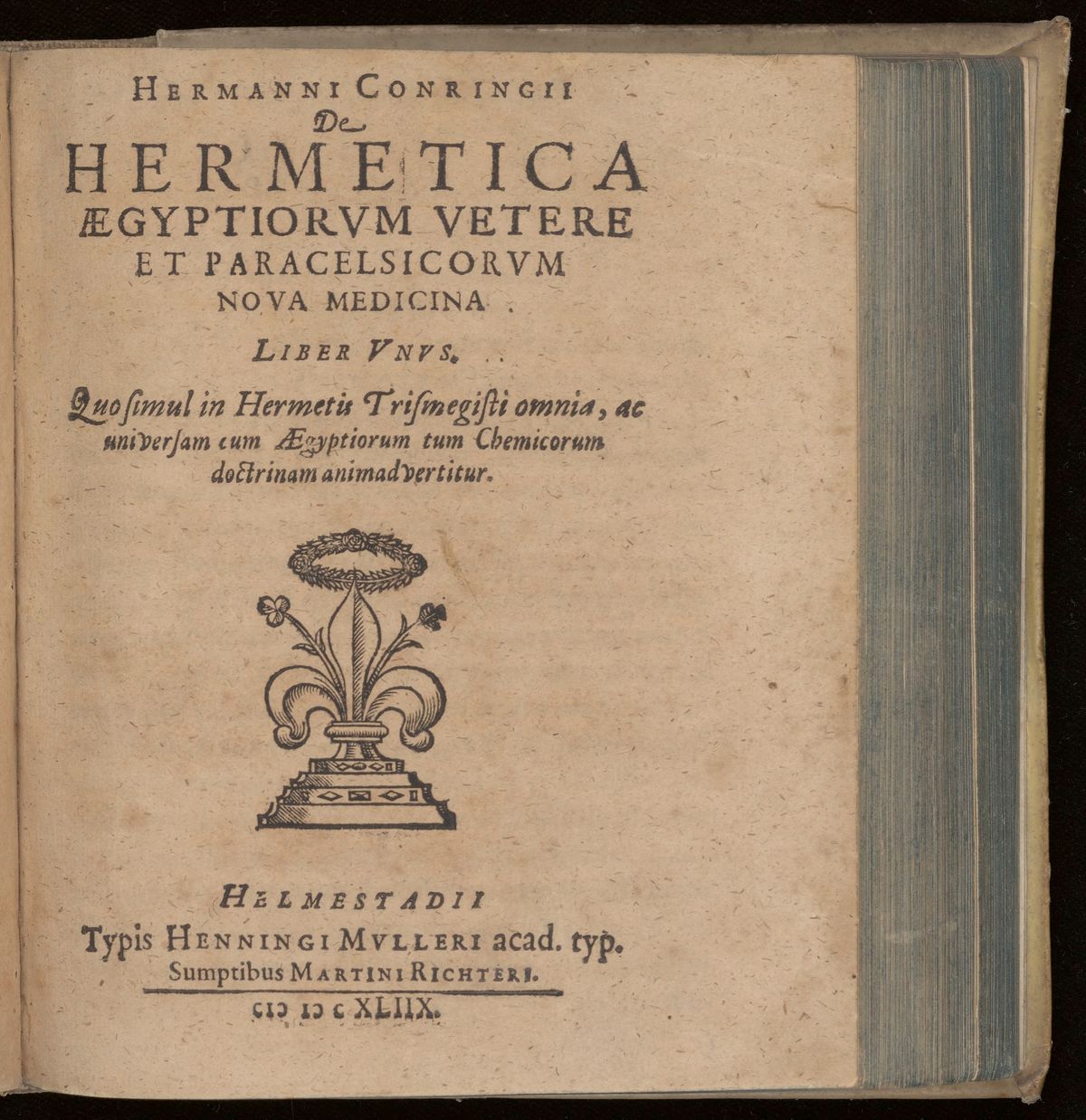
Helmstedt, 1649 · 433 pages
A critical history of ancient Hermetic medicine — one of the earliest attempts to sort myth from evidence in the history of alchemy and early chemistry. Conring is a significant figure in the history of science, but this work has remained locked in Latin for nearly four centuries.
What this means
The first translations in Source Library are not a planned editorial project. They are a consequence of digitizing and translating everything in the collection — approaching the historical record without the filter of what previous generations decided was worth translating. When you translate over 4,200 non-English books, you discover that a large fraction of them simply fell through the cracks.
The reasons differ. Some texts were too long (Kircher's 581 pages of dense Latin). Some were in the wrong language (the entire German alchemical tradition, the Sanskrit jyotish corpus). Some were by the wrong people (women, heterodox theologians, anonymous pamphleteers). Some were in the wrong field — too religious for historians of science, too scientific for historians of religion, too esoteric for both. And some were simply never prioritized by the small number of scholars who could have translated them.
AI translation does not replace scholarly editing. It cannot produce a critical apparatus, identify textual variants, or situate a passage in its full intellectual context. But it can do something that no human translator could do at this scale: it can make thousands of previously unreadable books readable, all at once, and let readers decide for themselves what is important.
The history of translation has always been a history of selection — someone deciding what is worth the effort. AI removes that bottleneck. The texts can speak for themselves.
Classification uses a multi-stage verification pipeline: an initial AI assessment from OCR text, followed by a deep verification step that searches real bibliographic databases — UNESCO's Index Translationum, Open Library, Google Books, and the Universal Short Title Catalogue — using Gemini function calling. The verification pipeline has now processed virtually all non-English books in the collection. Of the 1,971 first translations, 1,466 are confirmed with no English translation found in any catalog searched, 388 are first complete translations where only excerpts existed, and 109 are first modern translations of texts last rendered into English before 1800. The full methodology is documented separately. If you are a specialist who knows of a prior translation we missed, we would welcome the correction.
Explore the collection
Astrology & Divination
217 first translations
Alchemy & Chemistry
288 first translations
Browse all first translations
1,971 books · 912 fully translated
Every book preserves the original text alongside the translation for verification.
Source Library is a project of the Embassy of the Free Mind. If you are a scholar who can improve any of these translations, or if you know of a prior English translation we missed, please reach out — derek@sourcelibrary.org.