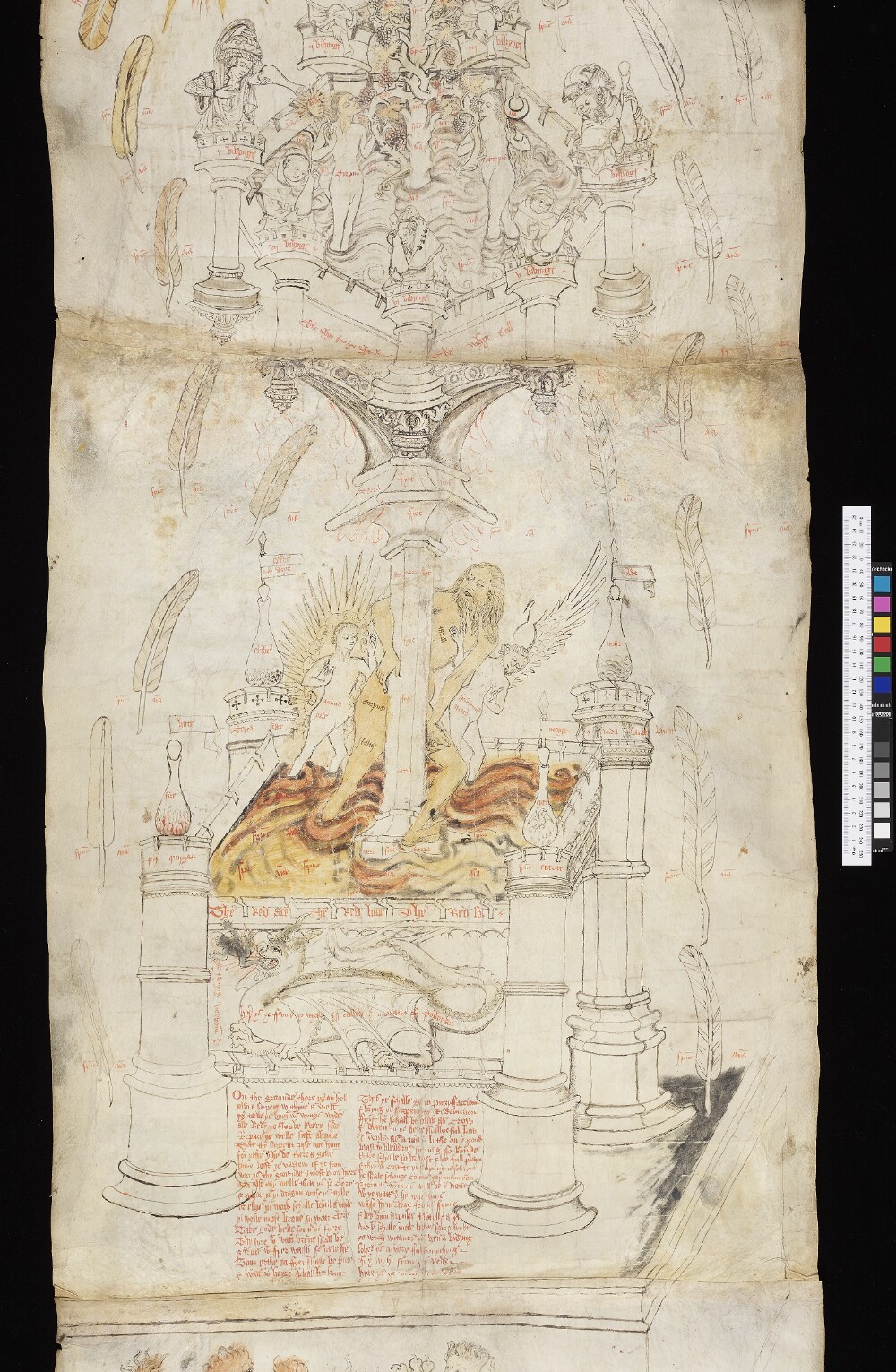
Today we're releasing an MCP server that gives Claude direct access to Source Library. One command, no API key, and Claude can search, read, and cite thousands of historical texts — with full English translations, a cross-book entity knowledge graph, and 50,000+ extracted illustrations.
claude mcp add source-library -- npx -y @source-library/mcp-serverMCP (Model Context Protocol) is an open standard that lets AI assistants connect to external data sources. Instead of pasting text into a chat window, you give Claude a set of tools — and it decides when and how to use them. Our server provides 11 tools covering search, full-text reading, entity lookup, academic citation, and image retrieval.
What you can do with it
The point isn't to query a database. It's to do research. Here are some things that now work naturally in a conversation with Claude:
Trace a concept across centuries
“Search for references to ‘prima materia’ across the collection. How do different alchemical authors describe it?”
Tools used: search_library → get_book_text
Claude searches the full text of every translated book, finds passages discussing prima materia in works spanning the 15th to 17th centuries, reads the relevant pages, and synthesizes a comparative analysis. It can pull the original Latin alongside the translation, showing you exactly what Sendivogius wrote versus what Basil Valentine wrote — with page numbers and links back to the source.
Follow a figure through the tradition
“Find everything about Hermes Trismegistus in the collection. What books mention him, and how does his treatment change across traditions?”
Tools used: search_entities → get_entity → get_book_text
Source Library maintains a knowledge graph of entities — people, places, and concepts — linked across books. Hermes Trismegistus, for example, appears in 18 books with 441 total mentions, connecting:
- ●Ficino's Pymander — the 1471 translation that launched the Hermetic revival
- ●Copernicus's De Revolutionibus — which quotes Hermes on the Sun's centrality
- ●The Musaeum Hermeticum — 543 pages of alchemical texts under his name
- ●Kepler's Harmonices Mundi, the Fama Fraternitatis, Kircher's Musurgia Universalis, and more
Claude can follow these connections, read the relevant passages in each book, and show you how the figure of Hermes shifts from Ficino's prisca theologia to the Rosicrucian manifestos to Kircher's baroque syncretism — all grounded in the primary sources.
Read a book and ask questions
“Read the first 50 pages of Galileo's Sidereus Nuncius and summarize what he observed through the telescope.”
Tools used: search_library → get_book_text
The get_book_text tool returns the complete text of a book — or a page range — in a single call. Claude can read 50 pages of the 1610 Sidereus Nuncius in both the original Latin and translation, then discuss the content as a reading partner who has actually read the text. This is the difference between searching about a book and reading the book.
Get a citation for your paper
“I need a quote from Copernicus about the Sun's centrality in the universe, with a proper citation I can use in my paper.”
Tools used: search_library → get_quote
The get_quote tool returns the passage alongside pre-formatted citations — inline, footnote, and bibliography formats — with DOI when available. Claude finds the relevant passage, gives you the Latin and English, and hands you a citation ready to paste into your paper.
Explore historical illustrations
“Find alchemical emblems depicting the ouroboros. What texts are they from, and what do they symbolize?”
Tools used: search_images → get_image → get_book_text
Source Library has extracted and catalogued 50,000+ illustrations from its books — woodcuts, engravings, emblems, frontispieces, diagrams — each with AI-generated metadata including subject tags, depicted figures, symbols, and museum-style descriptions. Claude can search this gallery, find the images, identify which books they come from, and read the surrounding text to explain their context.
The collection
Source Library holds over 4,000 books digitized from 13 archives worldwide — the Internet Archive, Gallica, the Bodleian, the Vatican Library, the Bavarian State Library, and others. The collection focuses on the Western esoteric tradition broadly defined:
- ●Latin alchemical and Hermetic manuscripts (1450–1700)
- ●German mystical and Paracelsian works
- ●Renaissance philosophy — Ficino, Bruno, Pico, Agrippa
- ●Rosicrucian manifestos and related texts
- ●Early modern science — Copernicus, Galileo, Kepler
- ●Sanskrit, Chinese, Greek, Arabic, and Hebrew philosophical texts
Every book has been OCR'd from the original page images and translated to English by AI, with the original language always preserved alongside for verification. Published editions carry DOIs via Zenodo.
How it works
The MCP server runs locally on your machine and calls Source Library's public API. It doesn't need database credentials, API keys, or any configuration. When Claude needs to search for a book or read a passage, it calls the appropriate tool, the server makes an HTTP request to sourcelibrary.org/api, and the result comes back into the conversation.
The 11 tools are organized into four groups:
Discovery
search_library for full-text search across all books and pages. list_books for browsing with filters (language, category, sort).
Reading
get_book_text for bulk reading (whole books or page ranges). get_book for metadata. get_quote for cited passages.
Knowledge Graph
search_index for concepts, people, and places in book indexes. search_entities and get_entity for the cross-book entity network.
Gallery
search_images across 50,000+ illustrations by subject, symbol, figure, or type. get_image and get_book_images for details.
Install
For Claude Code:
claude mcp add source-library -- npx -y @source-library/mcp-serverFor Claude Desktop, add this to your config file (claude_desktop_config.json):
{
  "mcpServers": {
    "source-library": {
      "command": "npx",
      "args": ["-y", "@source-library/mcp-server"]
    }
  }
}
The server is open source and published on npm. Full documentation is on the developers page.
Source Library is a project of the Embassy of the Free Mind. If you use it for research, we'd love to hear about it — derek@sourcelibrary.org.