Before chess conquered Europe, scholars played a different game. It was played on a double-length chessboard. Its pieces bore numbers instead of ranks. You captured opponents not through positional strategy but through arithmetic — addition, subtraction, multiplication, and the elegant proportions of Pythagorean number theory. You won by arranging captured pieces into mathematical harmonies. Its name was Rithmomachia, the “Battle of Numbers,” and for six centuries it was the game of the educated mind.
Source Library now holds the five major printed treatises on Rithmomachia, spanning 1496 to 1616, written in Latin, French, English, Italian, and German — all translated into English for the first time as a complete collection. Together they document one of the most remarkable intellectual games ever invented, and its slow disappearance from European culture.
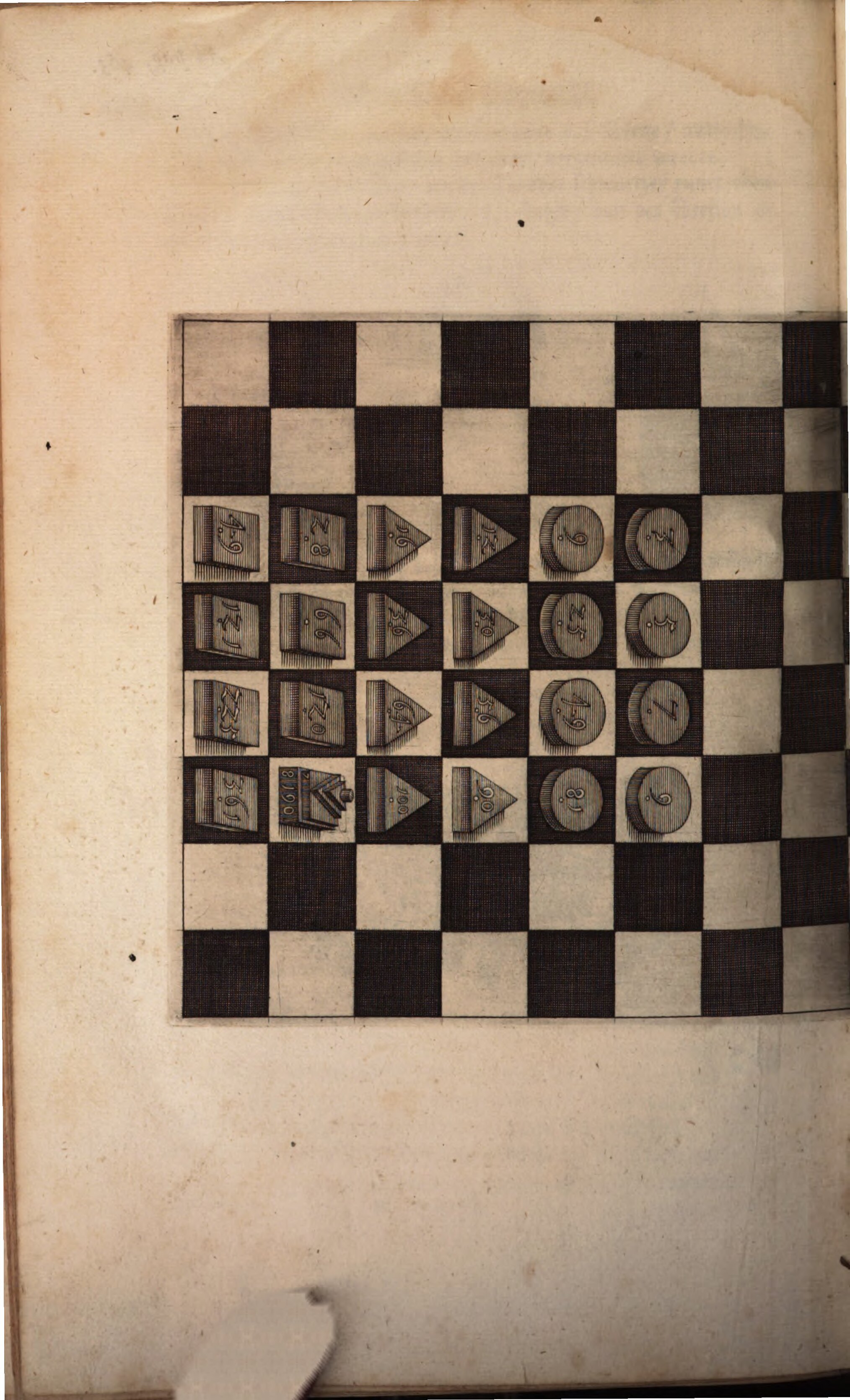
The Ancient Roots
Every Renaissance author who wrote about Rithmomachia attributed it to Pythagoras. The English treatise by Lever and Fulke (1563) opens with a dedicatory poem that states the case plainly:
“Pythagoras, therefore, I say, to make redress in this: first found out this same game, in which no evil is.”
Pythagoras almost certainly did not invent Rithmomachia. The game first appears in the historical record around 1030 CE, in the monastic schools of southern Germany, where a monk named Asilo of Würzburg devised it as a teaching tool. But the attribution is not mere flattery — the mathematics are genuinely Pythagorean. The game’s pieces, captures, and victory conditions are all built from the theory of ratios and proportions laid out in Boethius’s De Institutione Arithmetica (c. 500 CE), which itself transmitted Pythagorean number theory to the medieval West.
So while Rithmomachia is medieval in origin, it is Pythagorean in substance. To play it is to inhabit the Pythagorean worldview: a universe where numbers are not abstractions but living forces, where mathematical ratios generate musical harmonies, and where understanding proportion is understanding the structure of reality itself.
The earliest printed source makes this connection vivid. In Lefèvre d’Étaples’s 1496 treatise, the rules are not presented as instructions at all. They are a Socratic dialogue between three members of the Pythagorean community: Alcmeon, a mathematician and disciple of Pythagoras, and two eager students named Bathillus and Brontinus. The students ask Alcmeon to teach them a game the Pythagoreans play “to relieve their cares after serious studies.” The entire ruleset unfolds through conversation.
Alcmeon explains the color symbolism in explicitly cosmological terms: “Let the side of the Even numbers be blackish, for the Evens belong to the sensible world. And the side of the Odd be white and shining, for the Odds are masculine and of undivided substance, always expressing a likeness of the same.” The pyramids receive special sacred colors — red for the perfect pyramid (Even, 91), blue for the imperfect (Odd, 190) — “on account of the excellence both of their nature and of the divinity of the squares from whose accumulation they arise.”
Then comes a moment any student will recognize. Alcmeon, warming to his theme, begins explaining that the pyramid’s base is “the first sensible circle of moving things” and its apex represents divinity — and Bathillus cuts him off:
“You’re making paradigms, Alcmeon — we seek a game, not symbols!”
Alcmeon catches himself — “You remind me rightly, Bathillus; I was almost neglecting myself, and straying far from the task at hand” — and returns to the rules. But at the end of the lesson, after compressing the entire game into twelve numbered rules, he tells them something remarkable:
“Indulge in the game while your tender age does not yet allow you to ascend to higher things … Then, when you are more robust of spirit, seek our silence, and join yourselves as companions to our company — always seeking the innocent life.”
The game is not the destination. It is a gateway — a way to begin thinking in numbers, ratios, and harmonies before the student is ready for the deeper silence of Pythagorean contemplation. No other board game in history has been framed as a stage in philosophical initiation.
The Board and the Pieces
The board is a double chessboard — 8 squares wide and 16 long, “as if two chessboards were joined together,” as Lever and Fulke describe it. Each side commands 24 pieces in three shapes: circles, triangles, and squares. Every piece bears a number.
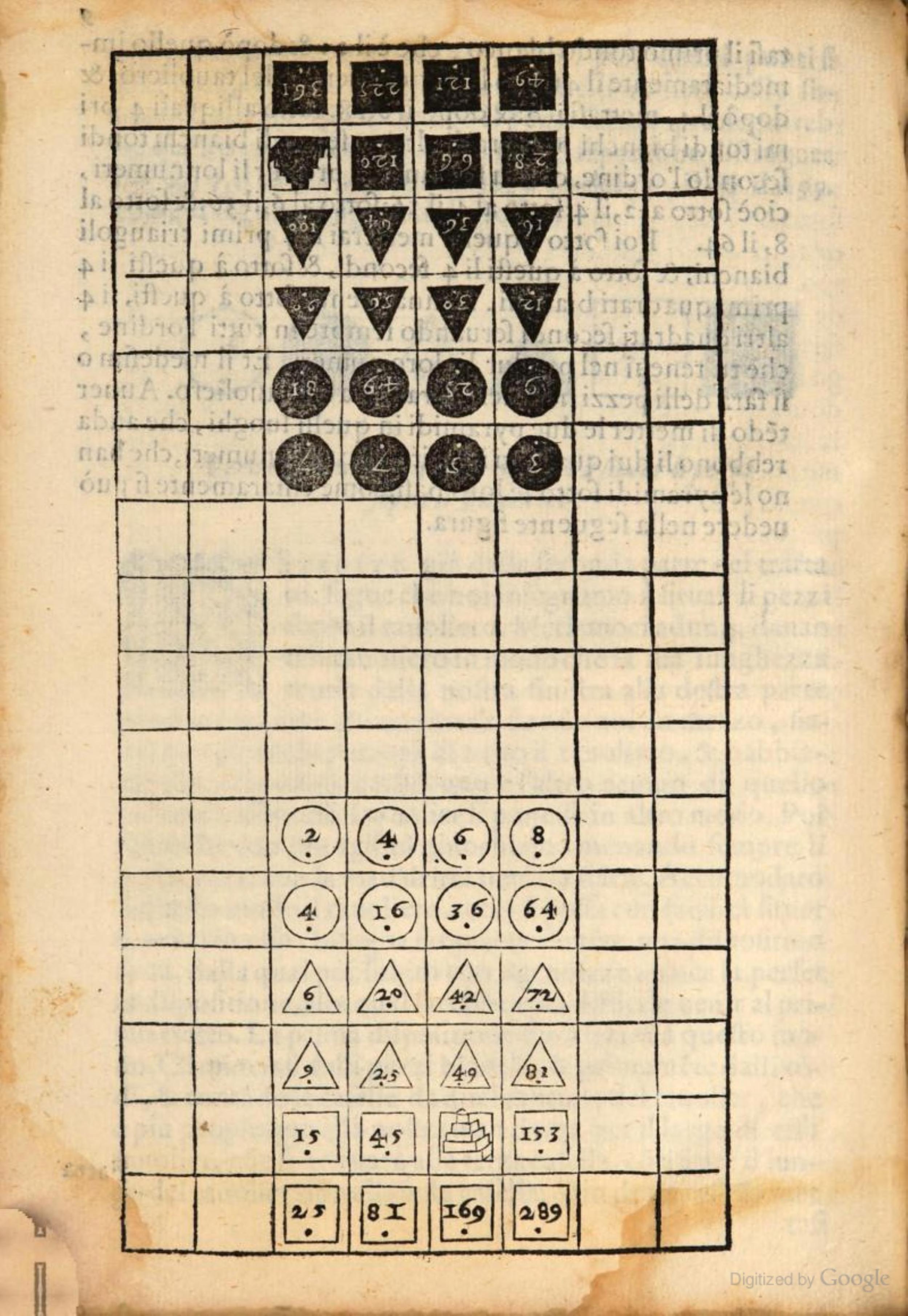
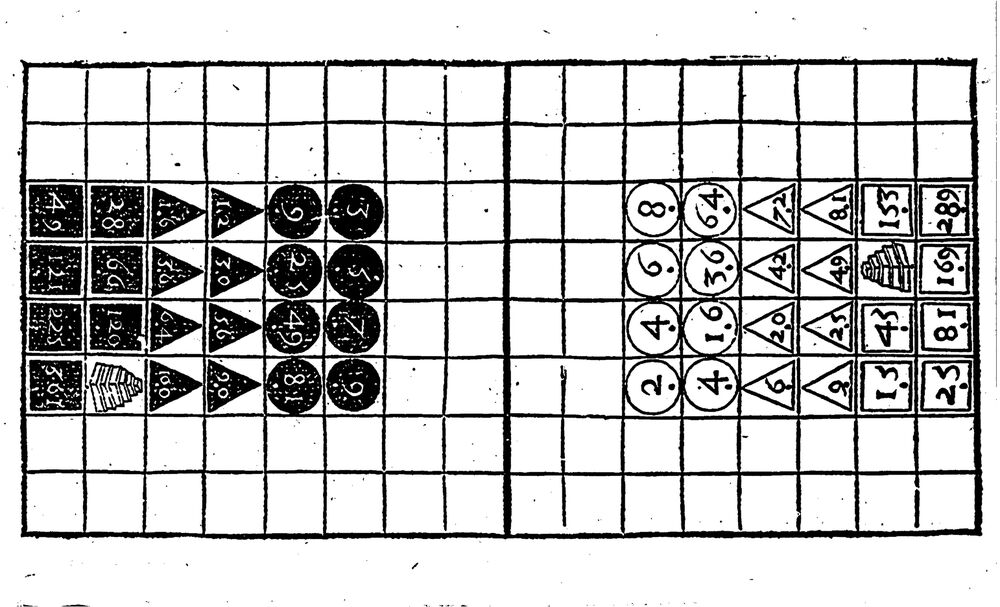
The two sides are not symmetric. One side plays the even numbers, the other the odd — a fundamental Pythagorean distinction. Barozzi describes how the numbers on each piece are derived from the first four even or odd integers through multiplication:
“Wishing then to determine the numbers that should be written upon the 8 white rounds, we shall first take the first four even numbers, one after the other, beginning from 2 — which shall be 2, 4, 6, and 8. Beneath the 3, we shall mark 9; beneath the 5, 25; beneath the 7, 49; and beneath the 9, 81. For from 3 multiplied by itself is born 9; from 5, 25; from 7, 49; and from 9, 81.”
The shapes determine how pieces move. Circles move one space diagonally, “no differently than the soldiers of Mars” (pawns in chess), as Selenus puts it. Triangles leap two spaces. Squares leap three. Each side also has a king — a pyramid of stacked pieces whose combined value represents the pinnacle of the army.
And here is a detail that reveals the game’s spirit: the underside of every piece is painted in the opponent’s color. When you capture a piece, it changes sides. Lever and Fulke explain: “the bottom or lower part of every piece must be marked with its adversary’s color, so that when it is captured, it may change its coat and serve the one to whom it is a prisoner.”
Capture by Arithmetic
This is what makes Rithmomachia unique among board games: you don’t capture by landing on an opponent’s square. You capture through mathematical relationships between your pieces and theirs.
Barozzi lists the methods: “In seven ways: counting, summing, subtracting, multiplying, dividing, and siege.” Lever and Fulke give the clearest English account:
Methods of capture
Equality — A piece that can reach an enemy of the same value captures it.
Addition — Two of your pieces whose values sum to an enemy’s value capture it. Barozzi gives the example: white triangle 9 plus white triangle 16 equals black circle 25.
Subtraction — Two of your pieces whose difference equals an enemy’s value capture it.
Multiplication — A piece’s value multiplied by the number of empty squares between it and an enemy equals the enemy’s value.
Division — The reverse: the enemy’s value divided by the distance equals your piece’s value.
Siege — Surround a piece so that “its lawful movement is blocked,” and it falls when you place the fourth surrounding piece.
Every capture requires mental arithmetic. You don’t just see the board — you calculate it. A player scanning for captures is simultaneously running addition, subtraction, multiplication, and division in their head, checking whether any combination of their pieces relates arithmetically to any reachable opponent. This is not a game you can play by intuition. It is a game that trains the mathematical mind.
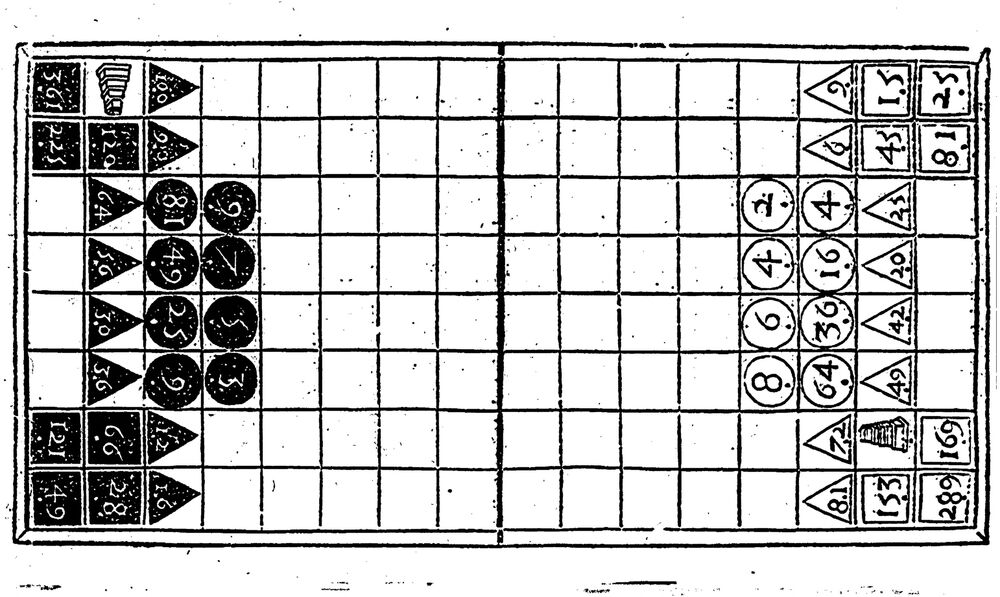
Victory Through Harmony
Rithmomachia’s victory conditions are its most extraordinary feature. You don’t win by eliminating the opponent. You win by arranging your captured pieces on the opponent’s side of the board in mathematical progressions — arithmetic, geometric, or harmonic.
Selenus’s treatise gives the fullest account. There are three levels of victory, each more demanding than the last:
The Small Victory
Arrange three captured pieces in a single proportion — arithmetic (e.g., 2, 4, 6), geometric (e.g., 2, 4, 8), or harmonic (e.g., 3, 4, 6).
The Great Victory
Arrange four pieces satisfying two different proportions simultaneously.
The Greatest Victory
Arrange four pieces satisfying all three proportions at once — arithmetic, geometric, and harmonic.
Selenus writes that the Greatest Victory yields “a singular delight,” because in those four numbers “all the harmonies are contained.” He connects the proportions explicitly to musical intervals: the ratio 2:1 produces the octave (diapason), 2:3 produces the fifth (diapente), 3:4 the fourth (diatessaron). The winning arrangement is, literally, a chord.
“Just as in the Great Victory, there are three simple ones — namely those of Arithmetic, Geometry, and Music — [representing] the Quadrivium, the mathematical sciences of the Middle Ages.”
This is a game where you win by creating beauty. Not by destroying the opponent, but by demonstrating mastery of the mathematical harmonies that — in the Pythagorean worldview — govern the cosmos.
Five Languages, One Game
The five treatises in our collection span 120 years and five languages. Each was written for a different national audience, and each reveals something different about the game’s meaning in Renaissance culture.

Paris, 1496 · Latin · 152 pages
The earliest printed source. Jordanus’s 13th-century arithmetic treatise, edited by the great humanist Lefèvre d’Étaples, with a Rithmomachia appendix presented as a Pythagorean dialogue. Students learn the game by questioning a master, in the tradition of philosophical pedagogy. “Before we encounter Pythagoras among the hundreds of his followers, we wish to be somewhat prepared in the basics.”
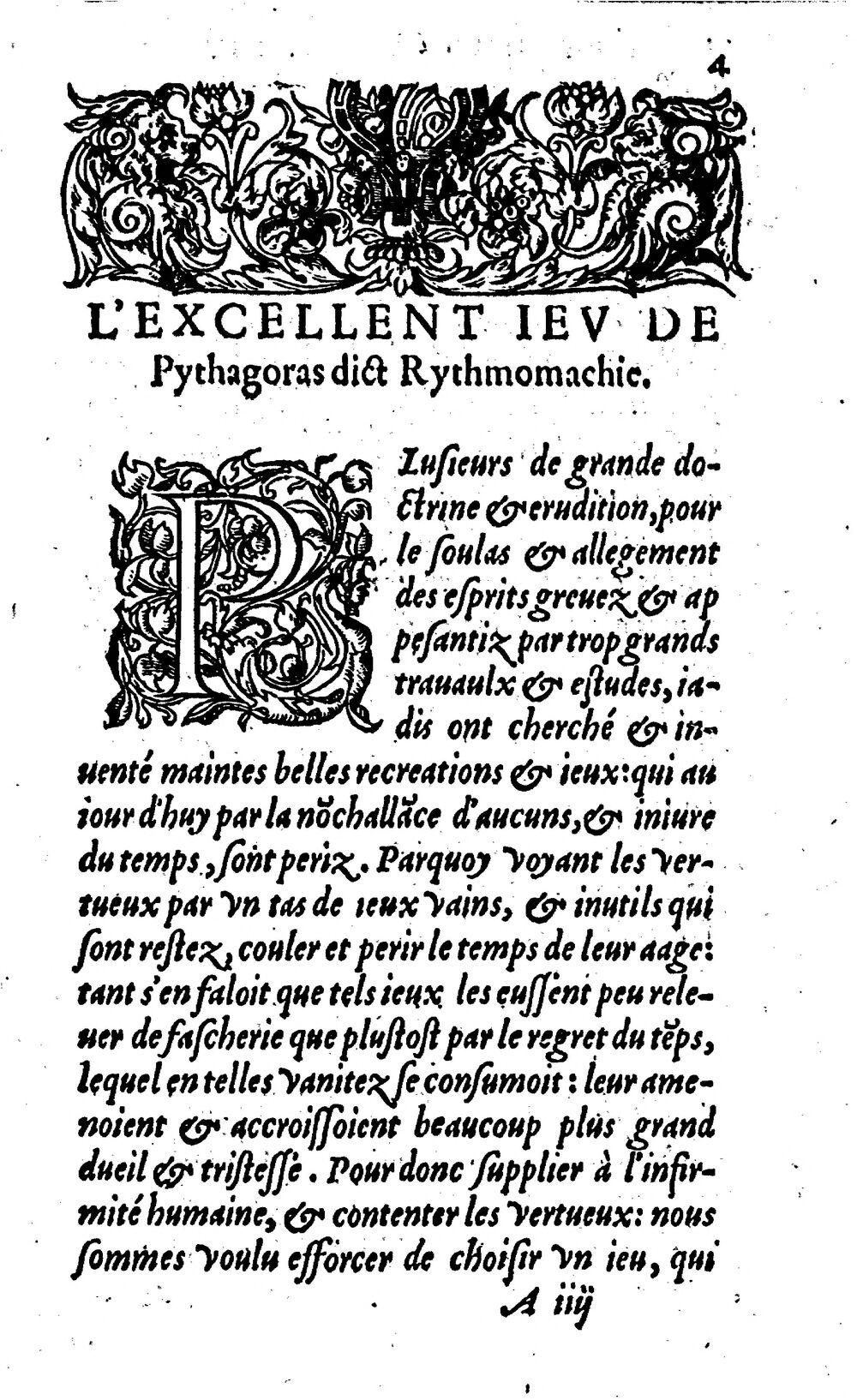
Paris, 1554 · French · 106 pages
The French treatise is the most diagram-rich, with 10 board diagrams and mathematical tables. Boissiere frames the game as a recovery of ancient wisdom: “Many men of great learning, seeking solace for spirits burdened by excessive labors, in times past sought and invented many fine recreations and games — which today, through the negligence of some and the injury of time, have perished.”
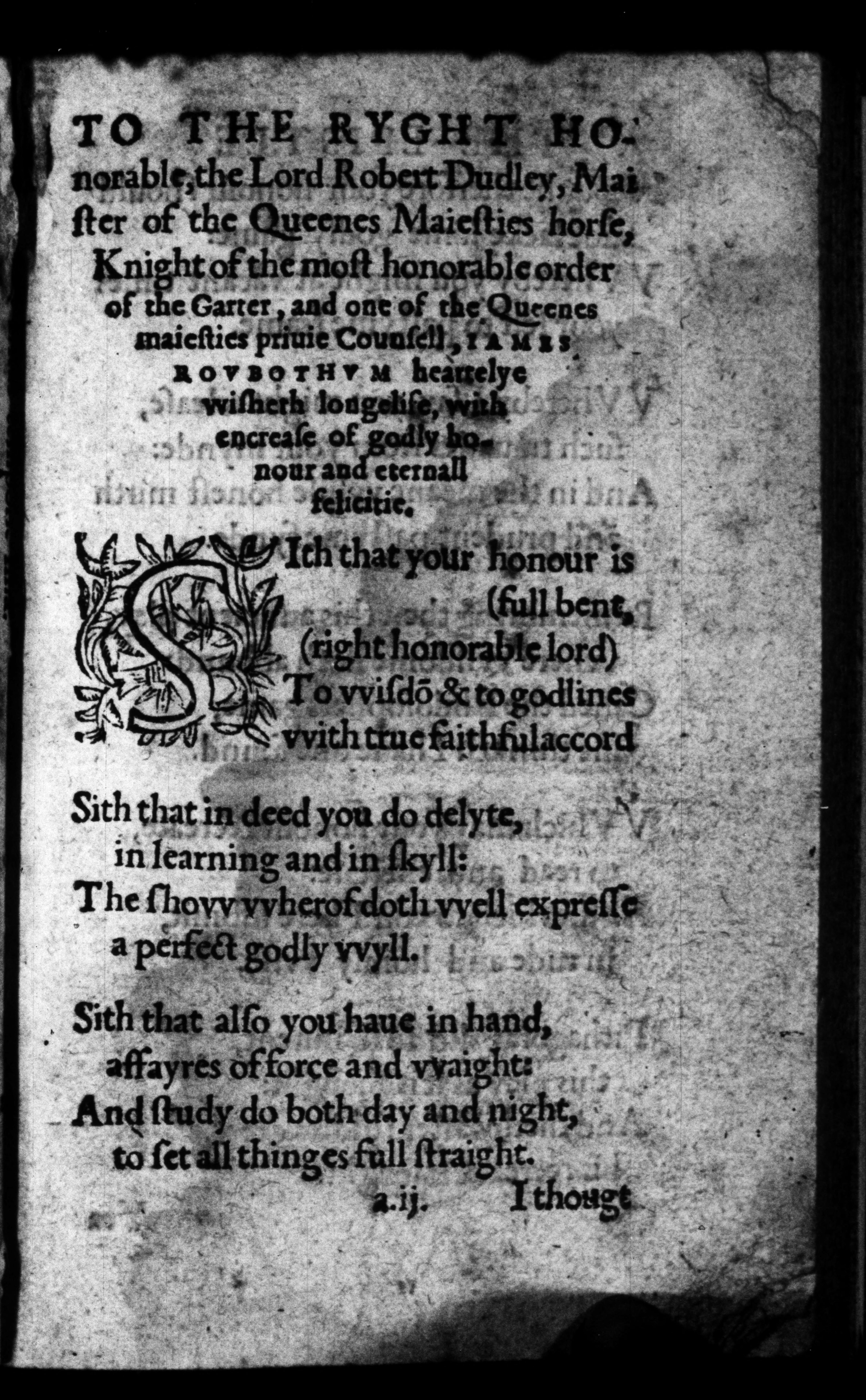
London, 1563 · English · 97 pages
The only English treatise, written as an explicit alternative to dice and card games. Lever appeals to moral reformers: “This causes no contention, nor any debate at all; by this, no hatred, wrath, nor guile arises in any way.” Fulke, a mathematician, supplies the technical details. The result is the most accessible of all five treatises — a practical how-to guide.
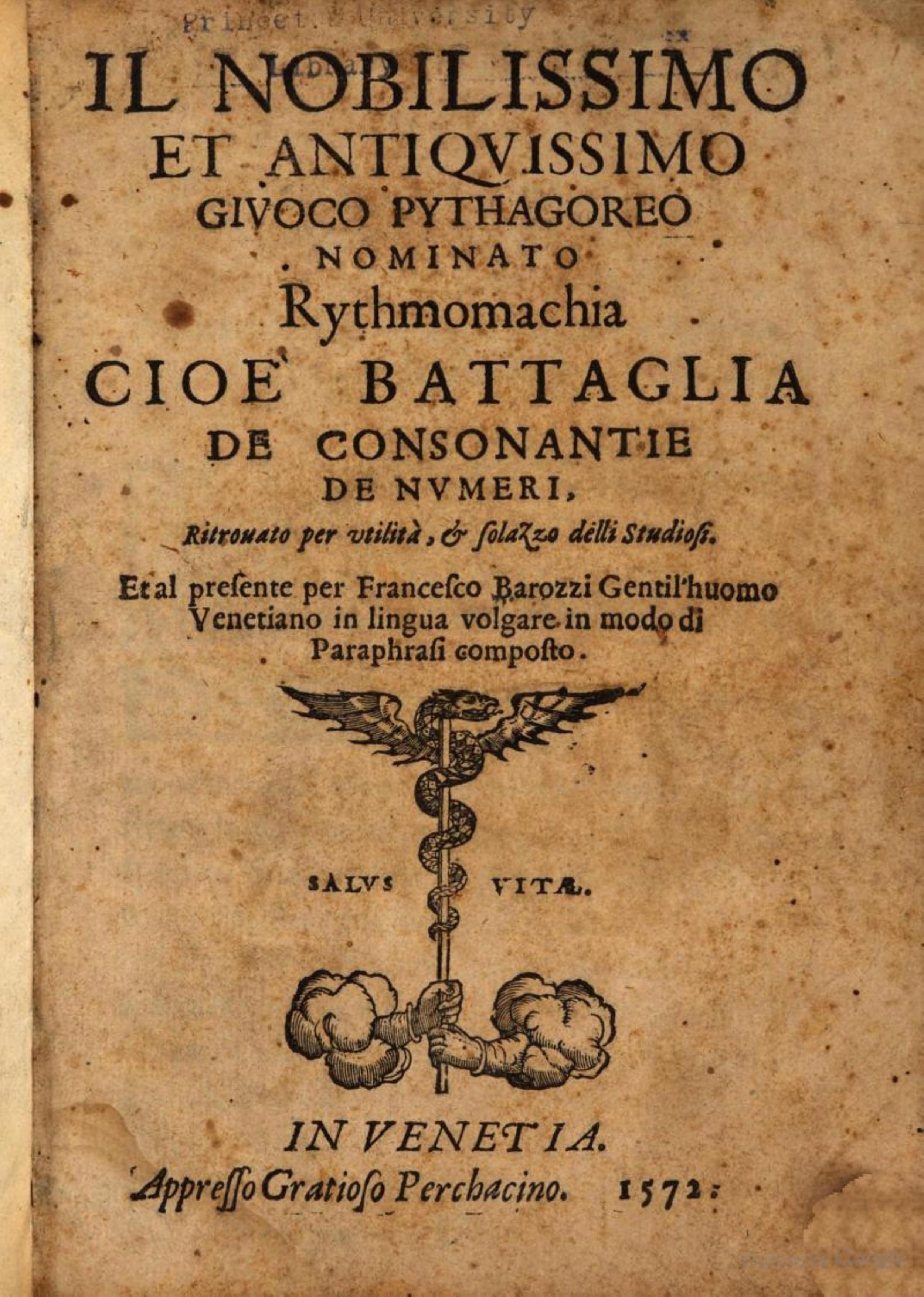
Venice, 1572 · Italian · 66 pages
Barozzi was a Venetian mathematician with a taste for Pythagorean mysticism — he was later tried by the Inquisition for magical practices. His treatise is compact, precise, and features the clearest explanation of how piece values are derived from Pythagorean number sequences. His preface laments that the “ancient philosophers discovered many most beautiful games” now “buried in perpetual oblivion.”
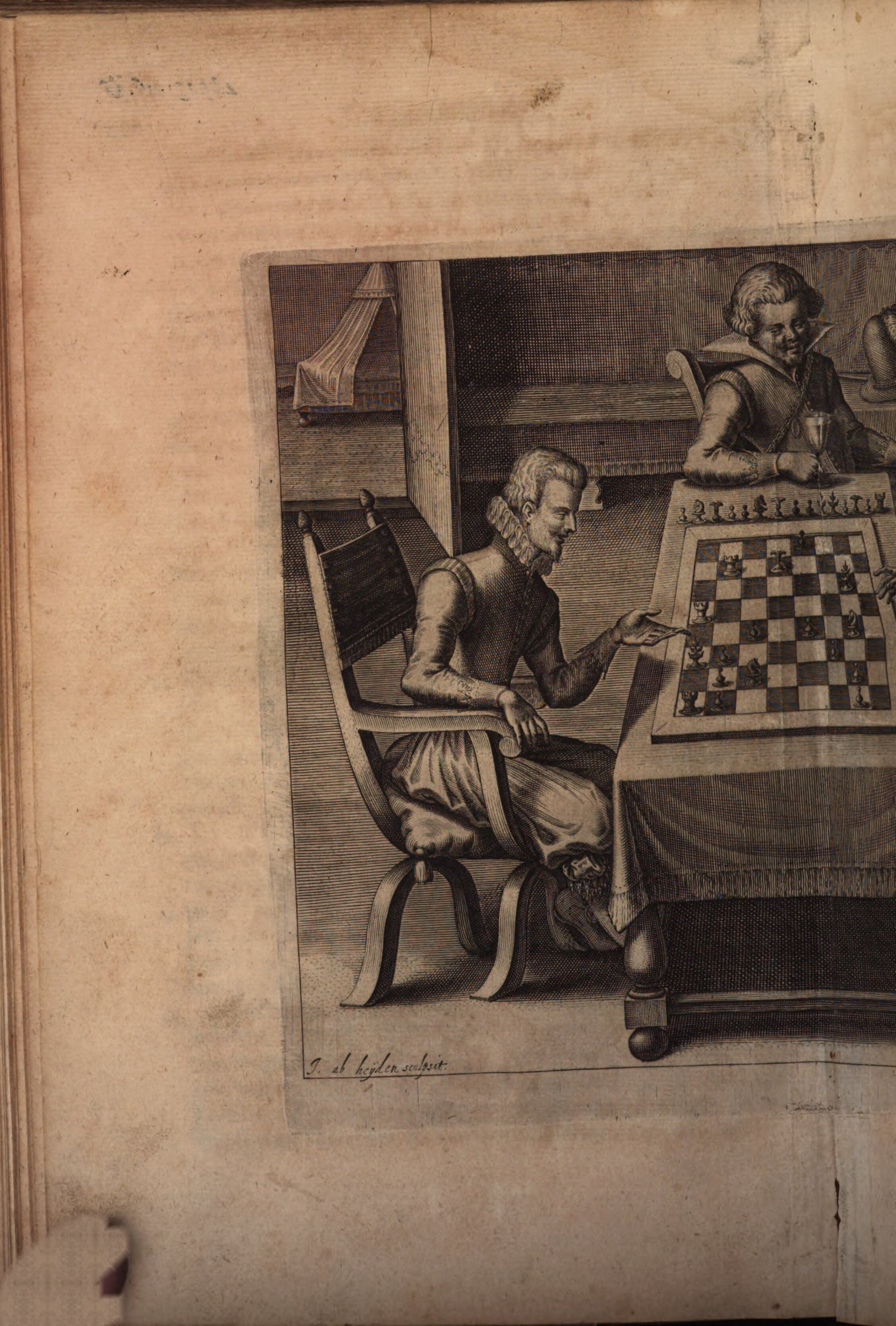
Leipzig, 1616 · German · 540 pages
The grandest of the five. “Gustavus Selenus” was a pseudonym for Duke August the Younger of Brunswick-Lüneburg, who later founded the famous Wolfenbüttel library — one of the largest in Europe. His massive chess treatise includes Rithmomachia as an appendix (from page 495), treating it as chess’s scholarly cousin. The copperplate engravings are the finest visual record of the game, and his account of the victory conditions is the most complete.
A Game for Philosophers
What is most striking in reading these five treatises side by side is how consistently the authors defend the game’s moral and intellectual value. Rithmomachia was not just a pastime — it was a pedagogical tool, a form of mental discipline, and a demonstration of Pythagorean principles.
Lever and Fulke make the case most forcefully:
“I would rather teach men how to play in such a way that both integrity may be preserved, their wits exercised, they themselves refreshed, and some profit also attained, rather than to see them, for lack of exercise, either pass the time in idleness or else take pleasure in things fruitless and unseemly.”
The game’s appeal was always tied to its Pythagorean credentials: “Its invention is ascribed to Pythagoras; it bears the name of philosophers; prudent men practice it, and godly men praise it.” Thomas More had recommended it in Utopia (1516) as a wholesome alternative to dice. The game occupied a unique cultural niche — respectable enough for clerics, intellectually rigorous enough for mathematicians, and entertaining enough to survive in print.
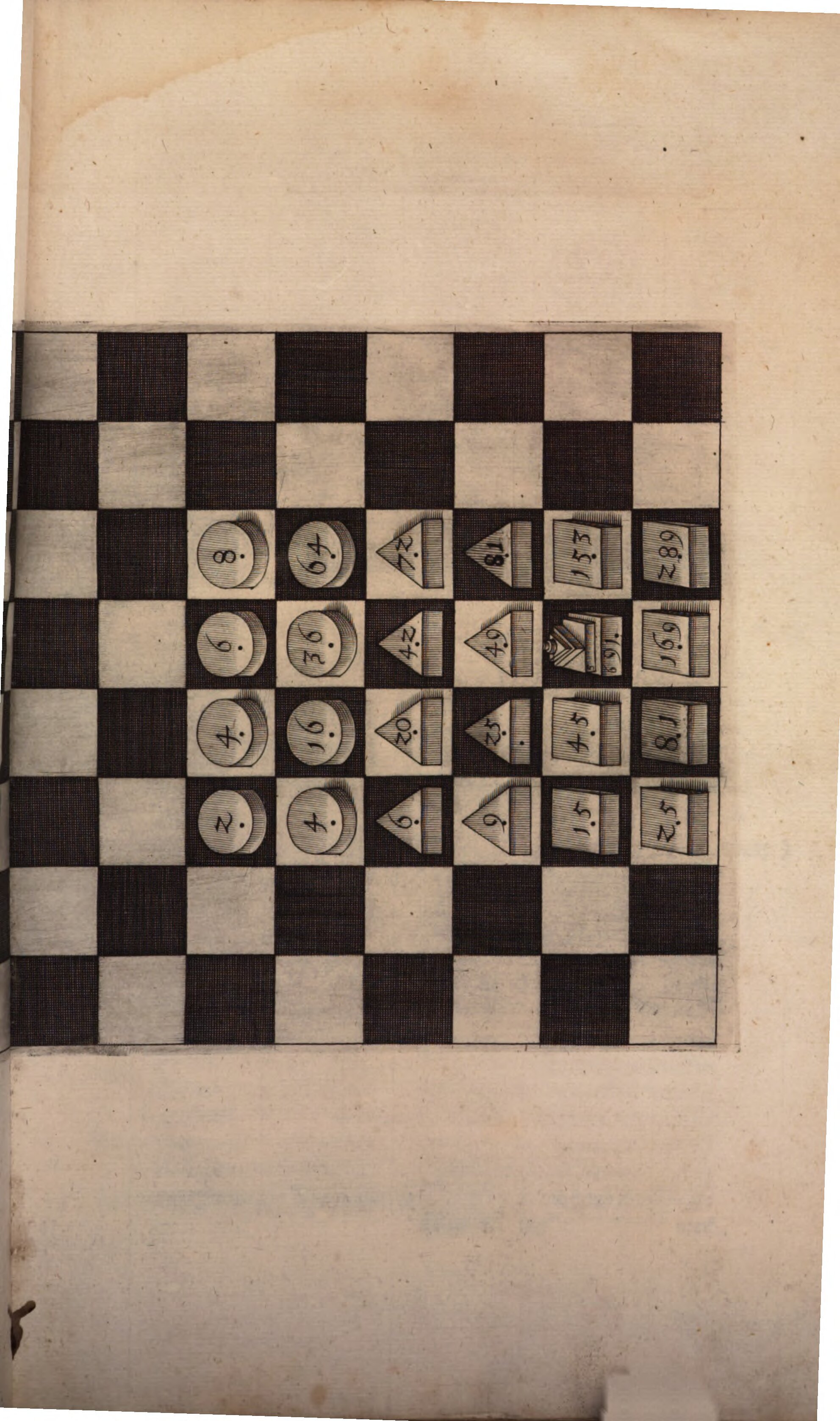
Even Against Odd: The Pythagorean Cosmos on a Board
The game’s deepest structure reflects Pythagorean cosmology. The two sides are not interchangeable armies — they represent the fundamental duality of the universe. Even numbers represent the sensible, material world. Odd numbers represent the intelligible, formal world. The Jordanus treatise makes this explicit:
“Let the side of the Even numbers be blackish, as the Evens belong to the sensible, worldly realm.”
Boissiere adds a characteristically elegant observation about the interdependence of the two sides: “Here you may consider this most noble alliance: how the parts of even numbers always proceed by progression from the odd number; conversely, the parts of the odd number have their progression according to the even number.” Even and odd are not merely opponents — they are complementary aspects of mathematical reality, locked in a generative relationship.
This gives the game a philosophical dimension that chess entirely lacks. In chess, the two sides are identical except for who moves first. In Rithmomachia, the two sides embody a metaphysical distinction. Playing the game means inhabiting one half of the Pythagorean cosmos and learning to understand the other through combat.
The Secrets Hidden in the Rules
Reading all five treatises side by side reveals details that no single source makes obvious. The game is stranger, deeper, and more tactically rich than its basic rules suggest.
Winning Is Literally Playing a Chord
The “Greatest Victory” isn’t just an abstract mathematical exercise. Selenus walks through how each winning set of four numbers encodes specific musical intervals. Take the simplest example: 2, 3, 4, 6. Within those four numbers you find:
3:2 — the Fifth (Diapente)
4:3 — the Fourth (Diatessaron)
4:2 = 2:1 — the Octave (Diapason)
6:2 = 3:1 — the Twelfth (Diapason + Diapente)
4:1 — the Fifteenth, or Double Octave (Disdiapason)
Buxerius, quoted by Selenus, confirms the physical reality of this connection:
“These ratios, if examined by weight — as in metals — or if tested by measure — as in strings — always provide and exhibit Musical Harmony.”
You don’t just win Rithmomachia by arranging numbers. You play a chord on the board — a harmony you could literally reproduce on a monochord or a set of tuned metal bars. The game’s ultimate victory is an act of musical composition.
Two Pieces That Cannot Be Captured by Arithmetic
Barozzi reveals a fact buried in the mathematics: two specific pieces — the white square 153 and the black pyramid 190 — cannot be captured by any arithmetic method. No combination of opposing pieces can sum, subtract, multiply, or divide to reach these values.
“There are two pieces in this game that cannot be captured except by siege alone: the 190 black pyramid and the 153 white square.”
This makes siege — surrounding a piece on all four sides — strategically essential. The strongest pieces on the board can only fall to positional play, not calculation. It also means these two pieces are the ultimate anchors: they can roam the board knowing they are immune to every form of arithmetic attack.
The Pyramid’s Chess Knight Escape
Rithmomachia is emphatically not chess. But there is exactly one moment where chess intrudes. Both Barozzi and Selenus describe a unique privilege of the pyramid: when besieged — surrounded on all four sides — the pyramid can escape using a chess knight’s leap.
“When the pyramid is besieged, it can free itself by making the knight’s jump of chess … All other pieces do not enjoy this freedom.”
This is the only chess move in the entire game. It applies only to the pyramid, and only when besieged. It cannot be used to capture — only to escape. The distinction matters: it means a besieging player must not only surround the pyramid, but also control all knight-jump escape squares, making siege of the pyramid extraordinarily difficult.
Victory Must Be Proclaimed
Barozzi’s seven rules for achieving victory include a remarkable protocol. When you place the second-to-last piece of your victory formation, you must announce your intention — giving your opponent a chance to disrupt it. Once proclaimed, the pieces in your formation become immune to capture.
“When you play the second-to-last piece for the final victory, it is necessary to proclaim it, to warn the enemy to remedy it if he can — so that afterward, when he can no longer remedy it, you may honorably move the last piece that completes the final victory.”
The victory is not a surprise attack. It is a demonstration — a public proof that you have achieved mathematical harmony despite your opponent’s best efforts to prevent it. This is the game’s most chivalric rule: you win not by stealth, but by openly declaring your mastery and daring your opponent to stop you.
The Polybius Connection: Pieces as an Army
Selenus quotes Buxerius comparing the starting formation directly to the military treatise of Polybius: “The rear of the army should be more open … so that if the front soldiers are weak, they can retreat to the rear, from which the ability to fight again is granted. And the light cavalry on the wings resembles the arrangement of this game.”
The circles (low-value, short-range) form the front rank — infantry. The triangles are the mobile middle ranks. The squares (high-value, long-range) hold the back — heavy reserves. The pyramid is the king, protected at the center. This isn’t a metaphor invented by modern commentators; the original authors explicitly thought of the game in military terms.
Three Different Games in One Book
Lever and Fulke describe not one but three complete rulesets, which they call “kinds of play.” In the first kind (the standard rules), circles move diagonally and triangles and squares move orthogonally. In the third kind, attributed to the Chaldean tradition, no piece moves diagonally at all — Buxerius writes that they move “straight, not through corners, like the mad chess bishops.” The second kind introduces a different capture system where multiplication and division use the empty squares between pieces as the operand. Each kind produces a fundamentally different tactical experience from the same board and pieces.
Lever’s Honest Admission
After sixty-five pages of painstakingly detailed rules, tables, and mathematical derivations, Lever and Fulke close their treatise with a confession that no strategy guide can substitute for experience:
“And thus is the first kind of playing at an end. And this is sufficient to teach you to play, but if you would learn to play cunningly, you must use to play often — so shall you learn better than by any precepts or rules.”
Even in 1563, the game was too complex for written strategy. Five hundred years later, it still is. The only way to learn Rithmomachia is to play it.
Why It Disappeared
After Selenus’s treatise in 1616, no new Rithmomachia book was printed. By the mid-17th century, the game had vanished from European culture almost completely. Why?
The simplest answer is that chess won. Chess is adversarial, fast, and infinitely deep in its strategic complexity. It requires no mathematical knowledge to learn. Rithmomachia, by contrast, demands that both players share a mathematical education — you cannot play it without understanding ratios and proportions.
But there is a deeper reason. Rithmomachia is a game that only makes sense within the Pythagorean worldview — a world where number is the essence of reality, where mathematical ratios produce musical harmonies, and where understanding proportion is the highest intellectual achievement. As the Scientific Revolution replaced Pythagorean numerology with empirical measurement, the philosophical framework that gave Rithmomachia its meaning dissolved. The game didn’t just lose to chess. It lost its world.
Selenus seems to have sensed this. Writing in 1616, he laments that the game “until our own times, has lain so shamefully in the Shadows.” He was already writing an elegy.
Read These Books
These are exactly the kind of texts Source Library exists for. They were written for educated readers, printed in small runs, scattered across European libraries, and never translated into a common modern language. Until now, reading the complete Rithmomachia corpus required Latin, French, Italian, German, and Early Modern English. Now it requires one click.
The complete Rithmomachia collection
If you want to start with one book, choose Lever and Fulke — it’s in English, the most practically oriented, and reads like a game manual. If you want the richest intellectual experience, read Selenus’s account of the victory conditions alongside Barozzi’s derivation of the piece values. And if you want to understand the philosophical tradition that made this game possible, start with Boethius.
Play the Game
We’ve built a playable version of Rithmomachia, synthesized from all five treatises. Challenge an AI opponent at three difficulty levels, or watch a demonstration game with move-by-move commentary drawn from the primary sources. Every rule links back to the original page where it appears.
Source Library is a digital library of rare philosophical, scientific, and esoteric texts, translated from their original languages using AI and available to read for free. Questions or corrections? derek@sourcelibrary.org.