Illustrations
Browse all60 images extracted from 4 books

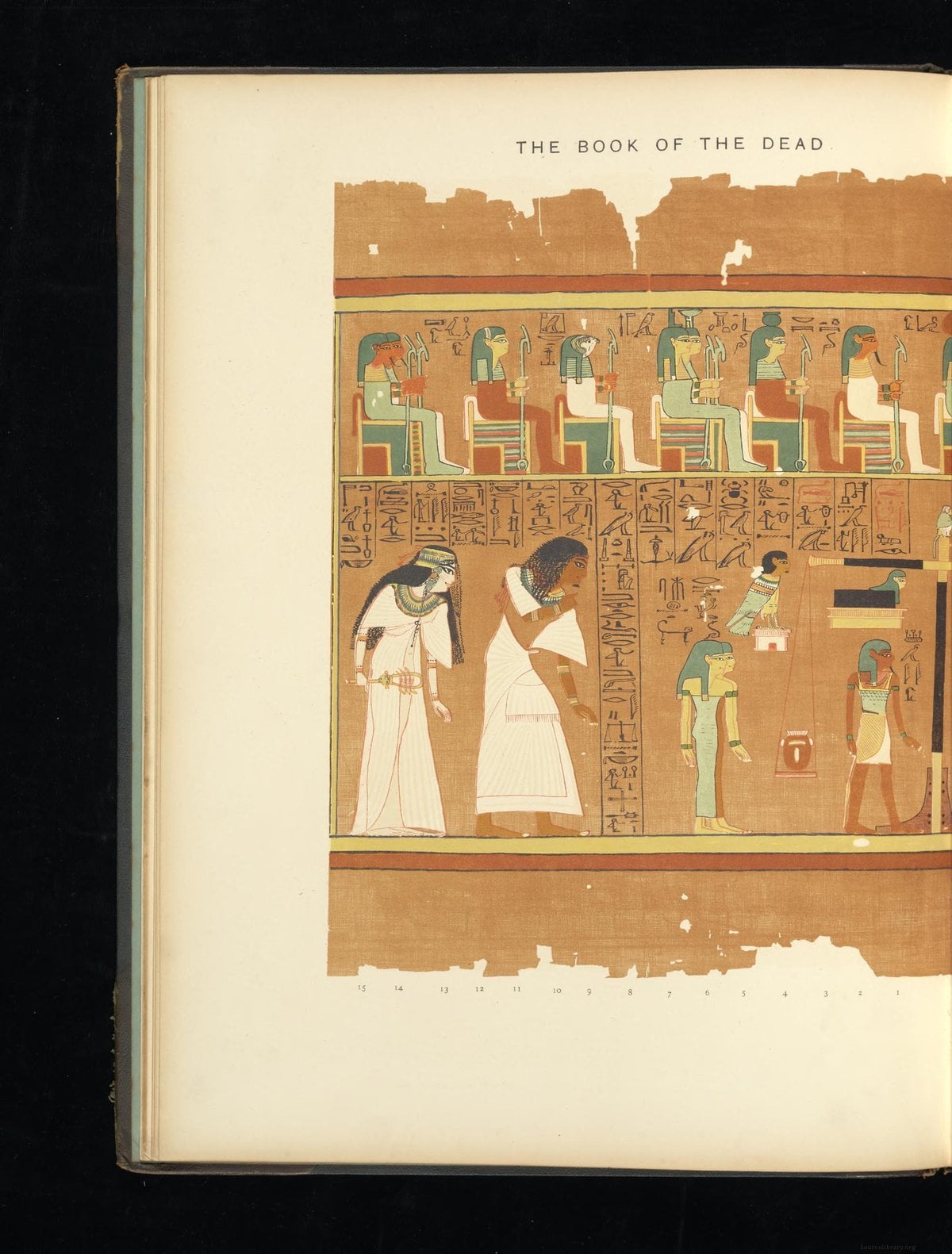
This plate reproduces a segment of the Book of the Dead, an ancient Egyptian funerary text intended to guide the deceased through the underworld. The upper register depicts a series of protective deities, including the jackal-headed Anubis and the falcon-headed Horus, seated in judgment or witness. Below, meticulously rendered hieroglyphic columns contain spells and incantations essential for the soul's journey to the afterlife.

This illustration depicts the critical 'Weighing of the Heart' ceremony, where the deceased's heart is balanced against the feather of truth. It captures the divine intervention of Anubis and Thoth, who oversee the judgment to determine the soul's worthiness for the afterlife.

This scene depicts the god Osiris, ruler of the underworld, seated upon his throne within a sacred shrine. He holds the crook and flail, symbols of his divine authority and role as the judge of the deceased in the afterlife.

This central scene depicts the critical moment of judgment in the afterlife, where the heart of the deceased, Ani, is weighed against the feather of Maat, representing truth and cosmic order. Presided over by the jackal-headed god Anubis and recorded by the ibis-headed scribe Thoth, the outcome determines the soul's fate, with the monstrous Ammit waiting to devour those found unworthy.

This vignette illustrates the solar deity in the form of a hawk, flanked by the goddesses Isis and Nephthys who stand beside the Tet of Osiris. The scene captures the profound religious symbolism of the Egyptian afterlife, emphasizing themes of sovereignty and divine protection.

This plate from a 19th-century facsimile of the Papyrus of Ani illustrates the deceased's perilous journey through the gates and pylons of the underworld. The upper register depicts the Second, Third, and Fourth Ārit, each guarded by a triad of deities, while the lower register shows the Third through Sixth Pylons and their monstrous guardians. These intricate vignettes, accompanied by hieroglyphic spells from Chapters 146 and 147 of the Book of the Dead, served as a guidebook for the soul to successfully navigate the trials of the afterlife.

This plate illustrates a marble relief of Nikè, the personification of Victory, which once adorned an archway near the Balat Kapoussi in Constantinople. The figure is shown in motion, wearing a flowing chiton and holding a palm branch, characteristic of the transition from classical Greek forms to the more stylized art of the early Byzantine period. Such architectural fragments provide vital evidence for the monumental decoration of the city's ancient gates and public spaces.

This woodcut, titled 'Triumphus Theodosii' (The Triumph of Theodosius), depicts a grand Roman military procession passing through a monumental arch. Based on an earlier work from Banduri's 'Imperium Orientale', the scene illustrates the pageantry of the Byzantine empire, featuring rows of armed soldiers and a central equestrian figure. It serves as a vital visual record of how 19th-century scholars reconstructed the imperial ceremonies of Constantinople.
Visual Art
Browse all art →36 works of visual art in this collection
 papyrus_fragment
Christian Amulet with Jesus-Nathanael Dialogue (Apocryphal Gospel?)
Berlin Papyrus Collection
A papyrus fragment from a Late Antique Christian amulet containing a Greek dialogue between Jesus and Nathanael.
 papyrus_fragment
Cicero, Pro Plancio (Latin Parchment Codex)
Berlin Papyrus Collection
A fragment of a Latin parchment codex containing text from Cicero's speech 'Pro Plancio'.
 papyrus_fragment
Consularia Berolinensia (Illustrated Chronicle with Martyrdoms)
Berlin Papyrus Collection
A fragmentary Greek papyrus containing the Consularia Berolinensia, an illustrated world chronicle depicting Christian martyrs.
 papyrus_fragment
Didymos' Commentary on Demosthenes (with Stoic Hierocles on Verso)
Berlin Papyrus Collection
A Greek papyrus fragment (P. Berol. inv. 9780) containing columns of script from Didymos' Commentary on Demosthenes.
 papyrus_fragment
Drinking Songs from Elephantine (Symposium Songbook)
Berlin Papyrus Collection
Fragmented Greek papyrus containing sympotic songs (skolia) intended for performance at a social banquet or symposium.
 papyrus_fragment
Easter Canon of John of Damascus
Berlin Papyrus Collection
A papyrus fragment containing the Greek text of the Easter Canon, a liturgical hymn traditionally attributed to John of Damascus.
 papyrus_fragment
Epigram about Homer's Origin (Ostracon)
Berlin Papyrus Collection
A pottery shard (ostracon) inscribed with a Greek epigram detailing the seven cities that claimed to be the birthplace of the poet Homer.
 papyrus_fragment
Euripides, Telephus
Berlin Papyrus Collection
A set of papyrus fragments containing Greek text from the lost tragedy 'Telephus' by Euripides.
 papyrus_fragment
Euripides, The Bound Melanippe
Berlin Papyrus Collection
A Greek papyrus fragment containing text from the lost play 'The Bound Melanippe' (Melanippe Desmotis) by the Athenian dramatist Euripides.
 papyrus_fragment
Homer Glossary (School Text for Iliad Book 1)
Berlin Papyrus Collection
A Greek papyrus fragment containing a glossary for Book 1 of Homer’s Iliad.
 papyrus_fragment
Homer, Iliad Book 24 (Grieving for Hector)
Berlin Papyrus Collection
A papyrus fragment containing Greek text from Book 24 of Homer's Iliad, focusing on the mourning for the Trojan hero Hector.
 papyrus_fragment
Homer, Iliad Book 8 (Divine Assembly on Olympus)
Berlin Papyrus Collection
A papyrus fragment containing Greek text from Homer's Iliad, Book 8, describing the assembly of the gods on Mount Olympus.
 papyrus_fragment
Homer, Odyssey Book 10 (Circe's Transformation)
Berlin Papyrus Collection
A fragment of papyrus containing Greek text from Book 10 of Homer's Odyssey, specifically describing the encounter between Odysseus and the god Hermes.
 papyrus_fragment
Letter of Apion the Soldier (Famous Papyrus Letter)
Berlin Papyrus Collection
A Greek papyrus letter sent by a Roman soldier named Apion to his father Epimachus.
 papyrus_fragment
Magical Handbook with Love Spells
Berlin Papyrus Collection
A fragmentary Greek papyrus from Egypt containing magical instructions and love spells.
Editions, facsimiles, and transcriptions of ancient papyrus manuscripts from Egypt and the classical world. From the Oxyrhynchus excavations to the Greek Magical Papyri, these publications give direct access to texts written on papyrus between the 3rd century BCE and the 7th century CE — letters, contracts, magical spells, philosophical treatises, lost works of literature, and early Christian scriptures.
All Books
Browse Full Catalog→37 books in this collection
Greek Magical Papyri (Papyri Graecae Magicae)
Karl Preisendanz (ed.)
Tibetan Book of the Dead (Bardo Thodol)
Padmasambhava / Evans-Wentz
Book of the Dead - Papyrus of Ani Facsimile
British Museum
Demotic Magical Papyrus of London and Leiden, Vol. 3
F. Ll. Griffith & Herbert Thompson
Hekate-Selene-Artemis and Related Deities in the Greek Magical Papyri and Curse Tablets
Theodor Hopfner
Papyri Graecae Magicae (Complete)
Karl Preisendanz (ed.)
Zenon Papyri Vol. II - Cairo Museum
Campbell Cowan Edgar
Demotic Magical Papyrus of London and Leiden
F. Ll. Griffith & Herbert Thompson
Graeco-Roman Memoirs
Egypt Exploration Society
Zenon Papyri Vol. III - Cairo Museum
Campbell Cowan Edgar
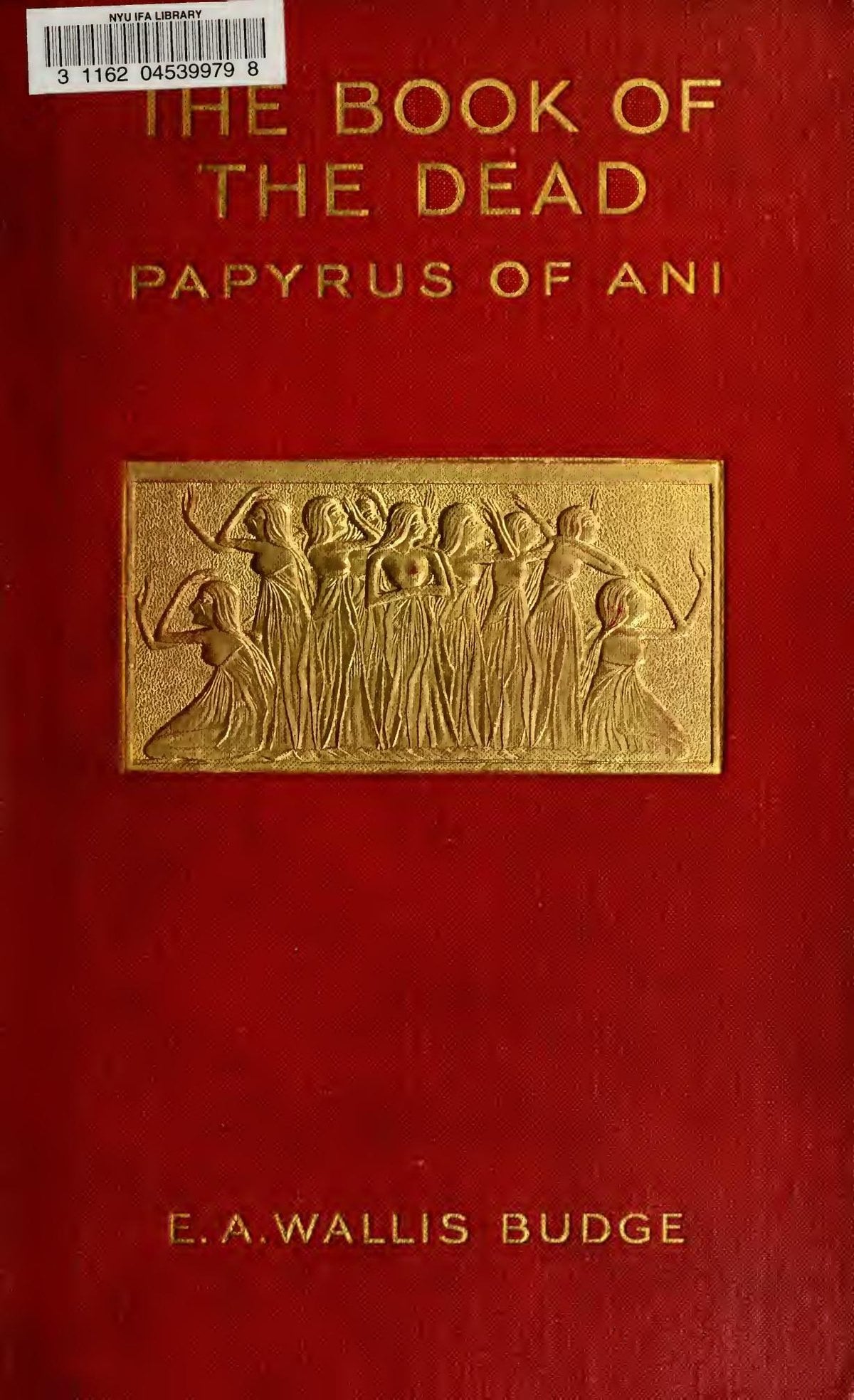
The Book of the Dead: The Papyrus of Ani
E.A. Wallis Budge
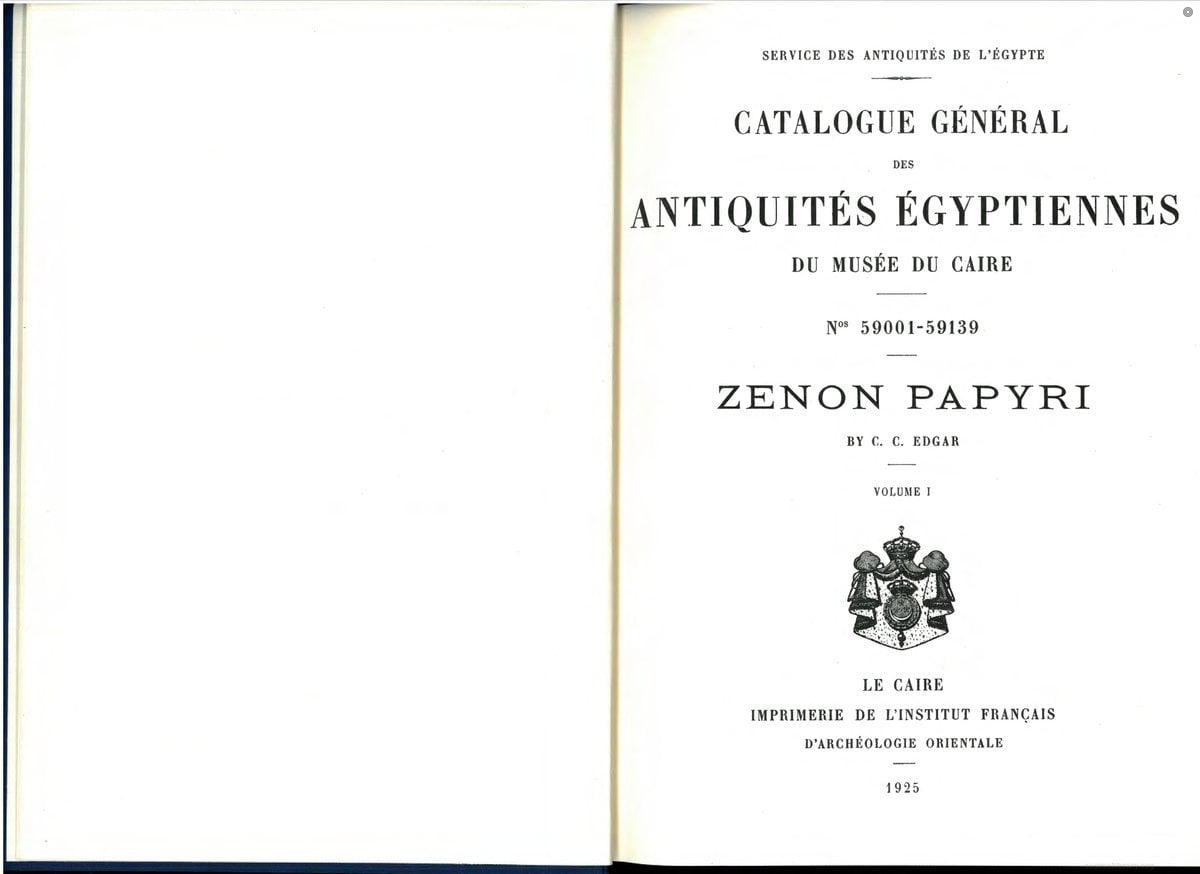
Zenon Papyri, Volume I
Campbell Cowan Edgar
Various Greek Documents from the St. Petersburg Museum
Athanasios Papadopoulos-Kerameus
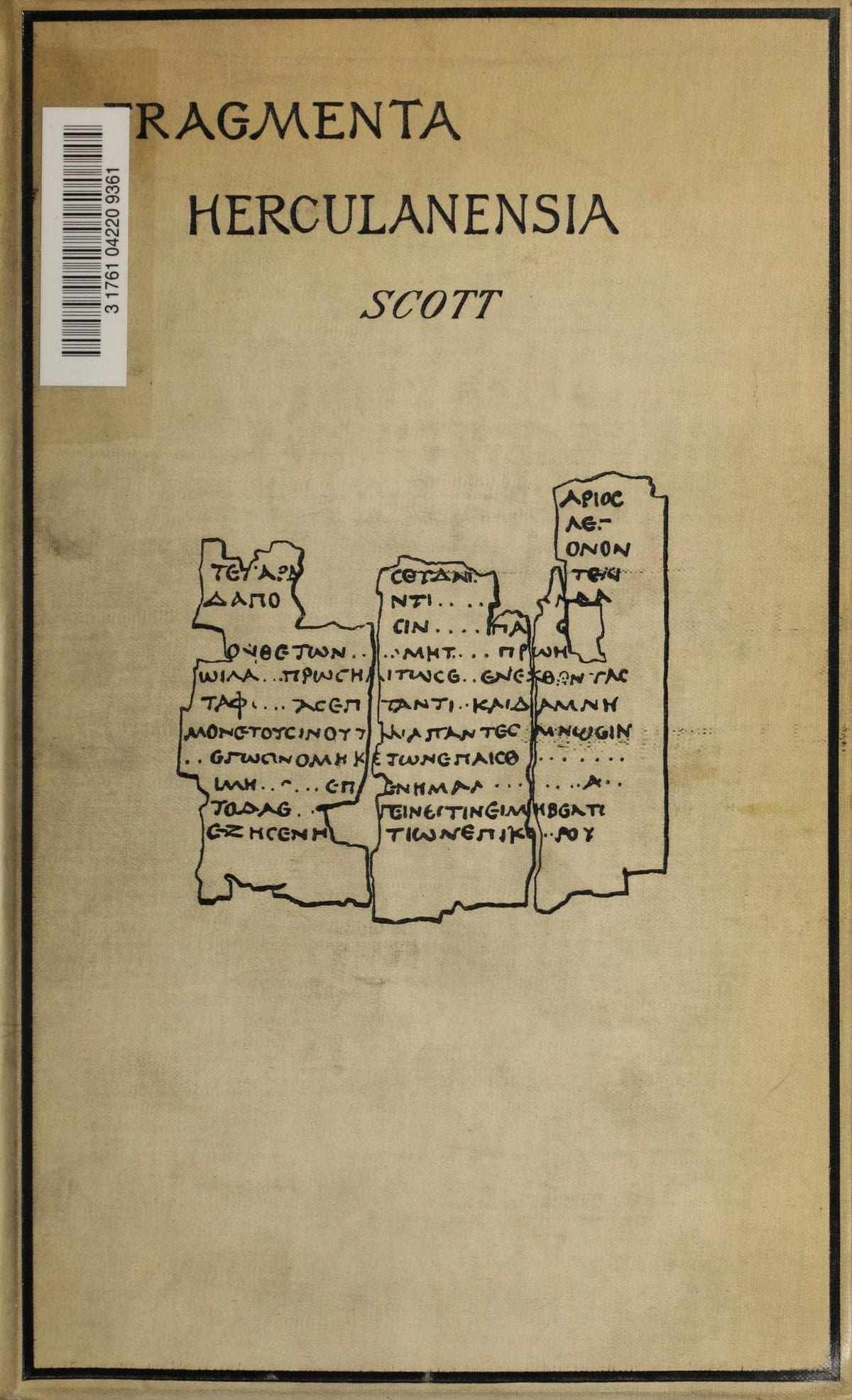
Herculaneum Fragments
Walter Scott