


Illustrations
Browse all60 images extracted from 18 books
This vibrant frontispiece from Andreas Cellarius's 1660 celestial atlas, 'Harmonia Macrocosmica,' presents a grand allegory of astronomical science. In the foreground, scholars and astronomers study celestial globes and instruments, while above, putti unfurl a banner amidst the sun, moon, and zodiac signs. The image perfectly captures the Baroque era's fascination with mapping the heavens through both empirical observation and symbolic harmony.
This finely detailed engraving depicts Michael Maier, the author of Atalanta fugiens, at the age of 49 in 1617. Maier was a celebrated physician, alchemist, and counselor to Holy Roman Emperor Rudolf II; he is shown here with symbols of his learning and status, including a book and his family crest.
This iconic engraving from Robert Fludd's 'Utriusque Cosmi Historia' presents a visual summary of the universe as a 'Mirror of Nature.' At the top, the hand of God holds a chain linked to the female personification of Nature, who in turn guides a monkey representing human Art or ingenuity. The surrounding concentric circles detail the hierarchy of existence, from the terrestrial elements and biological kingdoms to the celestial spheres of the planets and fixed stars.
This intricate engraving from Robert Fludd’s 'History of the Microcosm' illustrates the process of divine emanation. It progresses from the abstract unity of the Monad at the top to the radiant personified Sun, and finally to the descent of divine influence through the clouds into the physical realm. Fludd’s work is a cornerstone of 17th-century occult philosophy, blending Hermeticism, alchemy, and Christian theology into a visual map of the universe.
This iconic engraving from Robert Fludd’s 'Utriusque Cosmi Historia' illustrates the human head as a bridge between the physical and divine realms. It maps the faculties of the soul—sensation, imagination, and intellect—onto the brain, showing how they interact with the 'Mundus Sensibilis' (the world of the senses) and the 'Mundus Intellectualis' (the divine realm of God and angels). The diagram serves as a visual representation of the Hermetic principle 'as above, so below,' where the human mind is seen as a miniature reflection of the entire universe.
This compelling hand-colored woodcut, titled 'EMBLEMA II. De secretis Natura. Nutrix ejus terra est.' (Emblem II. On the secrets of Nature. The Earth is its nurse.), serves as a powerful allegory for the nurturing and life-giving essence of Mother Earth. A central, monumental female figure embodies Nature, her torso transformed into a globe from which human infants emerge, symbolizing humanity's origin and dependence on the planet. Flanking her are scenes of animalistic nurturing: a goat suckling two infants, and a dog or wolf (alluding to classical myths like Romulus and Remus) also providing sustenance to infants. This emblem beautifully encapsulates Renaissance thought on the interconnectedness of all life and the Earth's role as the universal provider, a theme central to early modern natural philosophy and emblem books.

This intricate 'Hieroglyphic Emblem' from Robert Fludd’s Medicina Catholica (1629) illustrates the mystical foundations of universal medicine. It depicts the interplay between divine light, personified by Apollo, and darkness, represented by Dionysus, showing how health and life are governed by these opposing cosmic forces. The diagram serves as a visual synthesis of Fludd's theories on the relationship between the macrocosm and the human body.

This seminal engraving depicts the 'Monochordum Mundanum' or World Monochord, a central concept in Robert Fludd's philosophy of universal harmony. A divine hand reaches from a cloud to tune the single string of the universe, which spans from the earthly elements of Earth, Water, Air, and Fire at the base to the highest celestial realms. The diagram meticulously maps musical intervals—such as the diapason and diapente—onto the structure of the cosmos, visually representing the Renaissance belief that the universe is governed by divine mathematical and musical proportions.

This elaborate frontispiece for Robert Fludd's 'Utriusque Cosmi Historia' (1617) serves as a visual manifesto for the Renaissance concept of the correspondence between the human body and the universe. At the center, a man is depicted as the 'Microcosmus' within the 'Macrocosmus,' surrounded by concentric circles representing the celestial spheres, the zodiac, and the elements. The engraving, likely by Johann Theodor de Bry, masterfully integrates text and image to illustrate the complex metaphysical theories of the period.
All Books
Browse Full Catalog→70 books in this collection
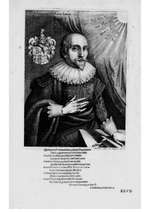
Sacred and Truly Christian Philosophy, or Cosmic Meteorology
Robert Fludd
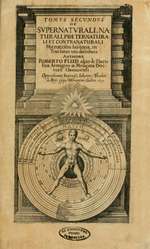
History of the Two Worlds, Volume 2
Robert Fludd
Mosaicall Philosophy
Robert Fludd
Three Canticles on the Harmony of the Whole World
Francesco Giorgi (Giorgio Veneto)
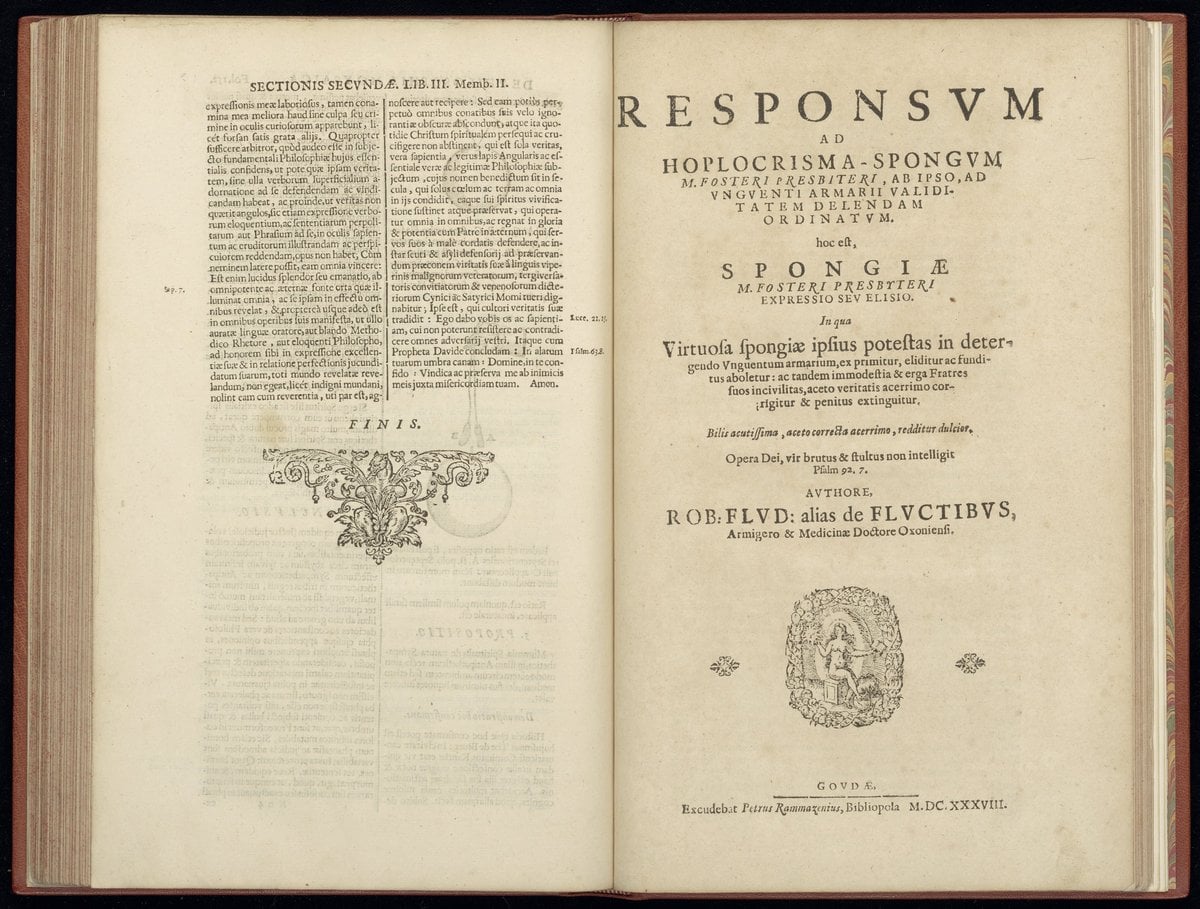
Response to Foster's Weapon-Salve Sponge
Fludd, Robert
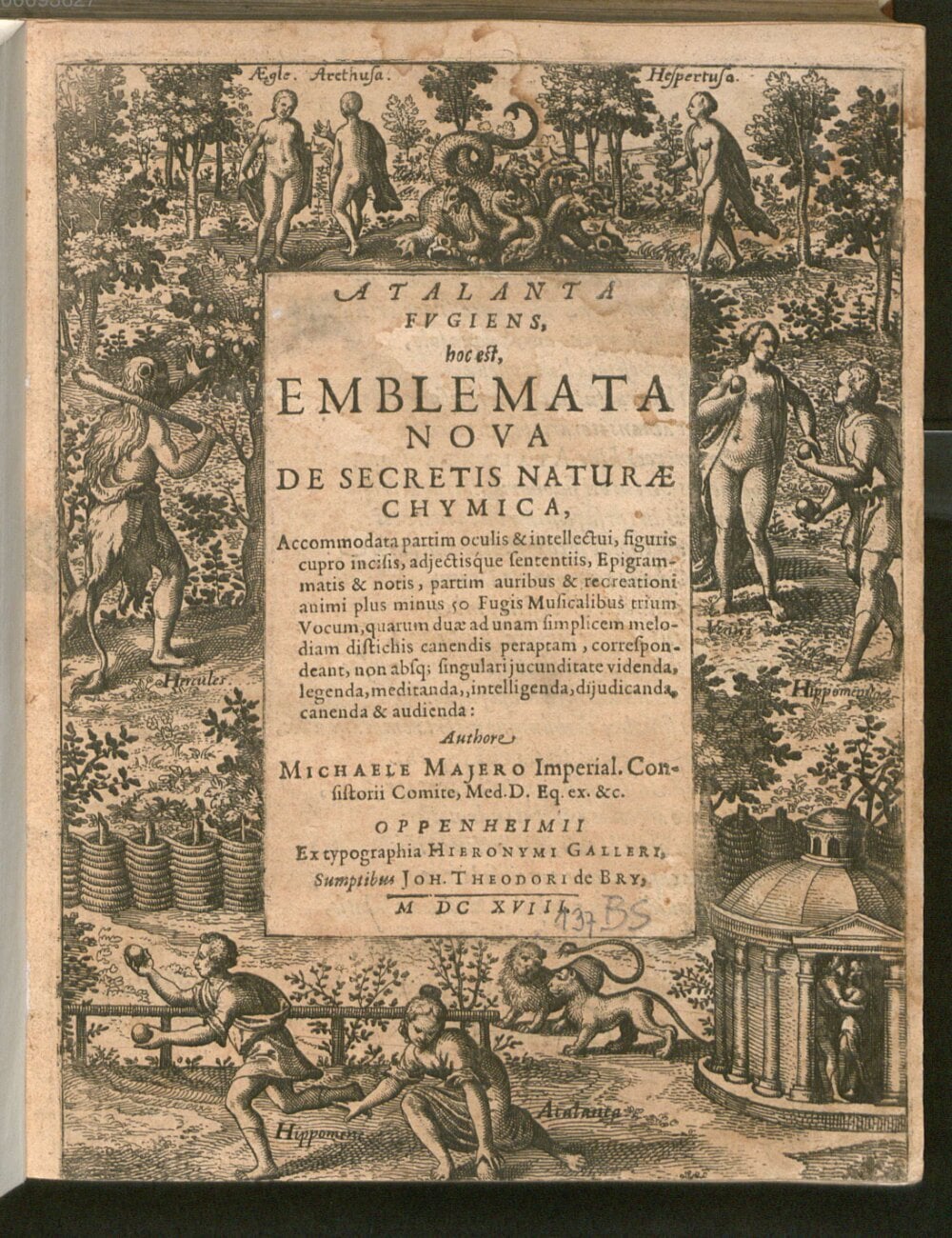
Michael Maier — Atalanta Fugiens (1618, Merian engravings)
Michael Maier
Harmonics
Ptolemy
Supplement to the Catalogue of Books Prohibited by the Aulic Commission
Fludd Medicina
Philosophia moysaica in qua sapientia & scientia creationis & creaturarum sacra veréque christiana (vt pote cujus basis sive fundamentum est unicus ille lapis angularis Iesus Christus) ad amussim & enucleaté explicatur
Fludd, Robert

Responsvm ad hoplocrisma-spongvm M. Fosteri presbiteri, ab ipso, ad vngventi armarii validi-tatem delendam ordinatvm
Fludd, Robert