Thrice-Greatest Hermes
There has been a Hermes-shaped hole in the SHWEP until now; this is partly because we wanted to save something special for Episode 100, and who better than the primordial Egyptian sage (for it is he), and partly because, while we have numerous Hermetica attested from the Hellenistic period onward...
Primary Sources

Homer, Iliad and Odyssey
The Iliad and the Odyssey stand as the foundational works of ancient Greek literature, offering a unique perspective on the intersection of fate and free will. Homer makes the bold claim that mortality, despite its inherent grief, is a state to be chosen over the empty ease of immortality. Through t

Vat.gr.1319
This manuscript challenges the modern separation of classical epic from theological inquiry. It argues that the wrath of Achilles and the death of Hector are central to understanding the nature of virtue and the reality of the soul. Readers will find a rigorous, at times medical, analysis of how hum

Cologny, Fondation Martin Bodmer, Cod. Bodmer 85
Codex Bodmer 85 offers a transformative reading of the Iliad, juxtaposing the raw brutality of the Trojan War with the sophisticated, often esoteric intellectualism of the 12th-century scholar John Tzetzes. By tracking the narrative from Polydamas’s ignored warnings to the desecration of Hector’s co

Commentary on Plato's Timaeus

Pal.lat.1328
Pal.lat.1328 is a monumental synthesis of Hermetic philosophy and medieval Arabic science, offering a rare glimpse into the systematic pursuit of the Philosopher’s Stone. The text makes the bold claim that alchemy is 'lower astronomy'—a sacred art where metals act as terrestrial stars and volatile s

Commentary on Plato's Timaeus

The Hermetic Corpus
Ott.lat.2074 is a breathtaking intellectual odyssey that bridges the gap between ancient Hermetic mystery and the rigorous structuralism of the Middle Ages. The text presents a world where the 'First Cause' is pursued through every available lens: the precision of Aristotelian categories, the negati

Reg.lat.1352
This manuscript is a monumental synthesis of classical literature and Hermetic philosophy, featuring the voices of Virgil, Servius, Apuleius, and the legendary Hermes Trismegistus. It boldly navigates the transition from the physical world of agriculture and apiculture to the metaphysical realms of

Homer and Quintus of Smyrna (Cambridge, Corpus Christi College, MS 81)
This manuscript acts as a bridge between the ancient Greek world and the medieval intellectual tradition. It presents the Iliad and the Odyssey with marginal notes that challenge the reader to look beyond the battlefield. You will see how early scholars interpreted the tension between mortal pride a

The Pimander of Hermes Trismegistus
Marsilio Ficino’s translation of the Pimander introduces the concept of Prisca Theologia, the original theology that predates the classical world. The work argues that human beings possess a dual nature: we are physically mortal but spiritually divine. Through dialogues between Hermes and the divine

The Divine Pymander
The Divine Pymander is a foundational pillar of Hermeticism, offering a visionary exploration of how humanity can transcend the shackles of Fate through Gnosis. Translated by the legendary Marsilio Ficino for the Medici court, this text presents the 'Prisca Theologia'—a primordial wisdom that prefig

On the Mysteries of the Egyptians
This work defends traditional religious practice against the skepticism of philosophers like Porphyry. Iamblichus asserts that the gods are not swayed by human emotions, but rather that rituals align the human soul with a pre-existing divine order. He defines the universe as a singular, living organ

Homeri Ilias, Odyssea, Batrachomyomachia, Hymni XXXII (Aldine)
This rare Greek text offers more than just the epic tales of the Iliad and the Odyssey; it represents a unique confluence of ancient heroism and Renaissance scholarship. Gifted from Philip Melanchthon to Martin Luther, this volume invites readers to explore the psychological depth of legendary figur

Complete Hermetica (1505 Paris Edition)
The Complete Hermetica (1505 Paris Edition) is a profound synthesis of Western esotericism, offering a transformative vision of humanity’s place in the cosmos. Through the legendary dialogues of Hermes Trismegistus, the text argues that ignorance is the ultimate plague of the soul, while true knowle

On the Mysteries of the Egyptians, Chaldeans, and Assyrians
Edited and translated by the Renaissance visionary Marsilio Ficino, 'Mysteries of Egypt' brings together the most influential voices of late antiquity—Iamblichus, Porphyry, and Proclus—alongside the mystical revelations of Hermes Trismegistus. The text argues that divine knowledge is not a product o

Four Volumes of Divine and Human Marvels
Symphorien Champier’s 'Four Volumes of Divine and Human Marvels' is a tour de force of Renaissance intellectualism, attempting to harmonize the miraculous with the rational. By placing the wonders of the Pentateuch alongside the natural observations of Aristotle and the geographical charts of Ptolem

Corpus Hermeticum with Pneumatica and Ocellus Lucanus
This text offers a rare synthesis of ancient mechanical ingenuity and the esoteric search for the divine. From Heron’s groundbreaking theories on the vacuum—which prefigure modern atomic theory—to Hermes Trismegistus’s meditations on the soul's ascent, the volume challenges the modern divide between

The Divine Pymander, Asclepius, and On the Mysteries
This monumental synthesis of Hermetic and Neoplatonic thought offers a radical roadmap for the soul’s ascent from the sensory 'multitude' to the intellectual 'One.' By weaving together the revelations of Hermes Trismegistus with the rigorous defenses of Iamblichus and the metaphysical depth of Procl

Pymander. Asclepius. On the Mysteries of the Egyptians. On Plato's Alcibiades, on the Soul and the Daemon. On Sacrifice.
This seminal volume brings together the core texts of the Hermetic and Neoplatonic traditions, asserting a unified lineage of 'ancient theology' (Prisca Theologia) that flows from Hermes Trismegistus to Plato. Readers will encounter bold claims about the human condition: that we are 'twofold' beings

On the Mysteries of the Egyptians - Pimander - Asclepius
This volume serves as a primary manual for understanding the mechanics of theurgy and the nature of the soul. It moves beyond simple philosophy to outline how ritual acts as a bridge between the mortal realm and the intelligible world. The authors argue that the soul is not a prisoner of the body bu

Commentary on Platos Timaeus
Chalcidius’ Commentary on Plato’s Timaeus is a landmark of intellectual history, serving as the primary bridge between ancient Greek philosophy and the Latin West. This text presents a universe built not by chance, but by a 'Demiurge' using the tools of geometry, musical harmony, and arithmetic prop

Preparation for the Gospel

Corpus Hermeticum and Plotinus' Enneads (Cambridge, Trinity College, MS B.9.9)
This rare collection documents the struggle of the human soul to recognize its divine origin while trapped in the sensible world. It presents the Hermetic tradition as an intuitive, performative realization of truth, contrasted against the systematic, dialectical path of Plotinus. The text argues th

Poimandres
This collection functions as a foundational guide for those seeking to understand the nature of God, the soul, and the cosmos. Hermes Trismegistus argues that the physical world is a veil, and that ignorance of one's own divinity is the ultimate human disaster. The text demands that you reject world

Homer (Cambridge, Christ's College, MS Rouse 358)
This volume houses the foundational texts of Western literature, tracing the fury of Achilles at Troy and the desperate wandering of Odysseus. It presents a world where divine whims shatter mortal lives and where individual glory often demands an unbearable price. Homer avoids simple morality, choos

On the Mysteries (De Mysteriis)
This volume presents the definitive Neoplatonic defense of ritual as a tool for spiritual transformation. It shifts the focus from mere intellectual debate to the practical application of sacred symbols. Iamblichus posits that man exists as a unique bridge between the material and the eternal. The t

Poimandres
Poimandres is a foundational pillar of Western esotericism that posits humanity as a 'divine animal' caught between the material and the eternal. Purported to be the work of the legendary Hermes Trismegistus—a syncretic fusion of the Greek Hermes and Egyptian Thoth—this tractate offers a radical cos

On the Mysteries of the Egyptians
‘On the Mysteries’ stands as a monumental defense of sacred action over mere intellectual speculation, primarily centered on Iamblichus’s high-stakes rebuttal to Porphyry’s skepticism. The text presents a staggering ontological map of the universe, populating the cosmos with an intricate hierarchy o

Biblical Palimpsest with Inquisition Abjuration Documents
The Hermetic Corpus stands as one of the most provocative syncretic works in history, blending the legendary insights of Hermes Trismegistus with the foundational theology of early Christianity. It makes the bold claim that spiritual liberation is a process of 'gnosis'—a transformation of the mind t
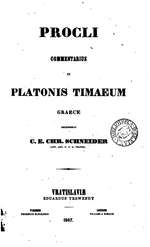
Commentary on Plato's Timaeus
This commentary serves as the definitive architecture of Neoplatonic thought, mapping the procession of all things from the One down to the physical realm. Proclus argues that the universe is not a product of blind chance but a living, ordered image sustained by divine providence. He treats the Tima

On the Mysteries (Thomas Taylor trans.)
In this foundational work of Neoplatonic thought, Iamblichus (writing as the Egyptian priest Abammon) offers a powerful rebuttal to the idea that religion is merely a human invention or a series of emotional delusions. By framing divine knowledge as an innate, eternal part of the soul's essence that

Iamblichus On the Mysteries
Iamblichus 'On the Mysteries' is a monumental work of Neoplatonic philosophy that shifts the spiritual search from mere intellectual speculation to the experiential power of theurgy. Writing as the Egyptian priest Abammon, Iamblichus responds to the skepticism of Porphyry, arguing that the divine ca

Timaeus (Greek text with commentary)
R.D. Archer-Hind’s edition of the Timaeus offers a radical reinterpretation of Plato’s later philosophy, arguing that this dialogue represents the culmination of Platonic metaphysics where the dualism of mind and matter is finally resolved. By identifying Being with a Universal Mind, the text presen

Timaeus
This text argues that the physical world is not an independent reality but a symbolic refraction of a universal soul. It solves the ancient deadlock between Herakleitos, who saw only constant change, and Parmenides, who saw only immutable stillness. By reconciling these opposites through the concept

Works of Plato (Republic, Timaeus, Critias)
Plato, the architect of Western philosophy, invites readers into a series of intellectual battles that remain startlingly modern. In these pages, he dismantles the cynical view that 'might makes right' and proposes a revolutionary vision of an ideal state where gender is no barrier to leadership and

Commentary on Plato's Timaeus, Vol. I
Proclus’s commentary on the Timaeus represents the pinnacle of Neoplatonic cosmology, offering a rigorous metaphysical map of the sensible world. He argues that the universe is not a chaotic assembly of matter, but a unified organism positioned between the eternal and the temporal through the 'middl

Commentary on Plato's Timaeus, Volume II
Ernst Diehl’s landmark edition of Proclus’ commentary is more than a philological triumph; it is a gateway to the ancient world’s most sophisticated interpretation of cosmic origins. By tracing the 'genealogy' of the text through the libraries of Renaissance cardinals and Byzantine scribes, Diehl re
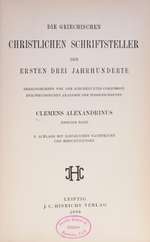
Clement of Alexandria II: Stromata I-VI
Clement argues that all wisdom originates from a singular divine source. He asserts that Greek philosophy serves as a vital tool for the believer, provided it is treated as a preparation rather than the final destination. The text demands intellectual rigor and warns against the vanity of mere debat

The Miscellanies, Books I-VI
This text operates as a masterclass in synthesis, bridging the gap between pagan philosophy and the rigorous demands of the Christian faith. Clement claims that the Greeks borrowed their greatest insights from Hebrew prophets, framing philosophy as a necessary preparation for a deeper understanding

Homer's Iliad (Books I-XII)
This volume presents a critical foundation for the first half of the Trojan War. It cuts through centuries of scholarly debate to place the reader directly in the camp of the disgruntled Achilles. The text forces a confrontation with the brutal reality of leadership, where a king's vanity often dict

The Hermetic Writings, Volume I: Texts and Translation
This volume is a monumental reconstruction of the Hermetic tradition, presenting a world where philosophy is not merely an academic exercise but a literal means of deification. Scott challenges the notion that these texts are mere 'occult rubbish,' instead revealing them as the profound response of

Homer Iliad I (Books 1-12, Loeb)
The Iliad is far more than a chronicle of the Trojan War; it is a profound exploration of the 'heroic code' and the devastating intersection of human emotion and divine will. This Loeb Classical Library edition presents the first half of Homer’s masterpiece, focusing on the catastrophic rift between