Dorian Greenbaum on Porphyry and Astrology
We are delighted to speak with Dorian Greenbaum, a leading historian of ancient astrology who has devoted special attention to Porphyry’s thought.
Primary Sources

Republic, Laws, and Timaeus
In this profound synthesis of 'Republic,' 'Laws,' and 'Timaeus,' Plato bridges the gap between the earthly and the divine. He argues that virtue is not merely a behavior, but a liberation of the soul achieved through alignment with the celestial sphere and the internalizing of 'common conceptions.'

Twenty-four Dialogues of Plato

Pal.gr.173
Pal.gr.173 functions as a practical manual for the soul. It moves beyond abstract theory to confront the actual stakes of living well in an unjust world. You will encounter a Socratic method that values clear thinking over popularity and moral integrity over political safety. The text forces a confr

On Paradoxical Machines
In 'On Paradoxical Machines,' Anthemius of Tralles offers a rare synthesis of high Euclidean theory and the practical grit of Byzantine engineering. As one of the master architects of Constantinople, Anthemius argues that the most profound challenges of the physical world—from the construction of bu

Urb.gr.31
Plato presents a brutal inquiry into the nature of justice and the health of the human soul. He argues that justice is not a social compromise but a requirement for inner harmony. You will discover why political leadership requires a rare, philosophical rigor that society almost always rejects. The

Vat.gr.126
This text provides a cold, clinical autopsy of the Peloponnesian War. Thucydides rejects supernatural explanations to focus exclusively on political mechanics and military strategy. He argues that the growth of Athenian power made conflict with Sparta a mathematical certainty. By studying his accoun

Plato . Platon . Platonis Dialogi
This collection captures the urgent, living spirit of Socratic inquiry at its most potent. Plato argues that we must abandon the distractions of the physical realm to grasp eternal truths. He warns that writing creates a dangerous illusion of wisdom by substituting memorized facts for internal under

Diversorum scriptorum Opera varia . Diaphoron syngrapheon Erga diaphora . Titulum corrige Platonis Opera omnia cum prolegomenis
Plato’s work functions as a complete framework for human conduct and cosmic understanding. He moves beyond simple dialogue to categorize the structure of reality, linking music, numbers, and political virtue to the divine. Each page challenges the reader to distinguish between fleeting sensory opini

Philosophical and Literary Miscellany
Vat.gr.2181 is a multi-layered interrogation of the Greek soul, weaving together the technical precision of poetic metrics with the subversive chaos of Old Comedy. Through the works of Aristophanes and the reflections of Porphyry, the manuscript explores the corrupting influence of money on the poli

Cologny, Fondation Martin Bodmer, Cod. Bodmer 136
In this legendary account of Socrates’ final day, Plato (narrated through Phaedo) investigates the profound relationship between the soul, the divine, and the morality of existence. The text presents a startlingly calm Socrates who argues that humans are the 'possessions of the gods,' framing life a

Greek philosophical miscellany (Cambridge, University Library, MS Dd.4.16)
This manuscript acts as a master key to Aristotelian thought, blending ethics, rhetoric, and political theory into a single argument about the human condition. It insists that happiness is not a feeling but an active practice of virtue that requires a lifetime to achieve. The text does not just theo

Plato De legibus . Platonos Nomoi . Ac praeterea alii eiusdem [Platonis] Dialogi tum gnesioi, tum nothoi, Definitiones, et epistolae
This work represents the peak of Plato's political thought, moving beyond abstract theories of justice to the mechanics of statecraft. He argues that laws are empty without the internal habits of virtue that only education can provide. Plato forces the reader to confront the reality that excess and

Problemata (Problems)
In this extraordinary synthesis of Neoplatonic philosophy and ancient medical praxis, Iamblichus presents the human body as a microcosm governed by the same harmonic principles as the stars. Moving beyond simple biography, the text offers a 'regimen according to reason,' tackling everything from the

Homer and Quintus of Smyrna (Cambridge, Corpus Christi College, MS 81)
This manuscript acts as a bridge between the ancient Greek world and the medieval intellectual tradition. It presents the Iliad and the Odyssey with marginal notes that challenge the reader to look beyond the battlefield. You will see how early scholars interpreted the tension between mortal pride a

On the Mysteries of the Egyptians
This work defends traditional religious practice against the skepticism of philosophers like Porphyry. Iamblichus asserts that the gods are not swayed by human emotions, but rather that rituals align the human soul with a pre-existing divine order. He defines the universe as a singular, living organ

Plato, Cratylus and Secular Florilegium
This work presents an unflinching look at the architecture of a well-lived life. It asserts that true virtue is not an action but a deliberate choice to align the soul with divine reason. By dismantling the common obsession with physical gratification, the text demands that we prioritize the health

On the Mysteries of the Egyptians, Chaldeans, and Assyrians
Edited and translated by the Renaissance visionary Marsilio Ficino, 'Mysteries of Egypt' brings together the most influential voices of late antiquity—Iamblichus, Porphyry, and Proclus—alongside the mystical revelations of Hermes Trismegistus. The text argues that divine knowledge is not a product o

The Complete Works of Plato Translated by Marsilio Ficino
This collection serves as a portal to the mind of Plato as seen through the eyes of one of the 15th century's most influential thinkers. Ficino treats philosophy not as a sterile academic exercise but as a medicine for the soul. He constructs an argument for the harmony between pagan wisdom and Chri

On Abstinence from Animal Food
In this seminal Neoplatonist treatise, Porphyry argues that the consumption of meat is a spiritual anchor that binds the human soul to material distraction. By refuting the anthropocentric claims of the Stoics and Epicureans, he posits that animals possess reason, sensation, and a share in the 'comm

Homer (Cambridge, Christ's College, MS Rouse 358)
This volume houses the foundational texts of Western literature, tracing the fury of Achilles at Troy and the desperate wandering of Odysseus. It presents a world where divine whims shatter mortal lives and where individual glory often demands an unbearable price. Homer avoids simple morality, choos

The Complete Works of Plato
This monumental edition of Plato’s *Opera Omnia* is more than a translation; it is a sacred bridge between Greek antiquity and Renaissance humanism, curated by Marsilio Ficino to harmonize philosophy with divine religion. Within these pages, readers will find the 'divine' Plato—a thinker who argues

On the Mysteries (De Mysteriis)
This volume presents the definitive Neoplatonic defense of ritual as a tool for spiritual transformation. It shifts the focus from mere intellectual debate to the practical application of sacred symbols. Iamblichus posits that man exists as a unique bridge between the material and the eternal. The t

The Complete Works of the Divine Plato
This 1590 edition of Plato’s 'Complete Works' serves as a spiritual and intellectual map of the human condition, viewed through the transformative Neoplatonic lens of Marsilio Ficino. Synthesizing classical dialectic with religious piety, the text argues that the ultimate end of man is to achieve a

Life of Pythagoras and Sentences on the Intelligibles
Porphyry’s 'Life of Pythagoras and Sentences on the Intelligibles' offers a rare window into the ancient quest for spiritual deification through intellect and discipline. By blending a hagiography of Pythagoras—complete with his rejection of the 'impure' Cylon and his cryptic dietary bans—with a rig

Plato Euthyphro, Apology, Crito, Phaedo, Phaedrus
Plato documents the final days of his teacher, Socrates, as he confronts a city that wants him dead. The text moves from the courtroom to the prison cell, eventually shifting into deep metaphysical inquiry. It argues that philosophy is nothing less than the practice of dying. By rejecting passive wr

On Abstinence from Animal Food
In 'On Abstinence from Animal Food,' Porphyry delivers a scathing critique of human gluttony, arguing that the consumption of meat is a 'nail' that binds the soul to the material body and prevents divine communion. Rejecting the anthropocentric views of the Stoics and Epicureans, Porphyry synthesize

Complete Plato (Thomas Taylor trans.)
Thomas Taylor’s 'Complete Plato' is a monumental achievement that offers more than a mere translation; it provides the 'key' to the Platonic system through the profound insights of ancient Neoplatonic commentators. Taylor argues that philosophy is a divine discipline designed to lead the soul away f

Introduction to Plato
Thomas Taylor’s 'Introduction to Plato' is a profound reclamation of ancient Neoplatonic wisdom, asserting that Plato’s work is a systematic, scientific ladder to the divine rather than mere literary dialogue. Taylor boldly positions the 'One' as a superessential principle that transcends even the C

On the Pythagorean Life (De Vita Pythagorica)
This work presents Pythagoras not merely as a mathematician, but as a semi-divine reformer who sought to align human life with the order of the cosmos. It details a rigorous path of purification through music, diet, and strict communal ethics. Readers will encounter a tradition that treats education

On the Pythagorean Life
This expansive 1815 collection serves as the definitive gateway to the Pythagorean tradition, weaving together the biographies of Iamblichus and Porphyry with profound scholarly commentary. Readers will encounter a Pythagoras who is part scientist and part shaman—a man who disciplined his soul throu

Life of Pythagoras (Iamblichus)
In this classic translation by Thomas Taylor, Iamblichus presents Pythagoras as a semi-divine figure whose 'Pythagoric Life' serves as a blueprint for human excellence. The text moves beyond simple biography to synthesize ancient mysteries from Egypt and Babylon with a rigorous ethical framework tha

On the Mysteries (Thomas Taylor trans.)
In this foundational work of Neoplatonic thought, Iamblichus (writing as the Egyptian priest Abammon) offers a powerful rebuttal to the idea that religion is merely a human invention or a series of emotional delusions. By framing divine knowledge as an innate, eternal part of the soul's essence that

Iamblichus On the Mysteries
Iamblichus 'On the Mysteries' is a monumental work of Neoplatonic philosophy that shifts the spiritual search from mere intellectual speculation to the experiential power of theurgy. Writing as the Egyptian priest Abammon, Iamblichus responds to the skepticism of Porphyry, arguing that the divine ca

Select Works of Porphyry
Select Works of Porphyry offers a rigorous and poetic manual for spiritual transcendence that remains strikingly relevant today. Porphyry presents a radical defense of 'ethical vegetarianism,' arguing that the slaughter of animals is historically and spiritually linked to human warfare and moral dec

Works of Plato
Plato’s 'The Laws' represents a monumental shift in the philosopher's journey, moving from the idealism of his youth toward a rigorous, practical exploration of legislation and social order. Translated by George Burges in 1880, this edition provides a meticulous 'literal version' that preserves the

Three Short Works (including Life of Pythagoras)
This volume, meticulously edited by the legendary August Nauck, preserves the surviving fragments of Porphyry’s most personal and provocative works. At its core, the text challenges the foundations of ancient Greek religion, replacing blood-soaked sacrifices with a philosophy of internal purity and

Phaedo
The Phaedo captures the final conversation of a man facing his own execution with absolute calm. Socrates argues that the philosopher spends their entire life preparing for death because the body acts as a prison for the truth. He maintains that true knowledge belongs only to the soul, which must ev

The Republic
Most people act justly only because they fear the consequences of getting caught. Plato guts this assumption by creating a theoretical city where justice is defined not by laws, but by the internal harmony of the individual soul. He argues that political stability requires rulers who hate power and

Works of Plato (Republic, Timaeus, Critias)
Plato, the architect of Western philosophy, invites readers into a series of intellectual battles that remain startlingly modern. In these pages, he dismantles the cynical view that 'might makes right' and proposes a revolutionary vision of an ideal state where gender is no barrier to leadership and

Plato: Laches, Protagoras, Meno, Euthydemus
Plato’s dialogues remain the standard for critical thinking because they force the reader to defend their own assumptions. This collection captures Socrates at his most agile, moving from the definition of courage to the nature of knowledge itself. You will see him challenge the Sophists, whose reli

Works (Laws, Definitions)
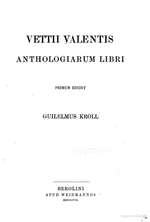
The Anthology (Anthologiarum Libri)

Euthyphro, Apology, Crito, Phaedo, and Phaedrus
This collection captures the final days of history's most famous provocateur. Socrates turns his own trial into a masterclass on how to live and die with integrity. He dismantles the hollow arguments of his accusers and shows that true wisdom starts with the admission of ignorance. The text forces y

Plato: Statesman and Philebus
Plato does not merely lecture; he forces his readers to think alongside his characters. In these texts, he argues that the best kind of power is not found in static codes but in the flexible, living intelligence of the expert. He dismantles the idea that pleasure or intellect alone can anchor a huma