The Great God Pan Lives: Introducing the Athenian Academy
The Athenian Academy has a kind of legendary status as a last bastion of ‘paganism’ in the Roman world.
Primary Sources

Proclus in Politiam Platonis . Proklos eis Politeian tou Platonos
In this commentary, the last great Neoplatonist philosopher reconciles the poetic genius of Homer with the rigorous logic of Plato. Proclus argues that myths are not fabrications but deliberate veils for ineffable truths. He maintains that true music and rhythm serve as the structural foundation for

Origen, Homiliae in Psalmos (29 homilies, discovered 2012)
These homilies represent a rare direct encounter with Origen's preaching voice. He treats the Psalms not as ancient poetry, but as a map for internal warfare and divine union. The text challenges the reader to categorize their own thoughts and desires as either fleeting shadows or eternal seeds. Ori

The Enneads

The Enneads
The Enneads is a towering achievement of late antiquity that reshaped the trajectory of Western and Near-Eastern thought, influencing everything from Christian theology to Islamic mysticism. Plotinus presents a bold metaphysical hierarchy—the One, the Intellect, and the Soul—arguing that true happin

Plotinus . Plotinos . Scilicet Plotini Enneades VI et Maximi Tyrii Dissertationes XI
Plotinus strips away the distractions of the physical world to reveal the singular, transcendent source of all being. The text documents the final philosophical ascent of a man who viewed his own body as a temporary, secondary image. You will encounter arguments that collapse the boundaries between

Pindarus . Pindaros . Adde Theocriti Idyllia, Lycophronis Cassandrae fragmentum, et alia aliorum excerpta
This volume serves as a bridge between the technical precision of classical poetry and the profound questions of moral philosophy. It treats the works of Pindar, Theocritus, and Lycophron not merely as literature but as blueprints for living a virtuous life. The text challenges the reader to conside

Plutarchi Vitae . Ploutarchou Bioi

Proclus: Platonic Theology and Elements of Theology
This work defines the hierarchy of the universe through the eyes of one of antiquity's final great thinkers. Proclus argues that reality is not a random collection of objects but a systematic emanation from the One. He explains how human intellect can bridge the gap between mortal limitations and et

Aristophanes . Aristophanes
These plays are not dusty relics. They are blunt instruments of social critique that target the hypocrisy of politicians, the moral rot of new educational fads, and the desperate greed of the common citizen. Aristophanes uses humor to puncture the self-importance of the ruling class and the intellec

Arist. De arte poetica . Aristotelous Peri poietikes . Ac praeterea Plutarchi, Herodoti, Dionis Chrysostomi, Libanii, Menandri, ac Demetrii Phalerei quaedam
Aristotle changed how we think about storytelling, but this volume goes much further. It includes essential guidance from Plutarch and Demetrius on how to read, write, and think critically. You will discover why poetry is more philosophical than history and how to spot a writer who is trying to dece

Hieroclis Expositio versuum Pythagorae qui aurei dicuntur . Hermes Trismegistus . Adde etiam Hermes Trismegistus, Apuleio interprete
Hierocles provides a rigorous manual for navigating the soul's ascent from material distraction to intellectual clarity. He argues that human suffering is not a divine punishment but a result of our own misalignment with natural law. By practicing nightly self-examination, we can transform the body

The Histories of Herodotus and Works of Plutarch and Gemistus Plethon
The authors examine why civilizations collapse and how leaders lose their grip on reality. By juxtaposing Herodotus's accounts of imperial hubris with the metaphysical arguments of Plethon and Plutarch, the text bridges the gap between ancient storytelling and systematic philosophy. You will encount

Plutus and Clouds with Commentaries
These plays are not just ancient relics. They are aggressive, funny, and dangerous critiques of how societies prioritize money over morality. Aristophanes argues that when wealth is blindly distributed, the result is social rot and the abandonment of tradition. He challenges the reader to consider w

The Enneads
The Enneads is a monumental achievement in Western philosophy, serving as the bridge between classical Hellenic thought and the burgeoning spiritual traditions of Late Antiquity. Plotinus offers a unique perspective on reality, viewing the physical world as a mere 'image of an image' while positing

Parallel Lives
Bodleian Library MS. Barocci 226 offers a profound exploration of leadership, civic identity, and the transition from tyranny to democracy. Plutarch navigates the 'Growing Argument' through the legendary Ship of Theseus while providing a harrowing account of the Roman Republic's earliest days—where

Plotinus, Enneads I-VI; Porphyry, Vita Plotini
This collection, organized by Porphyry, serves as a direct guide for anyone seeking to understand the soul's origin and ultimate return to the One. Plotinus treats philosophy not as an academic exercise, but as a practical path toward enlightenment. He argues that the physical world is merely a shad
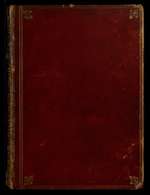
Aristophanes, Plutus, Nubes and Ranae (Cambridge, Trinity College, MS R.1.42)
Aristophanes turns the theater into a courtroom where money, gods, and philosophers stand trial. He asks if human virtue can survive in a world where the god of Wealth finally regains his sight. Through the eyes of a scribe in Crete and the pens of later scholars, this codex tracks the survival of c

Contra Celsum (1481 editio princeps)
This editio princeps reveals more than a theological argument. It captures the tension between Humanist scholarship and the existential dread caused by the Ottoman advance into Italy. Origen argues that Christianity survives not through the ornate rhetoric of philosophers, but through the lived powe
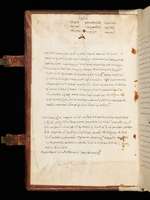
Bern, Burgerbibliothek, Cod. 402
Cod. 402 reads like a laboratory notebook from the ancient world, bridging the gap between abstract philosophy and hard physical observation. The authors reject pure speculation in favor of explaining how wind patterns, mineral properties, and biological functions actually operate. They treat the un

Quaestiones Convivales (Moralia 46 = Plan. 78) (defective at the end and with lacunae) (Cambridge, University Library, MS Nn.2.39)
This text invites you to pull up a chair at a table populated by the greatest minds of antiquity. Plutarch bridges the gap between the trivial and the cosmic, arguing that how we dine, drink, and converse reflects our deepest moral character. He treats the symposium not as a place for simple revelry
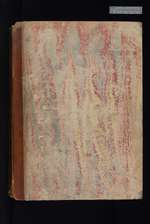
Greek texts on music, mathematics and astronomy (Cambridge, University Library, MS Kk.5.26)
The text functions as a bridge between the physical experience of sound and the abstract laws of the cosmos. Aristoxenus challenges his predecessors by arguing that music is a product of human perception rather than rigid instrument tuning. Following his lead, the manuscript transitions into a manua

Proclus' Commentary on Plato's Republic (Cambridge, St John's College, MS F.15)
This commentary is not merely an analysis of political theory. It is a guide to the Neoplatonic universe where justice serves as a structural harmony for both the city and the individual soul. Proclus argues that myths are not just stories, but symbolic veils designed to hide profound divine truths

The Histories and Parallel Lives
Herodotus treats the past as a global crime scene where oracles mislead kings and empires vanish overnight. Plutarch then shifts the focus to the individuals behind the power, weighing the moral worth of lawgivers and tyrants alike. Together, they document how the wheel of fortune turns regardless o

Corpus Hermeticum and Plotinus' Enneads (Cambridge, Trinity College, MS B.9.9)
This rare collection documents the struggle of the human soul to recognize its divine origin while trapped in the sensible world. It presents the Hermetic tradition as an intuitive, performative realization of truth, contrasted against the systematic, dialectical path of Plotinus. The text argues th

Proclus, Theologia Platonica; Michael Psellos
This essential exploration of Neoplatonic thought bridges the gap between Platonic philosophy and the mystical traditions of Orpheus and the Chaldeans. Proclus and Psellos argue that the universe is not a random collection of matter, but a sophisticated hierarchy governed by the interplay of 'Limit'

Enneads (1580 Greek-Latin, Ficino trans.)

The Enneads
The Enneads represents the pinnacle of Neoplatonic thought, a monumental synthesis where logic meets mysticism. Through the lens of Marsilio Ficino’s Renaissance commentary, Plotinus’s work is presented as a 'philosophical bait' designed to lead the intellectual mind toward religious faith through p

The Enneads

Against Celsus
This 1658 edition presents the definitive intellectual struggle between early Christian thought and pagan philosophy. Origen systematically dismantles the arguments of Celsus by shifting the debate from mere rhetoric to the moral transformation of the human soul. He argues that the life and death of

Dialogue Against the Marcionites, Exhortation to Martyrdom (Wettstein 1674)
This 1674 edition of Origen’s work serves as a foundational pillar of early Christian apologetics, offering a masterclass in theological debate and spiritual endurance. Through a rigorous dialectic between the character Adamantius and the heretic Marcion, Origen defends the integrity of the physical

Origen Philocalia (Greek)
In this definitive collection edited by William Spencer, readers encounter the first great synthesis of Greek philosophy and Christian theology. Origen does not merely rebut charges of magic and sedition; he builds a comprehensive metaphysical framework that justifies 'simple faith' as a moral medic

Proclus (Cambridge, Trinity College, MS O.5.11)
This manuscript preserves the rigorous dialectic of one of antiquity’s final great minds. Proclus examines the One not as a physical object, but as the absolute origin and end of every existing thing. He challenges the reader to consider how a source can be responsible for all diversity without beco

On Isis and Osiris
In this treatise, Plutarch rescues Egyptian theology from the twin errors of superstition and skepticism. He argues that myths about dismemberment and divine struggle are not accounts of ancient kings, but symbolic representations of moral and metaphysical forces. By mapping these stories onto the b

Platonic Theology (Thomas Taylor trans.)
This work functions as a complete, scientific manual for navigating the hierarchy of the universe. Proclus rejects the idea that the divine is beyond our reach; instead, he provides a rigorous path for the human soul to return to its source. Readers will encounter a vision where stars are living bei
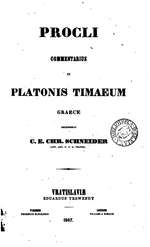
Commentary on Plato's Timaeus
This commentary serves as the definitive architecture of Neoplatonic thought, mapping the procession of all things from the One down to the physical realm. Proclus argues that the universe is not a product of blind chance but a living, ordered image sustained by divine providence. He treats the Tima

Commentary on the Timaeus
Proclus offers a breathtakingly dense metaphysical defense of Plato’s cosmology, positioning the soul as the critical 'middle nature' bridging the eternal and the material. By weaving together Pythagorean mathematics, Orphic theology, and rigorous dialectic, he argues that the cosmos is not a random

The Elements of Theology
The Elements of Theology functions as a rigorous, axiomatic guide to the structure of reality. Proclus assumes that if a first cause exists, all subsequent levels of being must unfold with mathematical necessity. He maps the path from the singular source of all things down to individual souls and ma

Opera Omnia I (Delarue-Lommatzsch)
This volume of Origen’s 'Opera Omnia' offers a rare synthesis of rigorous textual criticism and soaring spiritual exegesis. Drawing from ancient manuscripts across the Vatican, Stockholm, and Cambridge, the text reconstructs Origen’s masterful commentary on the entry into Jerusalem. Origen argues th

Plotini Opera Omnia cum Ficini commentariis
Plotini Opera Omnia represents the pinnacle of Neoplatonic thought, blending the original 3rd-century mystical insights of Plotinus with the intellectual fire of the Renaissance philosopher Marsilio Ficino. This text serves as a rigorous bridge between the classical logic of Plato and the burgeoning

Complete Works XVIII: Against Celsus I-IV (Lommatzsch)
In 'Contra Celsum I-IV,' Origen provides a groundbreaking response to the first major intellectual assault on Christianity. Rather than relying solely on tradition, Origen deconstructs Greek mythology as morally bankrupt while elevating the historical and ethical superiority of the Mosaic law and th

Complete Works XIX: Against Celsus V-VIII (Lommatzsch)
This work captures a master of Greek logic turning his focus toward his fiercest opponent. Origen refuses to retreat into silence; he dissects every charge Celsus brings against the Christian faith. He tackles the paradox of the incarnation, the validity of biblical allegory, and the nature of human

Proclus: Commentary on Plato's Timaeus

Patrologia Graeca vol. 12: Origenes II
This text presents the early church's most intense battle over how to read the Bible. Origen argues that the literal meaning often collapses into absurdity, forcing the reader to search for a deeper, allegorical truth. He connects the soul's journey to the events of Genesis and Exodus, claiming the

Plutarch's Morals, Vol. 4 (includes Isis and Osiris)
In this compelling volume of 'Morals,' Plutarch investigates the enigmatic mechanics of the 'spirit of divination,' arguing that prophecy is as much a physical phenomenon as it is a divine one. By examining the transformative power of natural vapors and the 'dry' temperament of the soul, he suggests

Plutarch's Morals, Vol. 5
This volume provides a fascinating window into Plutarch’s dual mastery of political ethics and natural philosophy. Plutarch moves beyond mere biography to offer bold claims about the physical world—arguing that cold is an active force rather than a mere absence of heat, and critiquing the Stoic visi

Remains of the Hexapla, Vol. I (Field Critical Edition)
Frederick Field’s work is the definitive guide to the scattered fragments of Origen’s Hexapla. It moves beyond standard historical accounts to identify the specific translation philosophies of figures like Aquila, Symmachus, and Theodotion. The text argues that ancient translators were driven by com

Parallel Lives
The Parallel Lives strips away the polished marble of history to reveal the raw, often contradictory, motives of ancient legends. Plutarch acts as both biographer and moralist, using his subjects as mirrors to test the virtues of justice, ambition, and restraint. He forces readers to grapple with th

Origenes: Contra Celsum (Greek Critical Edition)

Commentary on Plato's Timaeus, Vol. I
Proclus’s commentary on the Timaeus represents the pinnacle of Neoplatonic cosmology, offering a rigorous metaphysical map of the sensible world. He argues that the universe is not a chaotic assembly of matter, but a unified organism positioned between the eternal and the temporal through the 'middl

Commentary on Plato's Timaeus, Volume II
Ernst Diehl’s landmark edition of Proclus’ commentary is more than a philological triumph; it is a gateway to the ancient world’s most sophisticated interpretation of cosmic origins. By tracing the 'genealogy' of the text through the libraries of Renaissance cardinals and Byzantine scribes, Diehl re

The Enneads of Plotinus Vol. I
The Enneads of Plotinus, translated with poetic intensity by Stephen McKenna, stands as the foundation of Neoplatonism and a bridge between classical Greek logic and Western mysticism. Plotinus offers a bold metaphysical hierarchy—The One, the Intellectual-Principle, and the Soul—arguing that our tr

Damascius: Puzzles and Solutions Concerning the Primary Causes
Damascius, the final head of the Platonic Academy, writes from the precipice of a disappearing world. He argues that our standard tools of logic and naming are useless when applied to the First Principle. Instead of constructing a new system, he tears down existing ones to expose the limits of what