A Secret History of Secret History, Part II
In this episode, part two of our overambitious survey of western esotericism, we look at the second half of the summary borrowed from the Centre for the History of Hermetic Philosophy at the University of Amsterdam, which mentions:
Primary Sources

The Signature of All Things
The Signature of All Things is a profound journey into the 'Language of Nature,' asserting that the external world is a legible map of internal spiritual truths. Böhme, the legendary 'Teutonic Philosopher,' argues that true spiritual understanding is impossible without recognizing the 'Signature'—th

The Way to Christ
The Way to Christ is not a book of theory but a manual for spiritual combat. Böhme argues that the kingdom of heaven is an internal reality accessible only through the total death of the self-will. He rejects superficial rituals and historical faith, demanding instead a radical, lived imitation of C

The Signature of All Things
Jacob Boehme, known as the 'Teutonic Philosopher,' presents a breathtaking vision of cosmogony where the visible world is the 'spoken word' of an eternal, invisible Will. By decoding the 'Language of Nature,' Boehme argues that man is a microcosm containing the properties of three worlds, caught in

40 questions concerning the soule. Propounded by dr. Balthasar Walter
Jacob Boehme’s 'Forty Questions Concerning the Soul' stands as a monumental work of Western esotericism, offering a visionary map of the human spirit’s journey from the 'Eye of Eternity' to the afterlife. Unlike the rigid scholastics of his time, Boehme—a self-taught shoemaker—claims a direct revela

The Epistles of Jacob Behmen
The Epistles of Jacob Behmen is a foundational text of Christian mysticism that challenges the reader to move beyond 'lip-service' and historical belief toward a 'substantial' internal transformation. Böhme, known as the Teutonic Philosopher, argues that true Christianity is an organic process of 'T

The epistles
Jacob Boehme’s 'The Epistles' serves as a profound manual for spiritual regeneration, written by a man who claimed to see more of God's mysteries in fifteen minutes than a scholar could find in a lifetime at university. Boehme boldly challenges the religious institutions of his day—which he labels '

Signatura rerum: or the signature of all things
In 'Signatura Rerum,' the 17th-century mystic Jakob Böhme (the 'Teutonic Philosopher') presents a radical vision of the cosmos as a living symbol of eternity. Böhme argues that the physical world is not a mere accident but a manifestation of spiritual forces—Sulfur, Mercury, and Salt—locked in a cos

Concerning the election of grace
In this profound metaphysical treatise, Jacob Boehme challenges centuries of theological stagnation by redefining God not as a distant judge, but as an eternal 'Nothing' that manifests through a 'playful struggle of love.' He boldly argues that evil and hardening are not products of divine decree, b

Aurora, or The Day-Spring
This book acts as a primer for navigating the spiritual forces that underpin physical reality. Böhme rejects academic abstraction in favor of direct revelation from the Holy Spirit. He argues that every person contains a microcosm of the divine trinity. You will learn how the fall of Lucifer created

Mysterium Magnum
Mysterium Magnum serves as a map for the soul seeking to understand why God created a world filled with both beauty and suffering. Böhme claims that the visible universe is a magical birth originating from divine desire. He argues that the duality of love and anger is the foundation of all existence

The fifth book of the authour...of the becoming man
In this profound work, the 'Teutonic Philosopher' Jacob Boehme offers a radical, metaphysical reinterpretation of the Incarnation that transcends mere historical narrative. He argues that the 'Becoming Man' of Christ is a blueprint for the spiritual rebirth of every individual, requiring a literal '

The remainder of books. Englished by John Sparrow
This volume captures Böhme at his most defiant and most pastoral, defending his mystical 'Light of Nature' against the venomous critiques of the 17th-century academic elite. By refuting his adversaries, Böhme articulates a profound spiritual psychology—most notably in his 'Treatise of the Four Compl

Theosophical Writings

The Complete Theosophical Works of Jakob Böhme
Jakob Böhme: Alle Theosophische Wercken is a monumental collection of mystical insights from one of history’s most unlikely theologians. A simple shoemaker by trade, Böhme makes the bold claim that divine wisdom is granted to the humble rather than the learned, sparking a fierce conflict between raw

The Way to Christ
The Way to Christ is a profound journey into the heart of Christian theosophy, written by a man whose visionary 'illuminations' allowed him to see the 'Byss and the Abyss' of all existence. Boehme’s central thesis is that salvation is not a historical belief or an external ritual, but a metaphysical

Beschreibung der drey Principien göttliches Wesens
Jakob Böhme’s 'The Three Principles of Divine Essence' is more than a theological treatise; it is a daring descent into the mechanics of existence. Böhme claims to reveal the hidden history of the cosmos, from the 'without-origin' birth of the Trinity to the catastrophic fall of Lucifer. His perspec
De signatura rerum, das ist: Von der Gebuhrt und Bezeichnung aller Wesen

Theosophical Writings
Bartholomeus Scleus delivers a fiery, mystical manifesto that strips away the veneer of institutional religion to reveal the 'Inner Ground' of spiritual reality. Contending that true salvation is an internal 'Birth of God' rather than an adherence to external dogmas or 'stone churches,' Scleus launc
Theosophick philosophy unfolded
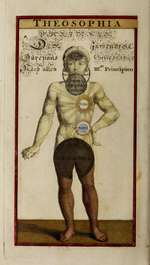
A Short Opening of the Three Principles and Worlds in Man
Gichtel presents a demanding path for the seeker who is tired of superficial religion. He claims that humans are tripartite beings trapped in cycles of their own making. By turning inward, you move past the ego to access the divine light. The text serves as a map for those who want to dismantle self

History of Jacob Boehme, the Shoemaker of Görlitz
Johann Sigismund von Schweinichen’s account of Jacob Böhme is a profound exploration of the conflict between direct spiritual revelation and the rigid structures of academic and clerical authority. Böhme, the 'Teutonic Philosopher,' argues that the Holy Spirit is not the exclusive property of the un

Theosophical Hall of Wonders
Richtenfels’ 'Theosophischer Wunder-Saal' is a daring synthesis of Hermetic science and Christian mysticism that challenges the rationalism of its age. By reimagining the universe as a singular 'Breath of Life' acting upon a passive material matrix, the author provides a roadmap for understanding ev

The Way to Christ
The Way to Christ is an explosive manual for spiritual transformation, written by a simple shoemaker whose mystical awakening allowed him to 'see through' the chaos of existence into the divine essence of all things. Böhme boldly claims that true spiritual knowledge is a gift of the Spirit that requ
Theosophia practica halten und kaempfen

Theosophy Revealed, Volume 5
Jakob Böhme, the 'Teutonic Philosopher,' presents a radical vision where the universe is born from the tension between a divine 'Yes' of love and a natural 'No' of self-will. In this volume, Böhme navigates the abyss of non-being to explain the birth of the Trinity, the fall of Lucifer as a failed '

Theosophia Revelata (Complete Divine Writings)
Jakob Böhme’s 'Theosophia Revelata' is a daring plunge into the 'Mysterium Magnum,' proposing that the human soul is a microcosm containing both the heights of the Angelic World and the depths of the Abyss. Böhme rejects the 'historical faith' of the academic elite—whom he dismisses as 'Sophists'—ar

The Way to Christ
The Way to Christ is a provocative exploration of Christian mysticism that replaces external ritual with an 'inner temple' of the heart. Boehme argues that the human soul is a 'magical fire' caught between divine wrath and the radiant light of Maiden Sophia (Divine Wisdom). By detailing the process

On the Election of Grace
Jacob Boehme’s 'On the Election of Grace' is a radical reimagining of divine sovereignty that challenges the sectarian dogmas of his time. Boehme argues that God, in His primordial essence, is the 'Ungrund'—a nature-less Abyss of pure goodness—and that the concepts of wrath and election are not arbi

The Signature of All Things
Jacob Böhme’s 'De Signatura Rerum' is a foundational pillar of Western esotericism that bridges the gap between alchemy, theology, and psychology. Böhme argues that the entire physical world is a 'chest of the Spirit,' where every form acts as a musical instrument waiting to be played by the Divine

Six Theosophic Points
This foundational work of Christian mysticism presents a bold metaphysical cosmology where the human soul serves as the pivotal mirror of the Godhead. Böhme argues that existence is a dialectic between darkness and light, driven by the 'Magical' power of the will, which must choose between self-cent

A Brief Opening of the Three Principles and Worlds in Man
Johann Georg Gichtel’s 'A Brief Opening of the Three Principles and Worlds in Man' is a provocative manifesto of mystical theosophy that challenges the boundaries of traditional faith. Drawing on the visionary tradition of Jacob Böhme, Gichtel argues that the human soul is a volatile battlefield bet

Important truths. With extracts from the way to Christ by Jacob Boehme
This profound synthesis of mystical theology challenges the reader to distinguish between the 'accessories' of religion and its one true essential: the transformative Love of God. By contrasting the limitations of natural reason with the boundless clarity of divine faith, the text argues that true C

Aurora, or Day-Spring: The Root of Philosophy, Astrology, and Theology
Jacob Böhme’s Aurora is a foundational masterpiece of Western mysticism that bypasses academic elitism to offer a direct, personal revelation of the Divine. Böhme argues that true wisdom is found not in the 'literal word' of scholars, but through a spiritual 'breaking-through' into the living heart

Dawn rising
Written by a self-taught mystic who claimed direct divine inspiration, 'Dawn Rising' (Aurora) offers a radical reimagining of the universe as a living, breathing 'Precious Tree' rooted in the dual qualities of good and evil. Boehme bypasses traditional scholarship to provide an anatomical look at th

Works of Jacob Behmen (William Law Edition, 4 vols)
This edition by William Law captures the intense, visionary prose of a man who claimed to see the inner heart of nature. Böhme argues that everything in existence carries a visible mark, or signature, of its divine origin. He rejects abstract theology in favor of a direct, experiential path that uni

Introduction to Primitive Cabalistic Science
This remarkable text reconstructs an ancient system of 'Gabala,' positioning it not as mysticism, but as a rigorous mathematical philosophy derived from Egyptian and Pythagorean roots. The author argues that the universe is a harmonic machine governed by 'Great Year' cycles of 800 years, where the c

The Way to Christ
The Way to Christ is a profound metaphysical manifesto that redefines the Christian journey as an internal alchemical process of 'Gelassenheit' or total resignation. Jacob Boehme boldly claims that salvation is not an external legal transaction, but a literal regeneration of the soul—a 'new birth' t

Forty Questions on the Soul
Jacob Boehme’s 'Forty Questions' is a towering work of mystical philosophy that bypasses traditional dogma to map the 'philosophical globe' of the soul. Boehme argues that the soul is an eternal, spherical 'Eye of God' structured by a cross of fire and light, possessing an inherent spiritual power t

Anthology
Jacob Böhme’s Anthology (Blumenlese) offers a radical reinterpretation of Christian theology, viewing biblical history not merely as past events, but as a living map of the human psyche. Böhme’s unique perspective asserts that true spiritual knowledge is found only by 'dying to selfhood,' a process

Practical Theosophy
Johann Georg Gichtel offers a visceral, first-hand account of the mystical path, moving beyond mere theology into a 'Practical Theosophy' of internal rebirth. Drawing on the cosmological framework of Jacob Boehme, Gichtel argues that man is a 'diabolical animal' whose selfish will must be pulverized