Jesus the Magician? Interrogating Ancient and Modern Discourses of Ritual Power in the Gospels
In this episode, we try to cover some of the main strands of evidence preserved in the New Testament for the idea that Jesus was practicing something we can usefully call ‘magic’.
Primary Sources
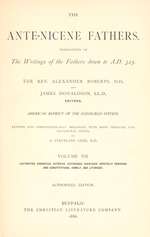
Ante-Nicene Fathers, Vol. 7 (Lactantius, Venantius, Victorinus, Dionysius)
This volume captures a pivotal moment when the ancient world collided with the rising tide of Christianity. Lactantius argues that the pagan gods were merely mortal rulers whose stories were twisted into mythology to deceive the masses. He insists that true wisdom and religious devotion are insepara

Nicene and Post-Nicene Fathers, Series 1, Vol. 1 (Augustine: Confessions, Letters)
Philip Schaff compiles an essential record of the early Church through the eyes of Eusebius, the man who first mapped out Christian history. The text tackles the messy reality of the Arian controversy and the precarious rise of Constantine. It forces you to confront the divide between a faith under
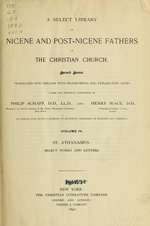
Nicene and Post-Nicene Fathers, Series 2, Vol. 4 (Athanasius: Select Works and Letters)
This collection presents the primary documents of the Arian controversy, documenting the intense friction between early Christian faith and imperial politics. Philip Schaff and Henry Wace provide a rigorous framework for understanding how Athanasius navigated exile, slander, and theological crisis t

Nicene and Post-Nicene Fathers, Series 1, Vol. 2 (Augustine: City of God, Christian Doctrine)
This volume presents the definitive ecclesiastical histories of Socrates Scholasticus and Sozomen, documenting how Christianity transformed from a persecuted sect into an imperial power. Readers follow the turbulent Arian controversy, where theological debates over the divinity of the Son served as
Nicene and Post-Nicene Fathers, Series 1, Vol. 10 (Chrysostom: Homilies on Matthew)
Ambrose of Milan was a governor turned bishop who refused to bow to emperors or pagan influence. This text outlines how he reconciled classical Roman ethics with Christian holiness to build a resilient church. He asserts that the clergy must be moral exemplars who prioritize divine law over state ed

Confessions
This book is not a dry theological treatise. It is a desperate, articulate, and deeply personal inventory of a life spent running from the truth. Augustine argues that humans are inherently broken and built for a connection that transcends the material world. He strips away the pretenses of his stat
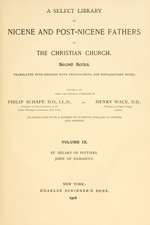
Nicene and Post-Nicene Fathers, Series 2, Vol. 9 (Hilary of Poitiers, John of Damascus)
The writings collected here document the urgent intellectual struggle to articulate the divinity of the Son against the tide of Arian skepticism. Hilary of Poitiers stands as a defiant witness in the West, forcing readers to confront how personal conviction survives state-sponsored religious pressur