Into Coptic Magic with Korshi Dosoo
In this extended interview we discuss a range of interesting Christian magical texts from the first millennium, considering how they were used, what they were meant to do, some of the background of lore and belief informing these texts, and related matters.
Primary Sources
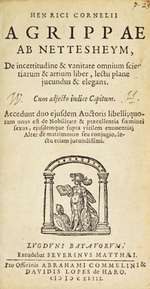
Agrippa: De Vanitate Scientiarum (1643)
Heinrich Cornelius Agrippa’s 'De Vanitate Scientiarum' is a foundational work of skeptical philosophy that systematically dismantles the intellectual foundations of the 17th century. Agrippa, himself a famed polymath and occultist, performs a shocking reversal by denouncing the very arts and science

Of Occult Philosophy, Book I
Heinrich Cornelius Agrippa’s 'De occulta philosophia' is a daring intellectual manifesto that seeks to rehabilitate the 'Magician' as a holy sage rather than a common sorcerer. By bridging the gap between the material and the divine, Agrippa argues that the world is a unified, threefold structure—el

Three Books of Occult Philosophy
Heinrich Cornelius Agrippa’s 'Three Books of Occult Philosophy' stands as the most influential grimoire of the Western esoteric tradition, synthesising centuries of Hermetic, Neoplatonic, and Cabalistic thought into a coherent metaphysical framework. Agrippa argues that the universe is a living, int

Three Books of Occult Philosophy
Heinrich Cornelius Agrippa’s 'Three Books of Occult Philosophy' is a monumental attempt to rehabilitate 'magic' as the highest form of human wisdom. By synthesizing physics, mathematics, and theology, Agrippa maps out a 'triple world'—elemental, celestial, and intellectual—where every herb and stone

Three Books of Occult Philosophy
Henricus Cornelius Agrippa’s 'Occult Philosophy' is a landmark of Renaissance esotericism, written to rescue the 'ancient discipline of all wise men' from the clutches of ignorance and religious slander. Rather than a manual of dark arts, this text frames magic as a rigorous intellectual and spiritu

Three Books of Occult Philosophy
Heinrich Cornelius Agrippa’s 'Three Books of Occult Philosophy' is a monumental synthesis of Renaissance thought that seeks to rehabilitate magic as a legitimate branch of natural philosophy. By defining the magician not as a sorcerer but as a wise 'priest and prophet,' Agrippa explores the profound

Three Books of Occult Philosophy
Henricus Cornelius Agrippa’s 'Three Books of Occult Philosophy' is a monumental defense of magic as the absolute consummation of physics, mathematics, and theology. By stripping away the 'superstitious' stigma of sorcery, Agrippa presents a rigorous 'Triple World' cosmology where the practitioner ac
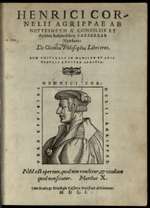
Three Books of Occult Philosophy
Heinrich Cornelius Agrippa’s 'De occulta philosophia' is a monumental synthesis of Renaissance thought that seeks to rehabilitate the very definition of 'Magic.' By structuring the universe into three distinct realms, Agrippa provides a philosophical map for the human soul to ascend toward the divin

The Key of Solomon
Les Clavicules de Salomon is far more than a collection of spells; it is a rigorous technical manual for the practitioner seeking to bridge the gap between the mundane and the divine. Attributed to the wisdom of Solomon and preserved through the lineage of Rabbi Abognazar, this 1634 manuscript claim

The Key of Solomon and Pneumatic Theosophy
Claviculae Salomonis et theosophia pneumatica presents a radical vision where magic is not a dark art, but a sacred science—a 'Spirit-Art' that integrates theology, alchemy, and astrology. The text argues that the human mind is the ultimate engine of miracle-working, capable of uniting with celestia

La philosophie occulte (De occulta philosophia) Tome 1
Agrippa challenges the common view of magic as mere superstition by presenting it as a disciplined study of how the universe functions. He argues that nature operates through a series of sympathies, where every object on earth reflects a higher celestial power. By mastering the relationships between
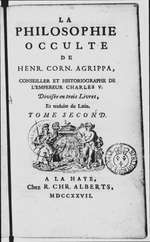
La philosophie occulte (De occulta philosophia) Tome 2
Heinrich Cornelius Agrippa’s 'De Occulta Philosophia Tome 2' is a profound synthesis of Renaissance polymathy and hermetic wisdom. Far from being a mere grimoire, it presents a rigorous philosophical framework where magic is treated as the highest form of theology, reconciling Platonic thought with

The Grand Grimoire with the Great Key of Solomon
Le Grand Grimoire represents the pinnacle of the Solomonic tradition, blending high ceremonial magic with dark, practical demonology. Anonymous yet authoritative, the text claims to offer the same arcane knowledge King Solomon used to command spirits, presenting a world where the infernal hierarchy

The Greater Key of Solomon
The Greater Key of Solomon is far more than a simple book of spells; it is a profound philosophical system that positions humanity as the sovereign mediator between the physical and spiritual realms. S. L. MacGregor Mathers, a central figure of the Hermetic Order of the Golden Dawn, presents a text

Nicene and Post-Nicene Fathers, Series 2, Vol. 12 (Leo the Great, Gregory the Great)
Leo the Great and Gregory the Great stand as the primary architects of the medieval papacy. This collection of their letters and sermons reveals how they turned theological precision and administrative rigor into tools for survival. Leo defines the Incarnation against the confusion of his age, while

The Key of Solomon
The Key of Solomon is far more than a simple book of spells; it is a complex philosophical system that bridges the gap between the mundane and the divine. Dating back to the Italian Renaissance, this grimoire presents the bold claim that through rigorous spiritual purification and the precise applic

Demotic Magical Papyrus of London and Leiden
The Demotic Magical Papyrus of London and Leiden represents a landmark in Egyptology, serving as the latest known manuscript written in the Demotic script. Editors Griffith and Thompson argue that while its contents of magic and medicine are inherently fascinating, the text’s true value lies in its

Demotic Magical Papyrus of London and Leiden, Vol. 3
This third volume of Griffith and Thompson’s seminal work serves as the ultimate philological grimoire, providing the essential linguistic framework for interpreting one of history’s most significant magical texts. It doesn't just translate; it decodes the 'Voces Magicae'—magical words of power—and

The Key of Solomon
The Key of Solomon presents a stark departure from modern passive spirituality. It outlines a system where the practitioner uses divine names, astrology, and specific physical talismans to assert authority over spiritual forces. The text insists that true mastery requires both internal purity and ri

Lesser Key of Solomon (Goetia) - De Laurence Edition
The L.W. de Laurence edition of the 'Lesser Key of Solomon' presents a radical reinterpretation of ceremonial magic, casting it as a rigorous 'Natural Philosophy' rather than mere superstition. By blending Kabbalistic mysticism with a bold psychological defense, the text argues that the demonic hier

The Book of the Goetia of Solomon the King
The Book of the Goetia forces a confrontation between medieval sorcery and early twentieth-century materialism. Crowley edits the original manuscript with a cynical, sharp edge, famously claiming that these demonic entities are merely projections of the human brain. Readers gain access to the comple

Greek Magical Papyri (Papyri Graecae Magicae)
Karl Preisendanz’s monumental edition of the Greek Magical Papyri offers an unfiltered gaze into the 'working library' of the ancient magician. Far from mere superstition, these texts present a sophisticated theurgy where practitioners employ 'voces magicae,' animal sacrifice, and solar liturgies to

Papyri Graecae Magicae (Complete)
The 'Papyri Graecae Magicae' offers an unparalleled window into the 'lived religion' of late antiquity, presenting a gritty, practical manual of sorcery far removed from abstract philosophy. This collection assembles a dizzying array of rituals—ranging from the high theurgy of self-deification to th

The Bornless One (Headless Rite)
The Bornless One (Headless Rite) offers an essential investigation into the evolution of ritual magic, moving from 2nd-century Egyptian syncretism to the high occultism of the Golden Dawn and the A∴A∴. Editor Jon Lange presents a unique perspective that dismantles common myths, specifically clarifyi