Westward Ho! with Matthew Melvin-Koushki
‘Our physicists are so Islamicate these days! And by “Islamicate”, I mean cool and weird.’
Primary Sources

Christian Arabic homilies of the Church Fathers (MS Or.1287)
Translated from their original Syriac, these homilies from Church Fathers like Ephrem the Syrian and John Chrysostom offer a profound psychological and theological exploration of the interior life. The text makes the bold claim that true fasting is not merely physical abstinence but a 'circumcision

Hymns on the Church
This manuscript presents a stark, beautiful defense of the unity of Christ. Ephrem rejects fragmented views of the savior, insisting instead on a single, indivisible nature of the Word made flesh. He weaves together biblical narrative, monastic discipline, and liturgical prayer to map the soul's ret

Hymns on Paradise
Ephrem provides a radical perspective on existence by asserting that the physical world acts as a mirror for hidden, spiritual realities. He claims that Paradise is not merely a place in the past but an accessible, eternal truth perceived through the intellect. The text challenges the reader to move

Illuminated Syriac Bible

The small Qur’ānic leaves from the Mingana-Lewis Palimpsest (MS Or.1287)
The Mingana-Lewis Palimpsest (MS Or.1287) is a breathtaking archaeological and spiritual enigma, offering a rare glimpse into the fluid intellectual landscape of the early Middle Ages. At its core, the text presents a 'Scriptio Inferior'—some of the earliest known Quranic fragments in Hijazi script—

The large Qur’ānic leaves from the Mingana-Lewis Palimpsest (MS Or.1287)
This extraordinary manuscript offers a rare glimpse into the literal layering of religious history, where 7th-century Qur’ānic verses exist as the silent foundation for a 10th-century Christian discourse. It presents a daring intersection of Islamic revelation and Christian liturgical commentary, fe

A Precious Collection on Alchemy
In 'Majmu nafis fi al-kimiya', the 'Father of Chemistry' presents a rigorous technical manual for the Great Work, blending practical laboratory procedures with deep philosophical insights. Jabir moves beyond simple recipe-sharing to detail the iterative cycles of sublimation, dissolution, and 'spiri

The Four Gospels
The text transforms the Gospel accounts into a structured path for spiritual development. It presents the Incarnation not just as history, but as a living reality that demands total commitment from the believer. The anonymous author insists that true knowledge requires a reciprocal relationship wher

The New Testament

The Goal of the Wise (Ghayat al-Hakim)
Maslama al-Majriti presents a revolutionary perspective on the occult, arguing that magic is not a shortcut for the superstitious, but the ultimate synthesis of mathematics, physics, and metaphysics. The text centers on the concept of the 'Universal Man,' positing that the human body is a microcosm

Picatrix (Ghāyat al-Ḥakīm)
The Picatrix (Ghāyat al-Ḥakīm) is a monumental synthesis of occult wisdom, merging Hellenistic Neoplatonism with Indian, Nabataean, and Egyptian magical traditions. Attributed to the scholar al-Majriti, it argues that magic is not mere superstition but the highest form of science, requiring mastery

Borg.sir.10
This manuscript acts as a direct transmission of ancient mystical wisdom. It frames the human soul as a steward of the body and argues that true holiness results in constant joy rather than mere endurance. The anonymous author connects historical biblical narratives to a rigorous, practical guide fo
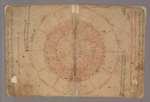
The Book of Curiosities
The Book of Curiosities is a stunning anonymous 11th-century Arabic cosmography that serves as a portal to a world where empirical observation and legendary lore are inseparable. Containing 17 of the rarest maps in medieval history—including the first recorded map of Sicily and a world map featuring

Proclus in Politiam Platonis . Proklos eis Politeian tou Platonos
In this commentary, the last great Neoplatonist philosopher reconciles the poetic genius of Homer with the rigorous logic of Plato. Proclus argues that myths are not fabrications but deliberate veils for ineffable truths. He maintains that true music and rhythm serve as the structural foundation for

Kīmiyā-yi Saʿādat (Alchemy of Happiness, Persian Original)
Abū Ḥāmid al-Ghazālī, one of history's most profound thinkers, presents a comprehensive framework for religious and social life in the 'Kīmiyā-yi Saʿādat.' This Persian original explores the 'Alchemy' of the soul—the process of turning base human impulses into spiritual gold through disciplined wors

Deliverance from Error
Deliverance from Error is the intellectual autobiography of Al-Ghazali, one of history's most influential polymaths, documenting a mid-life crisis that changed the course of Islamic thought. Al-Ghazali makes the bold claim that human reason and sense-perception have inherent limits, famously compari

Three Theological Treatises
Written just years after the death of the 'Proof of Islam,' this manuscript navigates the delicate balance between intellectual rigor and the innate faith of the common person. Al-Ghazālī challenges the elitism of formal theology, arguing that the simple, imitative faith (taqlid) of the masses is no

The Harclean Gospels

The Goal of the Wise
The Picatrix (Ghayat al-Hakim) is a foundational pillar of the Western esoteric tradition, uniting astronomy, medicine, and alchemy into a singular, practical science of the soul and world. Pseudo-Maslama presents a world where human fate is surgically determined by planetary 'winds' and where the p

Pal.lat.1339
This sprawling Latin manuscript serves as a definitive archive of the Hermetic lineage, asserting that alchemy is not merely a craft, but the 'mistress of the body' and a divine science revealed through the ages. It contains the bold claim that metals are living entities capable of being 'healed' fr

Syriac Manuscript
This text operates as a manual for those seeking to unite the human soul with the Divine through ascetic labor and constant prayer. It bypasses superficial piety to focus on the ontological struggle between the body and the spirit. The author argues that true redemption requires a shift from worldly

Syriac Theological Manuscript
This text operates as an uncompromising guide to the ascetic life, stripping away worldly distractions to focus on the salvation of the soul. It insists that faith is not a passive belief but a deliberate, daily battle against internal passions and spiritual deception. The author utilizes the legacy

Syriac Theological Anthology
The Syriac Theological Anthology reveals a world where the body acts as a fragile vessel for the intellect and the divine Word. These writers insist that human agency, when aligned with sincere prayer, forms the primary defense against invisible threats. The text rejects mere abstract theory in favo

Daily Prayers (Awrad Ibn Arabi)
This collection strips away the clutter of worldly life to focus on the essential link between the human soul and its Creator. Ibn Arabi asserts that regular litanies are not optional for the believer but are necessary requirements for any meaningful spiritual progress. The text positions the Prophe

Sun of Knowledge (Shams al-Ma'arif)
The 'Shams al-Ma'arif' is more than a book of spells; it is a profound synthesis of Sufi metaphysics, celestial hierarchies, and mathematical precision. Ahmad al-Buni, a mysterious philosopher and contemporary of Ibn Arabi, posits that letters and numbers are not merely tools for communication but t

The Radiant Sparks
In 'Al-Lum'a al-nuraniyya,' Ahmad al-Buni presents a rigorous metaphysical framework that elevates prayer from a mere religious duty to a precise science of the soul. By mapping the twenty-four hours of the day to specific 'spiritual inheritances' and angelic registers, Al-Buni claims that the pract

The Amulet of Al-Buni
Ahmad al-Buni, the enigmatic author behind the world-renowned 'Shams al-Ma'arif,' offers a specialized work of spiritual defense that bridges the gap between Sufi mysticism and the science of letters. This text presents a unique 'amulet' or protective formula intended to serve as a barrier between t

Reg.lat.1300
Reg.lat.1300 presents a cosmic manual where every planetary movement and elemental substance holds a specific magical virtue. The text argues that the material world is a decaying reflection of eternal celestial causes, and only through strict ritual purity can a practitioner bridge this gap. Reader

The Book of Games
Commissioned by the 'Wise King' of Castile, 'The Book of Games' is far more than a rulebook; it is a profound meditation on the human condition and the order of the universe. Alfonso X posits that God gifted humanity games to provide joy and mental sanctuary amidst life’s inevitable hardships. From

Kalila and Dimna
This book is not a collection of gentle bedtime stories. Ibn al-Muqaffa uses the lives of animals to dismantle the veneer of courtly politics and show how easily trust decays into ruin. Readers will find a cold, clear analysis of human nature, greed, and the high cost of unchecked ego. It presents w

Quadrilingual Psalter
The 'Quadrilingual Psalter' is a monumental synthesis of four ancient linguistic traditions, transforming the biblical Psalms into a rich, comparative spiritual experience. It presents a world where 'rational life' meets divine mystery, challenging readers to find security not in 'chariots or horses

Pal.lat.1329
Attributed to the legendary Umayyad prince Khalid ibn Yazid and the medieval polymath Arnaldus de Villanova, this manuscript offers a profound bridge between Hermetic philosophy and practical metallurgy. It posits the startling claim that the Philosopher’s Stone—the key to both physical wealth and s

Reg.lat.1300
This manuscript acts as a technical manual for those seeking to bridge the divide between the celestial spheres and the terrestrial world. It frames magic as a rigorous science where the practitioner aligns their will with planetary configurations and divine names. By synthesizing herbal, lapidary,

Book of Wonders
Bodleian Library MS. Bodl. Or. 133 is a physical testament to the global migration of knowledge, bridging the gap between the Islamic Golden Age and the English Enlightenment. Known as 'The Book of Healing,' the manuscript contains the distinct signatures of its history, from the humble 17th-century

Pal.lat.1328
Pal.lat.1328 is a monumental synthesis of Hermetic philosophy and medieval Arabic science, offering a rare glimpse into the systematic pursuit of the Philosopher’s Stone. The text makes the bold claim that alchemy is 'lower astronomy'—a sacred art where metals act as terrestrial stars and volatile s

Book of Wonders
The 'Kitāb al-Bulhān' is a monumental synthesis of medieval Islamic thought that posits the human being as a microcosm containing the entire universe within. Al-Isfahani masterfully weaves together rigorous astronomical tables, physiognomic character studies, and talismanic rituals to create a manua

Wonders of the Lands
This manuscript acts as a ledger for the world as it was understood centuries ago. Qazwini merges hard observations of trade and climate with reports of dragons, mythical creatures, and the divine fates of lost cities. He argues that human civilization is a necessity born of our need for one another

Proclus: Platonic Theology and Elements of Theology
This work defines the hierarchy of the universe through the eyes of one of antiquity's final great thinkers. Proclus argues that reality is not a random collection of objects but a systematic emanation from the One. He explains how human intellect can bridge the gap between mortal limitations and et

The Support of the Needy on the Legal Ruling of Chess
In this meticulously researched 15th-century treatise, al-Sakhawi navigates the complex intersection of play and piety. He moves beyond simple prohibition to explore the linguistic roots of 'Shatranj,' the mind-bending mathematics of exponential growth, and the fierce debates among Islamic jurists r
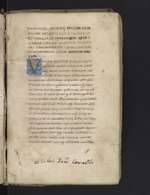
Neoplatonic Translations
In this foundational Neoplatonic collection, Marsilio Ficino provides a transformative vision of human potential, arguing that true connection is a sacred triad between two people and God. Through his translations of Speusippus, Alcinous, and Pythagoras, he builds a systematic hierarchy of existence

Platonic Theology
In an era of intellectual upheaval, Marsilio Ficino’s *Theologia Platonica* stands as a monumental synthesis of Platonic philosophy and Christian theology. Ficino boldly positions the human soul as the 'Third Essence'—a metaphysical hinge that allows humanity to participate in both the temporal and

Paintings of the Life of Jesus
These pages present a distinct provincial interpretation of the life of Jesus. The manuscript captures pivotal moments like the Transfiguration and the final judgment through a specific Byzantine lens. Readers see how the anonymous artist balanced the authority of the Law and the Prophets with the c

Alchemical Compendium
The Alchemical Compendium challenges the seeker to move past the superficial desire for gold and into the laboratory of the self. Al-Husayni argues that the secret of the universe is not locked away in distant lands but is found in the common materials of daily life. Success requires the death of th

The Goal of the Wise
Picatrix: The Goal of the Wise is a monumental compendium of ancient occult wisdom, translated into Latin for the court of King Alfonso. It boldly asserts that magic is not mere superstition but a divine science—a 'veiler' of the practitioner's will that channels the influence of the planets and the

Borg.ar.172
This manuscript maps the intersection of divine decree and human response through the lives of figures like Jonah, Jesus, and Joseph. It argues that personal affliction is not a sign of abandonment, but a specific mechanism for testing spiritual integrity. The text moves beyond simple hagiography to

Wonders of Creatures
This manuscript acts as a manual for decoding the universe and the human soul. It provides technical methods to calculate life expectancy, divine future events through letters, and identify the hidden influences of the seven planets. The text asserts that human beings are a synthesis of spiritual an

Proclus' Commentary on Plato's Republic (Cambridge, St John's College, MS F.15)
This commentary is not merely an analysis of political theory. It is a guide to the Neoplatonic universe where justice serves as a structural harmony for both the city and the individual soul. Proclus argues that myths are not just stories, but symbolic veils designed to hide profound divine truths

Platonic Theology on the Immortality of Souls
Ficino constructs a systematic map of reality that places the human soul at the center of the cosmos. He argues that our capacity for abstract thought and universal truth proves we are not merely physical accidents. By rejecting materialist explanations for human consciousness, he defends the soul a

Three Books on Alchemy
‘Three Books on Alchemy’ is a cornerstone of Western hermetic and chemical thought, attributed to the enigmatic Geber. The text presents a sophisticated defense of transmutation, arguing that the alchemist does not merely mimic nature but accelerates its thousand-year processes through disciplined a

On Alchemy
On Alchemy (De Alchemia) is a monumental synthesis of medieval scientific thought, bringing together the most influential voices of the Hermetic tradition, including Geber, Roger Bacon, and Hermes Trismegistus. This text argues that alchemy is not mere magic, but a rigorous 'Art' that acts as the ad

The Sum of Perfection
"The Sum of Perfection" stands as the most influential alchemical treatise of the Middle Ages, offering a rigorous, technical, and philosophical defense of alchemy as a 'supernatural science.' Attributed to the legendary Geber, the text provides a systematic taxonomy of metals and minerals while ref

Alchemiae Gebri cum Lull et Bacon
Alchemiae Gebri cum Lull et Bacon is a monumental synthesis of medieval and Renaissance chemical thought that elevates alchemy from a 'barbarous' reputation to the pinnacle of natural philosophy. The text argues that the perfection of metals is not merely possible but a necessary imitation of nature

Books of Alchemy
Geber’s 'Books of Alchemy' represents a monumental shift from mystical speculation to rigorous empirical practice, establishing a systematic framework for the transmutation of base metals into gold and silver. Attributed to the legendary Jabir ibn Hayyan, the text posits that all metals are composed

Proclus, Theologia Platonica; Michael Psellos
This essential exploration of Neoplatonic thought bridges the gap between Platonic philosophy and the mystical traditions of Orpheus and the Chaldeans. Proclus and Psellos argue that the universe is not a random collection of matter, but a sophisticated hierarchy governed by the interplay of 'Limit'

The Exposition of Geber
Giovanni Braccesco’s 'The Exposition of Geber' is a daring synthesis of alchemical theory and Hermetic allegory that challenges the reader to look past the surface of base matter. Rather than pursuing literal gold, Braccesco presents a 'divine science' that utilizes the 'vile stone' of iron to unloc

Platonic Theology on the Immortality of Souls
In 'Platonic Theology on the Immortality of Souls,' Marsilio Ficino orchestrates a brilliant synthesis of Platonic philosophy and Christian theology to defend the individual's eternal destiny. Writing at the height of the Florentine Renaissance, Ficino argues that the human soul is the 'center of na

The Hieroglyphic Monad
In this 1564 masterpiece, John Dee—court advisor to Elizabeth I and the most learned polymath of his age—presents a revolutionary 'Real Kabbalah' encoded within a single esoteric glyph. He claims this symbol is not a mere mark, but a mathematical and spiritual key capable of activating the hidden po

The Hieroglyphic Monad (1564 Antwerp)
Written in a feverish twelve-day burst in 1564, The Hieroglyphic Monad is a foundational text of Western esotericism that attempts to bridge the gap between the physical elements and the divine horizon of eternity. John Dee, a legendary polymath and court astronomer, argues that his singular Hierogl

The Book of Raziel (Sepher Raziel)
The Book of Raziel functions as a bridge between the celestial hierarchies and the practitioner on earth. It argues that physical reality is a reflection of immutable heavens governed by specific angelic powers. The text insists that true magical authority requires moral discipline, secret knowledge

The Hieroglyphic Monad
John Dee’s 'Monas Hieroglyphica' is far more than an occult manual; it is a bold manifesto for a metaphysical revolution. By grounding mystical insights in the rigorous logic of sacred geometry—specifically the point, the line, and the circle—Dee claims to have discovered a universal language that t

On Alchemy: The Sum of Perfection and the Book of Investigation
In 'On Alchemy: The Sum of Perfection,' Geber presents a monumental synthesis of chemical theory and spiritual discipline, arguing that alchemy is not mere magic, but a sophisticated imitation of nature's own processes. By establishing the 'Mercury-Sulfur' theory of metals, the author provides a tec

The Key of Solomon
The Key of Solomon is not merely a book of spells; it is a rigorous system of theurgy that bridges the gap between the divine and the terrestrial. Attributed to the biblical King Solomon, this 14th-century grimoire presents magic as a holy science, requiring extreme ritual purity, precise astrologic

Elements of Theology and Physics
Proclus’s 'Elements of Theology and Physics' is a monumental achievement in late classical philosophy, offering a systematic 'More Geometrico' (mathematical style) approach to the nature of existence. By transforming metaphysical inquiry into a series of logical propositions and proofs, Proclus maps

The Key of Solomon
Les Clavicules de Salomon is far more than a collection of spells; it is a rigorous technical manual for the practitioner seeking to bridge the gap between the mundane and the divine. Attributed to the wisdom of Solomon and preserved through the lineage of Rabbi Abognazar, this 1634 manuscript claim

Reg.lat.1266
This manuscript represents a pinnacle of Hermetic thought, blending John Dee’s rigorous mathematical mind with the esoteric traditions of alchemy and Kabbalah. Dee argues that true wisdom is not found in intellectual vanity, but in the 'invisible power' that animates the universe—a divine light he i

Syriac Gospel Lectionary
This text offers a radical synthesis of Syriac Christian liturgy and deep Jewish intellectual history, presenting a world where spiritual perfection requires both a rigorous ethical code and a mystical understanding of the cosmos. By interweaving Maimonidean rationalism with the visionary experience

True & Faithful Relation (Enochian diaries)
A True & Faithful Relation is a monumental record of the years-long spiritual odyssey undertaken by the polymath John Dee and the medium Edward Kelley. Framed by editor Meric Casaubon as a vital defense against atheism and the 'Sadduceeism' of a skeptical age, the diaries provide an unparalleled acc

A Compendious History of the Dynasties
This text serves as a chronicle of the world from creation to the Mongol invasions. The author connects the dots between the theological foundations of Israel and the scientific advancements of the Islamic Golden Age. He treats the erratic nature of absolute power with a surgeon's precision, often f

The Sum of Perfection and the Marrow of Alchemy
Attributed to the legendary Geber, this text represents the pinnacle of Latin alchemical thought, bridging the gap between ancient mysticism and empirical chemistry. Geber systematically dismantles the arguments of skeptics, arguing that while man cannot infuse a soul into living things, he can mast

The Works of Geber (1678)
The Works of Geber (1678) is a foundational cornerstone of alchemical literature, offering a rare English window into the mind of Abū Mūsa Jābir ibn Ḥayyān. Geber boldly asserts that metals are not static substances but living compositions of 'Argentvive' (Mercury) and Sulphur that can be cured of t

The Sum of Perfection
The Sum of Perfection stands as one of the most influential pillars of Western alchemy, offering a 'corrected' and complete guide to the Spagyric art. Geber—the 'Most Perspicacious Philosopher'—presents a bold defense of alchemy as a divine science, arguing that the alchemist does not replace nature

The Key of Solomon and Pneumatic Theosophy
Claviculae Salomonis et theosophia pneumatica presents a radical vision where magic is not a dark art, but a sacred science—a 'Spirit-Art' that integrates theology, alchemy, and astrology. The text argues that the human mind is the ultimate engine of miracle-working, capable of uniting with celestia

The Quran
Abraham Hinckelmann’s 1694 Hamburg edition of 'Al-Coranus' is a remarkable relic of theological warfare and linguistic obsession. Framing the Islamic scripture as a 'monster' to be defeated, Hinckelmann argues that only by mastering the original Arabic can the West hope to 'conquer' the religion. Ye

The Quran (Al-Coranus)
Abraham Hinckelmann presents a text that refuses to compromise on its core message: that humanity is governed by a singular, divine truth. Readers encounter a rigorous system of ethics that treats the saving of one life as the saving of all mankind. The work positions itself as the final link in a c

Proclus (Cambridge, Trinity College, MS O.5.11)
This manuscript preserves the rigorous dialectic of one of antiquity’s final great minds. Proclus examines the One not as a physical object, but as the absolute origin and end of every existing thing. He challenges the reader to consider how a source can be responsible for all diversity without beco

Complete Text of the Quran (Alcorani Textus Universus)
Ludovico Marracci’s Alcorani Textus Universus is a towering achievement of Oriental scholarship, offering a rare window into how the West first rigorously engaged with the Quran. Beyond a mere translation, Marracci provides a meticulous Latin-Arabic synthesis complete with 'Refutations' that challen

The Sun of Gnosis
Ahmad ibn Ali al-Buni argues that numbers and letters are not mere symbols; they are the active keys to the celestial architecture. The text asserts that human intent, when aligned with the right planetary hour and the correct divine name, can force the physical world to respond. Readers will find a

The Book of the Angel Raziel
The Book of the Angel Raziel is a cornerstone of mystical literature, claiming to be the foundational source of all esoteric knowledge transmitted through the biblical patriarchs. It posits a universe where the Hebrew alphabet serves as the literal DNA of creation, linking the anatomy of the human s

The Quran (Alkoran)
This 1707 edition is more than a religious text; it is a profound historical document capturing the complex encounter between East and West. While the Dutch translators frame the work within a polemical 'Voor-reeden' (Preface) that reflects the anxieties of the era, the text itself unfolds a vast ta

The Grand Grimoire with the Great Key of Solomon
Le Grand Grimoire represents the pinnacle of the Solomonic tradition, blending high ceremonial magic with dark, practical demonology. Anonymous yet authoritative, the text claims to offer the same arcane knowledge King Solomon used to command spirits, presenting a world where the infernal hierarchy

The Syriac Chronicle
This text provides a direct, chronological account of human events viewed through the lens of a thirteenth-century Syriac scholar. Bar Hebraeus blends historical record with theological interpretation, documenting everything from the origins of idolatry to the brutal sieges of the Crusades. He captu

Platonic Theology (Thomas Taylor trans.)
This work functions as a complete, scientific manual for navigating the hierarchy of the universe. Proclus rejects the idea that the divine is beyond our reach; instead, he provides a rigorous path for the human soul to return to its source. Readers will encounter a vision where stars are living bei
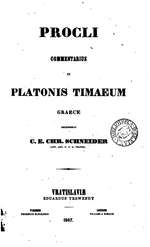
Commentary on Plato's Timaeus
This commentary serves as the definitive architecture of Neoplatonic thought, mapping the procession of all things from the One down to the physical realm. Proclus argues that the universe is not a product of blind chance but a living, ordered image sustained by divine providence. He treats the Tima

Commentary on the Timaeus
Proclus offers a breathtakingly dense metaphysical defense of Plato’s cosmology, positioning the soul as the critical 'middle nature' bridging the eternal and the material. By weaving together Pythagorean mathematics, Orphic theology, and rigorous dialectic, he argues that the cosmos is not a random

The Loves of Laili and Majnun
Nizami Ganjavi turns a historical chronicle into a brutal look at the cost of total devotion. The story follows Kais, a man who abandons his social standing and his sanity to become Majnun, the madman. Through the translation by James Atkinson, the reader encounters a work that rejects the comfort o

The Private Diary of Dr. John Dee
This text provides an unfiltered look at a Renaissance polymath caught between the rigorous demands of science and the strange promise of alchemy. Dee records everything, from the precise weight of gold transmuted from base metal to the visceral details of a nurse’s suicide in his home. His entries

Proclus: Commentary on Plato's Timaeus
Syriac Gleanings (Spicilegium Syriacum)
This collection rescues rare Syriac texts from oblivion and presents them for the modern reader. Bardesan and Melito of Sardis argue that the human mind can overcome both biological nature and celestial fortune. They strip away the veneer of pagan mythology to define the responsibilities of the indi

Selected Works of Saint Ephrem the Syrian, Rabbula of Edessa, Balai, and Others
The editor presents these Syriac manuscripts with a strict commitment to textual integrity, refusing to smooth over the rough edges of original thought. The works navigate the tension between the eternal nature of God and the constraints of human history. Readers will find hard-hitting arguments on

Logic and Psychology of the Arabs
Friedrich Dieterici’s presentation of 'Die Logik und Psychologie der Araber' offers a rare window into a medieval 'Golden Age' where science and spirit were inseparable. The Brethren of Purity (Ikhwan al-Safa) argue that logic is not merely an academic exercise, but a 'spiritual nourishment' essenti

Ikhwan al-Safa (Epistles of the Brethren of Purity)
The 'Ikhwan al-Safa' (Epistles of the Brethren of Purity) offers a startlingly modern critique of human arrogance through the lens of medieval Islamic philosophy. In this legal drama set on a remote island, representatives from the animal world systematically dismantle human claims of superiority ba

Ikhwan al-Safa (Brethren of Purity) - Dowson Translation
The Brethren of Purity present a stinging critique of human vanity through a legendary legal dispute between men and animals. When animals haul their human masters before the King of the Jinn, they challenge the assumption that dominion equals righteousness. The text strips away human self-justifica

Ecclesiastical Chronicle, Volume 1
The Ecclesiastical Chronicle is a rigorous record of survival in a world of shifting political tides. Bar Hebraeus maps the succession of church leaders from the high priests of the Old Testament through the complex reality of the medieval Syrian Church. He treats history as a series of documented a

Alchemy of Happiness
Written during a period of profound intellectual and political unrest, 'The Alchemy of Happiness' stands as one of the most influential syntheses of Islamic law and mysticism ever penned. Al-Ghazali, a polymath who mastered philosophy only to seek a deeper truth in the heart, argues that true happin

Ecclesiastical Chronicle, Volume 2
This volume documents the collapse of ecclesiastical order under the pressures of Mongol rule and internal greed. Bar Hebraeus tracks the shift from traditional apostolic succession to a system plagued by simony and secular interference. He records the voices of bishops, monks, and sultans locked in

Ecclesiastical Chronicle, Volume 3
This historical record tracks the evolution of the Church of the East from its apostolic origins to the administrative crises of the late medieval period. Bar Hebraeus examines the tension between local autonomy and central authority as church leaders navigated life under Sassanid, Arab, and Mongol
The Book of Tobit
In this meticulous 1878 study, Adolf Neubauer presents a compelling case for the recovery of the original 'Chaldee' (Aramaic) text of the Book of Tobit, a manuscript found hidden within the Bodleian Library. Neubauer argues that this specific text is the primary source for St. Jerome’s Latin Vulgate

The Sixth and Seventh Books of Moses (1880 facsimile)
The Sixth and Seventh Books of Moses presents itself as a direct translation of secret Hebrew manuscripts. It argues that biblical figures possessed the authority to control celestial and infernal spirits. The text provides explicit instructions for the use of seals, amulets, and incantations to man

The Quran, Part 1
This volume moves beyond simple religious devotion to examine the Quran as a historical and cultural document. Palmer strips away theological bias to analyze how Muhammad navigated the tribal politics of 7th-century Arabia. He treats the Quran not as a static manual but as a collection of shifting m

Gulshan-i Raz (The Mystic Rose Garden)
Shabistari rejects the idea that the world exists as a collection of independent things. Instead, he presents a vision of the universe as a shifting reflection of a single divine source. He argues that reason is a blind guide and that true understanding requires a complete dissolution of the self. B

Hymns and Sermons of Saint Ephrem the Syrian, Volume 1
This volume brings together the essential writings of Ephrem the Syrian, a legendary figure of the Eastern Church. Readers will encounter his strategy of using songs to combat false teachings and his deep meditations on the sacraments of baptism and the Eucharist. The text tracks how these ancient S
Arabian Society in the Middle Ages
This work bridges the gap between the medieval Caliphate and the modern observer. Lane treats the streets of Cairo as a living document of history, arguing that the traditions of the past remain the bedrock of the present. He examines the intersection of religious fervor and daily survival, where th

Targum Onkelos: Aramaic Torah
Abraham Berliner’s edition of the Targum Onkelos provides the standard Aramaic version of the Pentateuch, complete with scholarly corrections. The text distinguishes itself by replacing anthropomorphic descriptions of God with the 'Memra' or the Word of the Lord. It redefines the human soul as a 'sp

A Dictionary of Islam
This text provides a direct, unvarnished look at the doctrines and customs of the Muslim faith as perceived by a nineteenth-century missionary scholar. Hughes focuses on practical application, showing how theological concepts like predestination or divine attributes dictated everything from inherita

The Book of the Bee
The Book of the Bee functions as a singular repository of Syriac tradition, theology, and historical record. By mimicking a bee gathering nectar from diverse sources, the author extracts spiritual insights from both canonical scriptures and apocryphal legends. The work bridges the gap between the ph

Remnants of Arabic Paganism
Wellhausen argues that the rituals of the Hajj and the structure of early Arab society were not merely replaced by Islam, but systematically absorbed and repurposed. He treats paganism as a living, tribal social bond rather than a forgotten collection of myths. By analyzing linguistic shifts in theo

Iḥyāʾ ʿUlūm al-Dīn (Revival of the Religious Sciences)
In this foundational work, Abū Ḥāmid al-Ghazālī bridges the gap between outward religious law and the internal reality of the human soul. He posits the bold claim that the heart is a mirror prone to a spiritual 'rust' caused by worldly desires, requiring a perpetual state of return (Tawba) to mainta

The Greater Key of Solomon
The Greater Key of Solomon is far more than a simple book of spells; it is a profound philosophical system that positions humanity as the sovereign mediator between the physical and spiritual realms. S. L. MacGregor Mathers, a central figure of the Hermetic Order of the Golden Dawn, presents a text

The Syriac Chronicle
The Syriac Chronicle serves as a record of human persistence amidst the cyclical collapse of kingdoms. Bar Hebraeus maps the intersection of political power and spiritual obedience, arguing that the fate of nations depends on their adherence to divine order. He treats history as a living narrative w

The Sword of Moses
The Sword of Moses (Harba de-Mosheh) represents one of the most significant and daring examples of practical mysticism ever discovered. Attributed to the prophet Moses and translated from its ancient Syriac roots by Moses Gaster, this text posits that the 'Sword' is not a physical blade, but a terri

The Book of the Secrets of Enoch (2 Enoch)
The Slavonic Enoch captures the worldview of a Hellenistic Jew living in Egypt at the dawn of the Common Era. It details a universe built from invisible elements and divided into distinct layers of heaven. You will encounter the fall of Satanail, the origins of the millennium, and the peculiar mecha

The Apocalypse of Baruch (2 Baruch)
The Apocalypse of Baruch reveals what Jewish thinkers felt as their world burned in 70 A.D. R.H. Charles reconstructs this text from its Syriac translation, proving it was originally written in Hebrew. He argues the book is a composite document, bringing together multiple voices that clash and harmo
Poems from the Divan of Hafiz
In this definitive translation, Gertrude Bell bridges the gap between East and West, decoding the mystical 'Sufi dictionary' of Persia’s greatest lyric poet. Hafiz’s work is presented not merely as verse, but as a defiant act of sincerity against religious hypocrisy and the transience of earthly pow

The Hymn of the Soul
The Hymn of the Soul is a primary treasure of Gnostic literature, offering a rare look at Gnosticism not as a 'heresy,' but as a vibrant, lived faith. Editor A.A. Bevan presents this Syriac poem—originally hidden within the Acts of Thomas—as a standalone epic that masterfully allegorizes the soul's

The Book of Ethics
Bar Hebraeus strips away the pretense of worldly existence to examine the mechanics of the human heart. He bridges the gap between complex theology and the practical labor of daily prayer. Readers will encounter a rigorous framework for transforming the soul from a state of distraction into one of d

Book of Ethics
The Book of Ethics provides a direct roadmap for those seeking spiritual perfection through prayer, liturgical service, and the discipline of the mind. Bar Hebraeus argues that salvation is not an external reward but a process that must be cultivated from within. He places the individual at the cent

The Book of the Laws of Countries
The Book of the Laws of Countries provides a rare look at how a second-century philosopher tried to reconcile the rigid motions of the cosmos with the fluid nature of human choice. Bardaisan argues that while planets might govern our physical health or temperament, they cannot dictate the mind or mo

The Book of the Ascent of the Mind
Bar Hebraeus treats the universe as a geometric puzzle designed by the divine. He links the rigid motions of Ptolemaic spheres to the spiritual life of monks and the duties of bishops. By reading the stars, he argues, one learns to navigate the soul's ascent toward its creator. This text forces a co

Syriac Apocrypha: The Gospel of James and the Passing of Mary
Agnes Smith Lewis presents a rare look at the Protevangelium Jacobi and the Transitus Mariae through her expert deciphering of overwritten manuscripts. She argues that these apocryphal accounts provided the primary foundation for the cult of Mary in the Church. By using chemical reagents to reveal t

The Key of Solomon
The Key of Solomon is far more than a simple book of spells; it is a complex philosophical system that bridges the gap between the mundane and the divine. Dating back to the Italian Renaissance, this grimoire presents the bold claim that through rigorous spiritual purification and the precise applic

Commentary on Plato's Timaeus, Vol. I
Proclus’s commentary on the Timaeus represents the pinnacle of Neoplatonic cosmology, offering a rigorous metaphysical map of the sensible world. He argues that the universe is not a chaotic assembly of matter, but a unified organism positioned between the eternal and the temporal through the 'middl

Commentary on Plato's Timaeus, Volume II
Ernst Diehl’s landmark edition of Proclus’ commentary is more than a philological triumph; it is a gateway to the ancient world’s most sophisticated interpretation of cosmic origins. By tracing the 'genealogy' of the text through the libraries of Renaissance cardinals and Byzantine scribes, Diehl re

New Testament in Syriac (Peshitta)
The New Testament in Syriac (Peshitta) is more than a translation; it is a scholarly monument and a spiritual treasure of the Early Church. Published by the British and Foreign Bible Society, this text presents the revised scholarship of G.H. Gwilliam alongside unique Syriac 'Discourses' and 'Tablet

Lawā'iḥ: A Treatise on Ṣūfism
This treatise dismantles the boundary between the Creator and the created. Jāmī argues that the material world is not a static object but a continuous, fleeting manifestation of the One. He claims that existence is a monistic unity and our sense of independent identity is the primary obstacle to tru

Book of Kings (Shahnama)
Ferdowsi crafted more than a myth; he built a mirror for human existence. His narrative argues that history is a cycle of violence where the throne is always temporary and the grave is the only equalizer. He tracks the fall of giants and the rise of the wretched with an unwavering gaze. By reading t

The Religious Attitude and Life in Islam
The Religious Attitude and Life in Islam offers a profound psychological mapping of the Muslim soul, arguing that Islam is, at its core, a fundamentally mystical faith. Macdonald navigates the 'Unseen World,' showing how veridical dreams and encounters with Jinn serve as legitimate sources of knowle

The Philosophy of Averroes
In 'Philosophy of Averroes,' the legendary polymath Ibn Rushd presents a revolutionary defense of the intellect within the framework of religious law. He boldly claims that the Quran mandates the use of logic and demonstration, positioning philosophy as the 'milk-sister' of divine revelation. By cat

The Sixth and Seventh Books of Moses
L.W. De Laurence presents these forbidden books as divinely revealed tools for human empowerment. He argues that the Bible is a practical manual for both spiritual salvation and tangible magical intervention. The text suggests that man functions as a microcosm reflecting the wider cosmos. By manipul

The Odes and Psalms of Solomon
In this landmark scholarly recovery, J. Rendel Harris presents 'The Odes and Psalms of Solomon,' arguing that the Odes represent a primary monument of the late 1st-century Church. Unlike the derivative 'Psalms of Solomon,' these Odes pulse with a 'first-hand and immediate' inspiration, blending Jewi
Interpreter of Desires
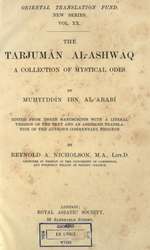
The 'Interpreter of Desires' is a seminal work of Sufi literature that uses the 'nasib' (amatory) tradition to map the journey of the gnostic soul. Inspired by the intellect and beauty of a woman named Niẓám, Ibn Arabi argues that the feminine is the most perfect manifestation of Divine Beauty, offe

The Kashf al-Mahjub (Revelation of the Veiled)
Ali ibn Uthman al-Hujwiri’s masterpiece is a testament to the resilient spirit of an 11th-century scholar-saint forced into exile in Lahore. Nicholson’s translation brings to life the rigorous world of early Sufism, where spiritual directors navigated the delicate boundary between genuine trance (Wa
Prose Refutations of Mani, Marcion, and Bardaisan, Vol. 1
This volume recovers the polemical power of Ephrem the Syrian as he defends the goodness of creation against those who claimed the material world was evil. He treats the human mind as a battlefield where truth must be defended through careful reasoning rather than blind dogma. Ephrem refuses to let

Aramaic Incantation Texts from Nippur
This study decodes the physical and linguistic evidence left by exorcists in Sassanian Babylonia. Montgomery challenges previous scholars by arguing that script styles are individual handwritings rather than clear markers of time. He frames these incantation bowls as tools for a mechanical, non-reli

The Masnavi (Mesnevi)
This landmark German translation by Georg Rosen captures the soul-stirring depth of Jalal al-Din Rumi’s magnum opus, a work that has shaped global mysticism and European literature alike. Rumi presents a world where the physical is merely a shadow of the spiritual, asserting that true wisdom lies no

Old Testament in Syriac (Peshitta)
The Peshitta serves as a vital anchor for understanding how early Aramaic-speaking communities received and interpreted the sacred text. Beyond the foundational narratives of Genesis and the Exodus, it integrates mystical and liturgical commentaries that link the physical body to spiritual salvation

The Key of Solomon
The Key of Solomon presents a stark departure from modern passive spirituality. It outlines a system where the practitioner uses divine names, astrology, and specific physical talismans to assert authority over spiritual forces. The text insists that true mastery requires both internal purity and ri
The Mandaean Book of John
The Mandaean Book of John presents a unique synthesis of Eastern theological traditions. It maps the path of the soul as it navigates the traps of the material world. The text argues that the human body undergoes a three-fold transformation to reach the light. Through liturgical prayer and the imita

The Lesser Key of Solomon (Goetia)
The Lesser Key of Solomon (Goetia) is not merely a catalog of demons; it is a sophisticated system of ceremonial magic that claims spirits are actually 'portions of the human brain.' Edited by the enigmatic L.W. de Laurence, this text provides a rigorous framework for the 'Bornless Ritual' and the p

The Odes and Psalms of Solomon, Vol. 1
This volume presents a rare Syriac manuscript that challenges conventional boundaries between faith traditions. Harris and Mingana translate these liturgical poems to reveal a portrait of a Messiah who acts as a bridge between humanity and the celestial realm. The text functions as a map for spiritu

The Book of the Dove
This text provides a rigorous framework for the contemplative life, stripping away external ritual to focus on the purification of the intellect. Bar Hebraeus argues that knowledge without practice is hollow and that true spiritual growth requires a total death to worldly attachments. By synthesizin

The Influence of Animism on Islam
Zwemer asserts that Islam failed to eradicate the pagan foundations of the cultures it encountered. He presents a stark, provocative look at how folk practices, from the use of rosaries to the fear of the Qarina, dominate religious expression. By comparing Islamic traditions to ancient spirit-worshi
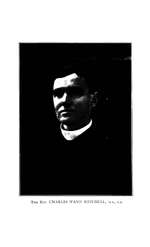
Prose Refutations of Mani, Marcion, and Bardaisan, Vol. 2
This volume captures a pivotal moment in theological history where Ephrem the Syrian confronts the architects of Gnostic dualism. He refuses to accept that the physical body or the natural world are evil inventions. Instead, he argues that the consistency of grace and the stability of human organs c

The Book of Splendours
Bar Hebraeus does more than catalog the rules of Syriac. He treats the language as a bridge between human intention and divine reality. Through a rigorous technical examination of verbs, particles, and names, he argues that the structure of speech reflects the structure of the soul. This text challe
Mandaean Book of John
G. R. S. Mead challenges the historical consensus by positioning the Mandaean Book of John as an independent, pre-Christian witness to a forgotten spiritual movement. He argues that the Mandaeans preserved a unique Gnostic tradition that rejected the authority of Jerusalem and the material world. By

The Book of the Goetia of Solomon the King
The Book of the Goetia forces a confrontation between medieval sorcery and early twentieth-century materialism. Crowley edits the original manuscript with a cynical, sharp edge, famously claiming that these demonic entities are merely projections of the human brain. Readers gain access to the comple

Masnavi (Mathnawi)
The Masnavi is often called the 'Koran in Persian' because it aims to unveil the deepest mysteries of religious truth. Rumi uses a sequence of parables, including tales of kings, physicians, and talking animals, to show that the physical world is a deceptive veil. He argues that true wakefulness is

Ginza Rabba: Der Schatz der Mandäer
The Ginza Rabba, or 'Great Treasure,' offers a rare, unfiltered window into a dualistic universe where the human soul is a 'garment of radiance' trapped in a material world of 'deficiency.' Translated by Mark Lidzbarski, this foundational text challenges traditional narratives by presenting John the

The Mathnawí of Jalálu'ddín Rúmí, Vols. 1-2
This translation by Reynold A. Nicholson provides a literal and faithful window into the heart of Persian Sufism. Rúmí argues that true spiritual progress requires dying to the self before physical death occurs. The text makes the bold claim that our internal ego is a great dragon far more dangerous

Kashf al-Maḥjūb (Persian Critical Edition)

The Book of Steps
This anonymous work functions as both a manual for ascetic life and a bold theological defense of suffering. The author argues that the righteous act as a necessary spiritual hedge, preventing the world from succumbing to divine wrath. By linking biblical history to the immediate struggle of the bel

Tahafut al-Falasifa (Incoherence of the Philosophers)
Tahafut al-Falasifa (The Incoherence of the Philosophers) is a seminal work of Islamic theology that serves as a blistering critique of Hellenistic philosophy. Writing at a time when Aristotelian and Neoplatonic thought threatened traditional doctrine, Al-Ghazali utilizes rigorous logic to expose th
The Mathnawi of Rumi Vol. 3-4
The Mathnawi serves as a transformative map for the soul’s journey from material entrapment to celestial homecoming, famously referred to as the 'Persian Quran.' In Volumes 3 and 4, Rumi challenges the reader to look past the 'eye of sense-perception'—which sees only the part—and ignite the 'candle'

Commentaries on the Old Testament: Genesis to Second Samuel
This commentary provides a rare view of how a medieval Syriac scholar navigated the tensions between literal tradition and philosophical inquiry. Bar Hebraeus does not merely explain scripture; he interrogates the mechanics of creation, the anatomy of the human soul, and the origins of civilization.

The Book of Directions
The Book of Directions functions as a bridge between the rigid administration of the church and the volatile mysteries of human existence. Bar Hebraeus maps out how a bishop must act, how a soul must repent, and why the physical world remains at odds with the light of God. He argues that true author

Ginza Rabba (English Translation)

Solomonic Cycle Magic Collection
The Solomonic Cycle Magic Collection is an essential synthesis for any practitioner or scholar of the Western Esoteric Tradition. By bridging the gaps between the seminal works of Johann Weyer, Reginald Scot, and Heinrich Cornelius Agrippa, this collection offers a rectified and expanded list of 72