Peter Adamson on Plato
Professor Peter Adamson is a man who knows a thing or two about Plato, and, while he comes from an analytical philosophy background, he is very concerned with the historical context of the philosophers he studies.
Primary Sources

Republic, Laws, and Timaeus
In this profound synthesis of 'Republic,' 'Laws,' and 'Timaeus,' Plato bridges the gap between the earthly and the divine. He argues that virtue is not merely a behavior, but a liberation of the soul achieved through alignment with the celestial sphere and the internalizing of 'common conceptions.'

The Goal of the Wise (Ghayat al-Hakim)
Maslama al-Majriti presents a revolutionary perspective on the occult, arguing that magic is not a shortcut for the superstitious, but the ultimate synthesis of mathematics, physics, and metaphysics. The text centers on the concept of the 'Universal Man,' positing that the human body is a microcosm

Picatrix (Ghāyat al-Ḥakīm)
The Picatrix (Ghāyat al-Ḥakīm) is a monumental synthesis of occult wisdom, merging Hellenistic Neoplatonism with Indian, Nabataean, and Egyptian magical traditions. Attributed to the scholar al-Majriti, it argues that magic is not mere superstition but the highest form of science, requiring mastery

Proclus in Politiam Platonis . Proklos eis Politeian tou Platonos
In this commentary, the last great Neoplatonist philosopher reconciles the poetic genius of Homer with the rigorous logic of Plato. Proclus argues that myths are not fabrications but deliberate veils for ineffable truths. He maintains that true music and rhythm serve as the structural foundation for

The Goal of the Wise
The Picatrix (Ghayat al-Hakim) is a foundational pillar of the Western esoteric tradition, uniting astronomy, medicine, and alchemy into a singular, practical science of the soul and world. Pseudo-Maslama presents a world where human fate is surgically determined by planetary 'winds' and where the p

The Goal of the Wise
Commissioned by Emperor Frederick II, this work rejects the armchair science of the ancients. It argues that physical reality, not classical texts, dictates the truth about avian anatomy and behavior. The author explains how to master the wild instincts of raptors through precise, observed technique

Commentary on Plato's Timaeus

Commentary on Plato's Timaeus

Commentary on Euclid's Elements

Proclus: Platonic Theology and Elements of Theology
This work defines the hierarchy of the universe through the eyes of one of antiquity's final great thinkers. Proclus argues that reality is not a random collection of objects but a systematic emanation from the One. He explains how human intellect can bridge the gap between mortal limitations and et

Plato De legibus . Platonos Nomoi . Ac praeterea alii eiusdem [Platonis] Dialogi tum gnesioi, tum nothoi, Definitiones, et epistolae
This work represents the peak of Plato's political thought, moving beyond abstract theories of justice to the mechanics of statecraft. He argues that laws are empty without the internal habits of virtue that only education can provide. Plato forces the reader to confront the reality that excess and

Commentary on Plato's Alcibiades
This commentary provides a rigorous map of the soul's ascent from material obsession to intellectual unity. Proclus challenges the reader to move beyond common opinion by demonstrating that true wisdom requires internal, not external, investigation. He argues that our failures result from a lack of

The Goal of the Wise
Picatrix: The Goal of the Wise is a monumental compendium of ancient occult wisdom, translated into Latin for the court of King Alfonso. It boldly asserts that magic is not mere superstition but a divine science—a 'veiler' of the practitioner's will that channels the influence of the planets and the

Proclus' Commentary on Plato's Republic (Cambridge, St John's College, MS F.15)
This commentary is not merely an analysis of political theory. It is a guide to the Neoplatonic universe where justice serves as a structural harmony for both the city and the individual soul. Proclus argues that myths are not just stories, but symbolic veils designed to hide profound divine truths

Pymander. Asclepius. On the Mysteries of the Egyptians. On Plato's Alcibiades, on the Soul and the Daemon. On Sacrifice.
This seminal volume brings together the core texts of the Hermetic and Neoplatonic traditions, asserting a unified lineage of 'ancient theology' (Prisca Theologia) that flows from Hermes Trismegistus to Plato. Readers will encounter bold claims about the human condition: that we are 'twofold' beings

Reg.lat.1344
Reg.lat.1344 is a profound synthesis of Renaissance occultism and radical theology, featuring the works of luminaries like Johannes Trithemius and the legendary Paracelsus. The text makes the bold claim that secret messages can be transmitted across the world via spirit intermediaries and that the '

Proclus, Theologia Platonica; Michael Psellos
This essential exploration of Neoplatonic thought bridges the gap between Platonic philosophy and the mystical traditions of Orpheus and the Chaldeans. Proclus and Psellos argue that the universe is not a random collection of matter, but a sophisticated hierarchy governed by the interplay of 'Limit'

Elements of Theology and Physics
Proclus’s 'Elements of Theology and Physics' is a monumental achievement in late classical philosophy, offering a systematic 'More Geometrico' (mathematical style) approach to the nature of existence. By transforming metaphysical inquiry into a series of logical propositions and proofs, Proclus maps
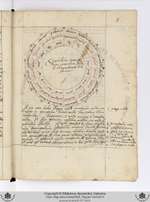
Reg.lat.1344
Reg.lat.1344 is a profound synthesis of esoteric science and Christian orthodoxy, weaving together the once-forbidden arts of steganography, astrological magic, and alchemy. This manuscript challenges the boundary between the sacred and the occult, presenting a world where spirits of the air serve a

Proclus (Cambridge, Trinity College, MS O.5.11)
This manuscript preserves the rigorous dialectic of one of antiquity’s final great minds. Proclus examines the One not as a physical object, but as the absolute origin and end of every existing thing. He challenges the reader to consider how a source can be responsible for all diversity without beco

The Life of Proclus
This biography documents the transition of Proclus from a brilliant young student to the final great successor of the Athenian Academy. Marinus provides a map of the soul, scaling from basic civic virtues to the heights of theurgic practice and divine communication. He strips away the historical rum

Platonic Theology (Thomas Taylor trans.)
This work functions as a complete, scientific manual for navigating the hierarchy of the universe. Proclus rejects the idea that the divine is beyond our reach; instead, he provides a rigorous path for the human soul to return to its source. Readers will encounter a vision where stars are living bei
Commentary on Plato's Timaeus
This commentary serves as the definitive architecture of Neoplatonic thought, mapping the procession of all things from the One down to the physical realm. Proclus argues that the universe is not a product of blind chance but a living, ordered image sustained by divine providence. He treats the Tima

Proclus: Commentary on Plato's Timaeus

Commentary on Plato's Timaeus, Vol. I
Proclus’s commentary on the Timaeus represents the pinnacle of Neoplatonic cosmology, offering a rigorous metaphysical map of the sensible world. He argues that the universe is not a chaotic assembly of matter, but a unified organism positioned between the eternal and the temporal through the 'middl

Commentary on Plato's Timaeus, Volume II
Ernst Diehl’s landmark edition of Proclus’ commentary is more than a philological triumph; it is a gateway to the ancient world’s most sophisticated interpretation of cosmic origins. By tracing the 'genealogy' of the text through the libraries of Renaissance cardinals and Byzantine scribes, Diehl re

Works (Laws, Definitions)

Plato: Laws, Vol. 2 (Books 7-12)
Plato’s 'Laws' represents the philosopher's most mature and practical reflection on governance, shifting from the idealism of 'The Republic' to a concrete legal framework. This second volume, encompassing Books 7 through 12, serves as a masterclass in jurisprudence, exploring the foundational pillar