We're Together In Dreams: Dreaming and Western Esotericism
Primary Sources

Republic, Laws, and Timaeus
In this profound synthesis of 'Republic,' 'Laws,' and 'Timaeus,' Plato bridges the gap between the earthly and the divine. He argues that virtue is not merely a behavior, but a liberation of the soul achieved through alignment with the celestial sphere and the internalizing of 'common conceptions.'

Physics, Metaphysics, and Ethics
This text serves as the foundation for Western natural philosophy by demanding that we identify the 'why' behind every phenomenon. Aristotle rejects the idea that the universe results from random chance. He argues that nature operates with clear purpose and that every change requires a specific caus
Hippocratic corpus (Cambridge, Gonville and Caius College, MS 50/27)
The Hippocratic Corpus rejects the idea that disease is a divine punishment or a random event. Instead, it asserts that health depends on natural, observable processes and the careful balancing of diet and environment. The author demands that a physician be a moral, analytical professional rather th

On the Mysteries of the Egyptians
This work defends traditional religious practice against the skepticism of philosophers like Porphyry. Iamblichus asserts that the gods are not swayed by human emotions, but rather that rituals align the human soul with a pre-existing divine order. He defines the universe as a singular, living organ

The Interpretation of Dreams (Oneirocritica)
The Oneirocritica is not a book of mystic vapor or vague encouragement. It is a technical guidebook designed for the professional diviner to extract concrete predictions from dreams. Artemidorus insists that a dream only has meaning when measured against the dreamer's specific life, class, and local

On Nature and Grace and On the Spirit and the Letter
In this definitive defense of Divine Grace, Augustine of Hippo confronts the bold Pelagian claim that human nature is inherently capable of sinlessness. He argues that while humanity was created good, original sin has left the race as a 'mass of perdition,' unable to achieve righteousness without th
De spiritu et litera liber unus

Commentary on the Dream of Scipio; The Saturnalia; On the Birthday
This volume serves as a systematic record of Roman science, religion, and literature. Macrobius uses Cicero’s Dream of Scipio to explore the immortality of the soul and the mathematical ratios of the planets. He identifies the Sun as the singular power behind all major deities while providing techni

The Interpretation of Dreams (De Somniorum Interpretatione)
This text provides a practical manual for the art of oneiromancy. Artemidorus insists that a dream is not a random flicker of the soul but a specific indicator of future goods or evils. He demands that the reader categorize dreams based on personal identity and physical context. If you want to under

Commentary on the Dream of Scipio and the Saturnalia
Macrobius’s writings represent the ultimate synthesis of Late Antique wisdom, bridging the gap between the classical past and the medieval future. In his 'Commentary on the Dream of Scipio,' he offers a radical Neoplatonic vision of the soul's descent from the stars, arguing that our physical life i

Hippocrates: Twenty-Seven Treatises
This volume documents the foundational shift toward observation-based medicine. It moves beyond raw data to link bodily health with ethics, seasons, and divine order. Readers will find a raw, unapologetic look at how ailments reveal the true character of a patient. It challenges the reader to view t

On Kingship; On Dreams
This collection captures the volatile intersection of Neoplatonic thought and late Roman political catastrophe. Synesius refuses to separate his intellectual life from the grim realities of governing a crumbling province. He employs everything from sharp political satire to intricate theological myt

Iamblichus On the Mysteries
Iamblichus 'On the Mysteries' is a monumental work of Neoplatonic philosophy that shifts the spiritual search from mere intellectual speculation to the experiential power of theurgy. Writing as the Egyptian priest Abammon, Iamblichus responds to the skepticism of Porphyry, arguing that the divine ca

Complete Works of Aristotle

Plutarch's Morals, Vol. 4 (includes Isis and Osiris)
In this compelling volume of 'Morals,' Plutarch investigates the enigmatic mechanics of the 'spirit of divination,' arguing that prophecy is as much a physical phenomenon as it is a divine one. By examining the transformative power of natural vapors and the 'dry' temperament of the soul, he suggests

The Odes of Pindar (Pindari Carmina)
The reader encounters a poet who prioritized grand, sweeping rhythmic periods over the mechanical consistency demanded by lesser scholars. W. Christ argues that Pindar’s work defies simple, uniform categorization and instead requires an ear for musical modulation. By rejecting the artificial pauses

Olympian and Pythian Odes
Pindar, the most celebrated yet enigmatic of the canonical Greek lyric poets, offers a vision of human excellence that balances the grit of the Olympic stadium with the sublime heights of theology. Through his 'inspired magnificence,' he challenges the reader to reconsider the relationship between i

The Republic
Most people act justly only because they fear the consequences of getting caught. Plato guts this assumption by creating a theoretical city where justice is defined not by laws, but by the internal harmony of the individual soul. He argues that political stability requires rulers who hate power and
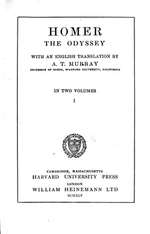
The Odyssey, Books 1-12
This epic poem serves as the bedrock of Western storytelling by defining the hero as a man of many wiles. It confronts the brutal realities of war, the fragility of the household, and the desperate human need for home. The text challenges the reader to distinguish between divine fate and mortal foll

Complete Works (Vol. 5, Minor Works)
This collection moves past abstract philosophy to deal with the grit of survival and governance. Xenophon treats leadership not as a high-minded concept, but as a technical skill honed through trial and error. He examines why tyrants are often miserable, why Spartans were so dangerous, and how a com

On Old Age, On Friendship, On Divination
This collection presents three foundational dialogues that confront the inevitable pressures of the human condition. Cicero uses the voices of Roman statesmen to argue that old age is a period of intellectual harvest rather than a simple decline. He dismantles the modern tendency to rely on utility