Daniel Harris-McCoy on the Oneirocritica of Artemidorus
Some time in the second century a man called Artemidorus, associated with the great city of Ephesus but also with his small hometown of Daldis in the hinterlands of Asia Minor, decided to write a comprehensive manual on the interpretation of dreams.
Primary Sources

Homer, Iliad and Odyssey
The Iliad and the Odyssey stand as the foundational works of ancient Greek literature, offering a unique perspective on the intersection of fate and free will. Homer makes the bold claim that mortality, despite its inherent grief, is a state to be chosen over the empty ease of immortality. Through t

Physics, Metaphysics, and Ethics
This text serves as the foundation for Western natural philosophy by demanding that we identify the 'why' behind every phenomenon. Aristotle rejects the idea that the universe results from random chance. He argues that nature operates with clear purpose and that every change requires a specific caus

Vat.gr.1319
This manuscript challenges the modern separation of classical epic from theological inquiry. It argues that the wrath of Achilles and the death of Hector are central to understanding the nature of virtue and the reality of the soul. Readers will find a rigorous, at times medical, analysis of how hum

Cologny, Fondation Martin Bodmer, Cod. Bodmer 85
Codex Bodmer 85 offers a transformative reading of the Iliad, juxtaposing the raw brutality of the Trojan War with the sophisticated, often esoteric intellectualism of the 12th-century scholar John Tzetzes. By tracking the narrative from Polydamas’s ignored warnings to the desecration of Hector’s co

Aristotle (Cambridge, University Library, MS Add. 1732)
Aristotle argues here that the universe is finite, ordered, and governed by natural laws that leave no room for the random or the infinite. He rejects the idea of a chaotic cosmos, insisting that everything from the path of a comet to the development of an embryo follows a predictable, purposeful de

On Dreams (De Insomniis)
Synesius of Cyrene offers a breathtaking synthesis of Neoplatonic philosophy and orthodox theology in this profound exploration of spiritual formation. He challenges the reader to view the soul as a building under construction and the body not as a source of evil, but as a sacred vessel to be discip

Aristotle (Cambridge, University Library, MS Ii.5.44)
This manuscript challenges the modern assumption that ethics is merely a list of rules. Aristotle argues that virtue is a stable state of the soul formed through habit and deliberate action. He draws a hard line between theoretical wisdom and practical prudence, insisting that knowing what is right

Greek philosophical miscellany (Cambridge, University Library, MS Dd.4.16)
This manuscript acts as a master key to Aristotelian thought, blending ethics, rhetoric, and political theory into a single argument about the human condition. It insists that happiness is not a feeling but an active practice of virtue that requires a lifetime to achieve. The text does not just theo

The Organon

Homer and Quintus of Smyrna (Cambridge, Corpus Christi College, MS 81)
This manuscript acts as a bridge between the ancient Greek world and the medieval intellectual tradition. It presents the Iliad and the Odyssey with marginal notes that challenge the reader to look beyond the battlefield. You will see how early scholars interpreted the tension between mortal pride a
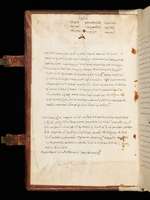
Bern, Burgerbibliothek, Cod. 402
Cod. 402 reads like a laboratory notebook from the ancient world, bridging the gap between abstract philosophy and hard physical observation. The authors reject pure speculation in favor of explaining how wind patterns, mineral properties, and biological functions actually operate. They treat the un

Aristotle's Metaphysics
This text defines wisdom as the pursuit of knowledge for its own sake rather than for survival or utility. Aristotle challenges the pre-Socratic reliance on matter and rejects the Platonic dependence on separate Forms. He argues that being is not a vague concept but a structure defined by substance

The Interpretation of Dreams (Oneirocritica)
The Oneirocritica is not a book of mystic vapor or vague encouragement. It is a technical guidebook designed for the professional diviner to extract concrete predictions from dreams. Artemidorus insists that a dream only has meaning when measured against the dreamer's specific life, class, and local

The Interpretation of Dreams (Oneirocritica) by Artemidorus Daldianus and Achmet
Artemidorus rejects the unverified theories of his predecessors. He relies on his own extensive travels and personal observations to build a rigorous framework for divination. The text argues that a dream's meaning is never universal: it depends entirely on the dreamer's profession, social status, a
Commentary on Aristotle's Three Books On the Soul
Simplicius treats the human body as a masterpiece of biological engineering governed by a central, immaterial soul. He argues that every anatomical feature, from the bend of a knee to the cooling mechanism of the lungs, serves a specific purpose in the preservation of life. By viewing the animal as

Commentary on Aristotle's On the Soul
This commentary serves as a sharp, argumentative guide to Aristotle's theory of the soul. Philoponus rejects lazy interpretations of his predecessors and defends a vision of the intellect as an independent, eternal substance. He explains why we are not merely physical machines by untangling the role

Commentary on the Physics
This commentary serves as a sharp-edged guide to the transition between ancient speculative philosophy and emerging natural science. Philoponus challenges the dogma of his time by demanding that we distinguish between the labels we apply to things and the actual principles governing their behavior.

The Interpretation of Dreams (De Somniorum Interpretatione)
This text provides a practical manual for the art of oneiromancy. Artemidorus insists that a dream is not a random flicker of the soul but a specific indicator of future goods or evils. He demands that the reader categorize dreams based on personal identity and physical context. If you want to under

Homer (Cambridge, Christ's College, MS Rouse 358)
This volume houses the foundational texts of Western literature, tracing the fury of Achilles at Troy and the desperate wandering of Odysseus. It presents a world where divine whims shatter mortal lives and where individual glory often demands an unbearable price. Homer avoids simple morality, choos
Orphic and Homeric Hymns
This remarkable collection offers an intimate look at the intersection of ancient Greek theology, ritual practice, and poetic tradition. By weaving together the Orphic perspective on cosmogony with the Homeric celebration of divine exploits, the text presents a world where every natural force—from t

Complete Works of Aristotle

Homeric Hymns
These hymns function as both divine invocations and raw narrative portraits of the Olympian gods. They move beyond simple praise to explore how deities negotiate power, commit theft, and suffer loss. August Baumeister’s editorial work captures the tension between the original poetic vision and the c
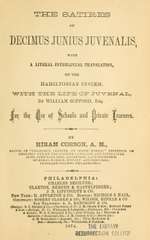
The Satires of Juvenal
The Satires are not just historical artifacts; they are savage takedowns of the human condition. Juvenal argues that money, status, and power turn people into caricatures of themselves. He treats the Roman elite like common criminals and exposes how the poor were forced to play along with the charad

In Aristotelis Physicorum Libros Commentaria
This work is a massive intellectual rescue mission. Simplicius gathers the fragments of pre-Socratic thought, the critiques of the Academy, and the logical rigor of the Lyceum to build a unified system of natural philosophy. He tackles why we can know the physical world and how motion, time, and the

Commentary on Aristotle's On the Soul
This commentary provides a rigorous look at the Aristotelian definition of the soul, placing it firmly at the center of both natural science and metaphysics. Simplicius rejects attempts to define the soul as a mere collection of atoms or physical movements. Instead, he treats it as a formal substanc

Homeric Hymns
This text compiles thirty-three hymns dedicated to the gods of the Greek pantheon, moving past the standard epics to show the deities in their formative moments. Albert Gemoll provides a rigorous edition that rejects the excessive editing of past scholars, choosing instead to honor the original manu

Homers Odyssey Books XIII-XXIV
This edition brings the final movement of Homer’s epic to life through careful linguistic and historical analysis. It challenges readers to see Odysseus not merely as a hero, but as an instrument of divine retribution. You will encounter the tension between human agency and the overwhelming influenc
Works of Homer (Vol. 4)
Homer’s fourth volume captures the tension between the cunning of a man and the inevitable will of the gods. It is a story of disguise, endurance, and the brutal necessity of vengeance in a world governed by strict laws of hospitality. The reader watches as a king disguised as a beggar maneuvers thr

Works of Aristotle (Vol. 2)
This text provides a direct look at Aristotle's natural philosophy as he connects the material world to human behavior. He argues that plants, animals, and humans follow consistent physical laws governed by heat, moisture, and motion. By examining everything from the optics of shadows to the mechani

Natural and Moral Questions, On Fate, On the Soul
In these pages, Alexander moves beyond mere commentary to defend the reality of human choice against the crushing weight of determinism. He argues that if every event is necessitated by a prior cause, the very idea of possibility loses its meaning. Readers will find a rigorous, logical defense of th

Commentary on Aristotle's On the Soul
This commentary serves as a battleground for the definition of the human person. Philoponus systematically dismantles materialist theories that view the soul as a mere harmony of body parts or a collection of physical elements. He asserts that the soul is not a single genus but a hierarchy of powers

The Homeric Hymns (Allen & Sikes Critical Edition)
This landmark 1904 critical edition by Allen and Sikes offers a rigorous reconstruction of the Homeric Hymns, presenting them as vibrant 'rhapsodic preludes' that once set the stage for the performance of the Iliad and the Odyssey. Beyond mere translation, the editors make the bold claim that the te

Homer's Iliad (Books I-XII)
This volume presents a critical foundation for the first half of the Trojan War. It cuts through centuries of scholarly debate to place the reader directly in the camp of the disgruntled Achilles. The text forces a confrontation with the brutal reality of leadership, where a king's vanity often dict

Works of Homer (Vol. 5: Hymns, Cycle, Fragments)
Beyond the famous epics lies a world of divine hymns and fragmentary lore that defines the Greek mythological experience. This collection acts as both a primary source for the sacred rituals of the past and a critical map of how those stories survived the centuries. It traces the transition from ora
The Odyssey, Books 1-12
This epic poem serves as the bedrock of Western storytelling by defining the hero as a man of many wiles. It confronts the brutal realities of war, the fragility of the household, and the desperate human need for home. The text challenges the reader to distinguish between divine fate and mortal foll

Homer Iliad I (Books 1-12, Loeb)
The Iliad is far more than a chronicle of the Trojan War; it is a profound exploration of the 'heroic code' and the devastating intersection of human emotion and divine will. This Loeb Classical Library edition presents the first half of Homer’s masterpiece, focusing on the catastrophic rift between

On Medicine (De Medicina), Vol. 2
Celsus provides a raw, unfiltered look at Roman medicine where physicians lacked modern anatomical knowledge but possessed a deep understanding of botanical and mineral remedies. The text bridges the gap between ancient philosophy and clinical practice, cataloging every concoction from simple emolli