Korshi Dosoo on the Papyri Graecae Magicae and Western Esotericism
We are delighted to interview Korshi Dosoo, a papyrologist who not only knows what’s in the Greek Magical Papyri (all manner of texts of ritual power from various parts of Egypt, dating from the first to the fourth centuries CE), but knows the history of the texts before they became the PGM corpu...
Primary Sources

The Chaldean Oracles
This text offers a rare, syncretic exploration of Zoroastrian oracles interpreted through the lens of Neoplatonic and Christian thought. It presents a universe structured in three distinct parts—the eternal, the immortal but generated, and the decaying—and positions the human soul as a mediator 'glu
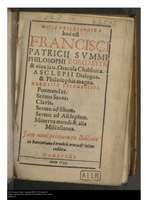
Philosophical Magic: Zoroaster and his 320 Chaldean Oracles
This work reclaims the identity of Zoroaster as a primordial philosopher rather than a mythical figure. Patrizi argues that the cosmos is a divine construction, pulsating with the activity of the Paternal Mind and maintained by the soul. Readers will find a rigorous defense of theurgy as a legitimat

Philosophical Magic: The Chaldean Oracles
This text provides a bridge between ancient pagan theology and the Christian era by asserting that the oldest sages were actually practitioners of a high, holy religion. Patrizi challenges the Aristotelian status quo of his time by arguing that philosophy is inherently tied to theurgy and the animat

Abraxas, or the Unbelieving Believer
Jean Macarius’s 'Abraxas' is a masterpiece of early modern antiquarian scholarship, offering a rare, deep dive into the material culture of the Gnostic 'heretics' and their 'barbaric' words of power. While the text catalogs the terrifying, syncretic iconography of Basilidian amulets, it simultaneous

Abraxas Gems
Bellermann treats these artifacts as puzzles of history rather than magical relics. He strips away the mystery surrounding the Abraxas figures and the Urim and Thummim to reveal the rational intentions of the ancients. By linking Gnostic cosmology to the administration of the Berlin-Cölln Gymnasium,

Pistis Sophia
The 'Pistis Sophia' is a profound 4th-century Gnostic gospel that challenges traditional narratives, presenting a transfigured Jesus who reveals 'higher mysteries' to disciples like Mary Magdalene and Martha. This edition, meticulously preserved by scholars like Petermann and Woide, serves as a gate
Abraxas: Studies in the History of Religion
Albrecht Dieterich reveals how ancient people actually lived their religion through the lens of forgotten magical papyri. He argues that Gnosticism and Orphic mystery cults were not intellectual abstractions, but direct outgrowths of pagan magic. The author proves that the divine was experienced thr

On the Chaldean Oracles
In 'De oraculis Chaldaicis', Wilhelm Kroll performs a masterclass in philological detective work, reconstructing the lost fragments of a text that Neoplatonists like Proclus considered more authoritative than Plato himself. This work navigates the high-stakes tension between rigorous historical crit

Demotic Magical Papyrus of London and Leiden
The Demotic Magical Papyrus of London and Leiden represents a landmark in Egyptology, serving as the latest known manuscript written in the Demotic script. Editors Griffith and Thompson argue that while its contents of magic and medicine are inherently fascinating, the text’s true value lies in its

Demotic Magical Papyrus of London and Leiden, Vol. 3
This third volume of Griffith and Thompson’s seminal work serves as the ultimate philological grimoire, providing the essential linguistic framework for interpreting one of history’s most significant magical texts. It doesn't just translate; it decodes the 'Voces Magicae'—magical words of power—and

The Chaldaean Oracles
G.R.S. Mead brings to life one of the most mysterious and influential texts of late antiquity, bridging the gap between Hellenic philosophy and Eastern mysticism. Through his unique Gnostic-leaning perspective, Mead decodes the cryptic Oracles to describe a universe governed by 'Iynges' (divine whir

Hekate-Selene-Artemis and Related Deities in the Greek Magical Papyri and Curse Tablets
In this masterful analysis of the Greek Magical Papyri and ancient curse tablets, Theodor Hopfner challenges the blurred lines between Hekate, Selene, and Artemis to expose a goddess of primal, terrifying power. Hopfner’s Hekate is a 'dead woman among the dead,' a bacchic force who rages among buria

Pistis Sophia: A Gnostic Gospel
G.R.S. Mead’s translation of the Pistis Sophia offers a profound window into Gnosticism, presenting a cosmic drama of fall and redemption that centers on the suffering and thirteen repentances of Sophia. Mead argues that these texts are not mere 'libertine' heresies, but sophisticated philosophical

The Headless God
This study shifts the focus from abstract academic theories back to the primary source material of the magical papyri. Preisendanz argues that the headless figure is not a solar deity but a product of ancient anxieties regarding death and cosmic order. He systematically dismantles earlier scholarly

Greek Magical Papyri (Papyri Graecae Magicae)
Karl Preisendanz’s monumental edition of the Greek Magical Papyri offers an unfiltered gaze into the 'working library' of the ancient magician. Far from mere superstition, these texts present a sophisticated theurgy where practitioners employ 'voces magicae,' animal sacrifice, and solar liturgies to

Papyri Graecae Magicae (Complete)
The 'Papyri Graecae Magicae' offers an unparalleled window into the 'lived religion' of late antiquity, presenting a gritty, practical manual of sorcery far removed from abstract philosophy. This collection assembles a dizzying array of rituals—ranging from the high theurgy of self-deification to th

The Eighth Book of Moses
The Eighth Book of Moses is a masterpiece of Greco-Egyptian syncretism, blending Hebrew tradition with Hermetic ritual to present a unique vision of divine creation and human empowerment. At its heart lies a startling cosmogony: a deity whose laughter creates light, water, and the soul itself. The t

The Bornless One (Headless Rite)
The Bornless One (Headless Rite) offers an essential investigation into the evolution of ritual magic, moving from 2nd-century Egyptian syncretism to the high occultism of the Golden Dawn and the A∴A∴. Editor Jon Lange presents a unique perspective that dismantles common myths, specifically clarifyi