Esoteric Orientalism Part II: The Greeks are Always Children?
We looked in the last episode at the phenomenon of orientalism among the ancient Greeks, and at the particular brand of orientalism known as ‘Platonic’, an approach to non-Greek civilizations which sees them as ancient sources of wisdom personified by wise men like Zoroaster, Hermes, and others.
Primary Sources

Republic, Laws, and Timaeus
In this profound synthesis of 'Republic,' 'Laws,' and 'Timaeus,' Plato bridges the gap between the earthly and the divine. He argues that virtue is not merely a behavior, but a liberation of the soul achieved through alignment with the celestial sphere and the internalizing of 'common conceptions.'

Euclid's Elements
This text strips the physical world down to its purest, most essential parts. By defining points, lines, and angles, Euclid builds an unbreakable chain of reasoning that requires no external validation. He treats geometry as a mental exercise where simple axioms lead to absolute truth. Readers will

Vat.gr.1291
This manuscript acts as a technical bridge between the movement of the cosmos and the geography of the earth. It provides the specific tools needed to align historical timelines with planetary cycles. Readers will find exact coordinates for ancient cities, ranging from the edges of the known world t

Vat.gr.1594
This manuscript displays the machinery of the Ptolemaic universe where celestial mechanics function as a mirror for logic and theology. Ptolemy argues that because the stars move in perfect, repeating circles, the universe must be fundamentally spherical and mathematically structured. He treats the
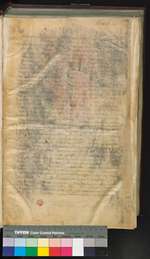
Theonis Expositio magnae constructionis Ptolemaei . Theonos ermeneia tes megales suntaxeos Ptolemaiou
Theon of Alexandria invites readers to see the cosmos through the intersection of rigorous geometry and philosophical inquiry. He argues that human sensory perception provides the initial, albeit imperfect, data required to unlock the clockwork of planetary motion. The text bridges the gap between t
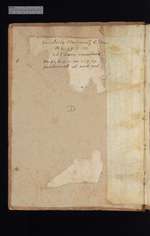
Greek texts on mathematics, astronomy and geography (Cambridge, University Library, MS Gg.2.33)
Cambridge MS Gg.2.33 functions as a practical bridge between the terrestrial and the celestial. It demands that the reader view the Earth as a mere point within the vast, spherical geometry of the universe. The text moves beyond mere observation by linking planetary motion to theological necessity.

Libellus Isagogicus ad Magisterium Iudiciorum Astrorum
This manual serves as the primary gateway for understanding how the heavens dictate sublunary events. Alcabitius moves past simple interpretation to offer a rigorous, mathematical system for judging nativities and timing future outcomes. He treats the cosmos as a coherent machine where every degree

The Elements
More than a mere treatise on shapes, 'The Elements' represents the birth of deductive reasoning and the rigorous pursuit of absolute truth. Euclid systematically constructs a universe of logic, beginning with the most basic definitions of points and lines before ascending into the staggering complex

The Geography
Ptolemy’s 'Geography' represents a monumental shift in human history: the moment geography moved from anecdotal storytelling to precise mathematical science. By critiquing the errors of his predecessors and introducing sophisticated geometric projections, Ptolemy established a coordinate system that

The Elements of Geometry
Euclid’s 'Elementa' is the undisputed cornerstone of Western rational thought, but the 1482 Ratdolt edition is a masterpiece of both mathematical rigor and technological innovation. Featuring the insightful commentary of Johannes Campanus, this text bridges the gap between classical Greek geometry a

Tetrabiblos and Centiloquy
Claudius Ptolemy’s Quadripartitum, enriched by Hali’s classic commentary, stands as the most influential defense of astrology as a legitimate branch of natural philosophy. Rather than mere superstition, Ptolemy presents astrology as a rigorous study of physical influence, where the four qualities—he

On the Judgments of the Stars
De Judiciis Astrorum stands as a monumental bridge between the Islamic Golden Age and the European Renaissance, offering a comprehensive system for decoding the influence of the heavens. Originally composed in Arabic and translated under the royal patronage of King Alfonso of Castile, this text make

On the Judgments of the Stars
Libri de Iudiciis Astrorum is more than a manual of astrology; it is a bold Renaissance manifesto for the restoration of ancient scientific truth. Edited by the humanist Antonius Stupa, the text seeks to 'purify' the wisdom of the 11th-century Arabic master Ali ibn Abi al-Rijal, stripping away what

Alchabitius with Commentary
The 'Libellus isagogicus' stands as an essential bridge between the sophisticated traditions of Islamic astrology and the Latin West, offering a rigorously structured guide to the 'magisterium of the judgments of the stars.' Alchabitius rejects the 'excessive wordiness' of his predecessors to delive

The Book of Nativities and the Centiloquy of Hermes
Liber Nativitatum et Centiloquium Divi Hermetis stands as a monumental synthesis of Hermetic wisdom and Arabic astrological precision, asserting that the moment of birth is an inescapable map of a person's entire existence. By blending medical iatromathematics with social predestination, Albubather

Flowers of Astrology
In 'Flores Astrologiae,' the legendary Abu Ma’shar (Albumasar) synthesizes Greek, Persian, and Indian traditions into a rigorous guide for statecraft and survival. He argues that astrology is not mere superstition but a universal science of 'generation and corruption' rooted in mathematical calculat

Introduction to Astronomy
Abu Ma'shar’s *Introductorium in Astronomiam* is a monumental synthesis of Greek, Persian, and Indian wisdom that positions astrology as an essential pillar of human reason and medicine. By systematically dismantling skeptical arguments, the author asserts that the stars are a primary constituent of

On the Great Conjunctions
In 'De magnis coniunctionibus,' Abu Mashar (Albumasar) presents a breathtakingly ambitious synthesis of Persian, Indian, and Greek astrological traditions to explain the 'Translatio Imperii'—the transfer of rule between nations. This seminal work argues that human history is not a series of accident

Tetrabiblos (Quadripartitum)

Epitome of Ptolemy's Almagest
The 'Epitome of the Almagest' is a profound defense of mathematical certainty in an era Regiomontanus saw as blinded by material greed. By distilling the complex Greek astronomical traditions into a precise Latin framework, Regiomontanus does more than summarize Ptolemy; he refines the models of the

The Complete Works of Plato Translated by Marsilio Ficino
This collection serves as a portal to the mind of Plato as seen through the eyes of one of the 15th century's most influential thinkers. Ficino treats philosophy not as a sterile academic exercise but as a medicine for the soul. He constructs an argument for the harmony between pagan wisdom and Chri
Almagest, Optics, and Spherics with Miscellaneous Commentaries
This text operates on the conviction that nature is governed by a singular, rational order. It merges the technical rigor of Ptolemaic astronomy with the spiritual demands of Christian orthodoxy. You will find geometric proofs for planetary motion sitting alongside meditations on the nature of the s

The Complete Works of Plato
This monumental edition of Plato’s *Opera Omnia* is more than a translation; it is a sacred bridge between Greek antiquity and Renaissance humanism, curated by Marsilio Ficino to harmonize philosophy with divine religion. Within these pages, readers will find the 'divine' Plato—a thinker who argues

The Complete Works of the Divine Plato
This 1590 edition of Plato’s 'Complete Works' serves as a spiritual and intellectual map of the human condition, viewed through the transformative Neoplatonic lens of Marsilio Ficino. Synthesizing classical dialectic with religious piety, the text argues that the ultimate end of man is to achieve a

Complete Plato (Thomas Taylor trans.)
Thomas Taylor’s 'Complete Plato' is a monumental achievement that offers more than a mere translation; it provides the 'key' to the Platonic system through the profound insights of ancient Neoplatonic commentators. Taylor argues that philosophy is a divine discipline designed to lead the soul away f

Tetrabiblos (The Four Books)
This text argues that celestial bodies act as a physical engine for the terrestrial world. Ptolemy maintains that the movements of the Sun and Moon regulate the seasons and the physical constitution of every living thing. By applying these observations to human birth charts, he creates a system for

Timaeus (Greek text with commentary)
R.D. Archer-Hind’s edition of the Timaeus offers a radical reinterpretation of Plato’s later philosophy, arguing that this dialogue represents the culmination of Platonic metaphysics where the dualism of mind and matter is finally resolved. By identifying Being with a Universal Mind, the text presen

Timaeus
This text argues that the physical world is not an independent reality but a symbolic refraction of a universal soul. It solves the ancient deadlock between Herakleitos, who saw only constant change, and Parmenides, who saw only immutable stillness. By reconciling these opposites through the concept

Works of Plato (Republic, Timaeus, Critias)
Plato, the architect of Western philosophy, invites readers into a series of intellectual battles that remain startlingly modern. In these pages, he dismantles the cynical view that 'might makes right' and proposes a revolutionary vision of an ideal state where gender is no barrier to leadership and
An Irish Astronomical Tract (based on Mashallah)
An Irish Astronomical Tract offers a captivating window into a forgotten era of Gaelic intellectualism, where the rigorous astronomy of the Jewish-Arab scholar Mashallah was adapted for Irish schools. Editor Maura Power presents a text that replaces medieval 'bombast' with a clear, technical style d