Wikimedia Commons · Public domain · Hover to magnify, click for fullscreen
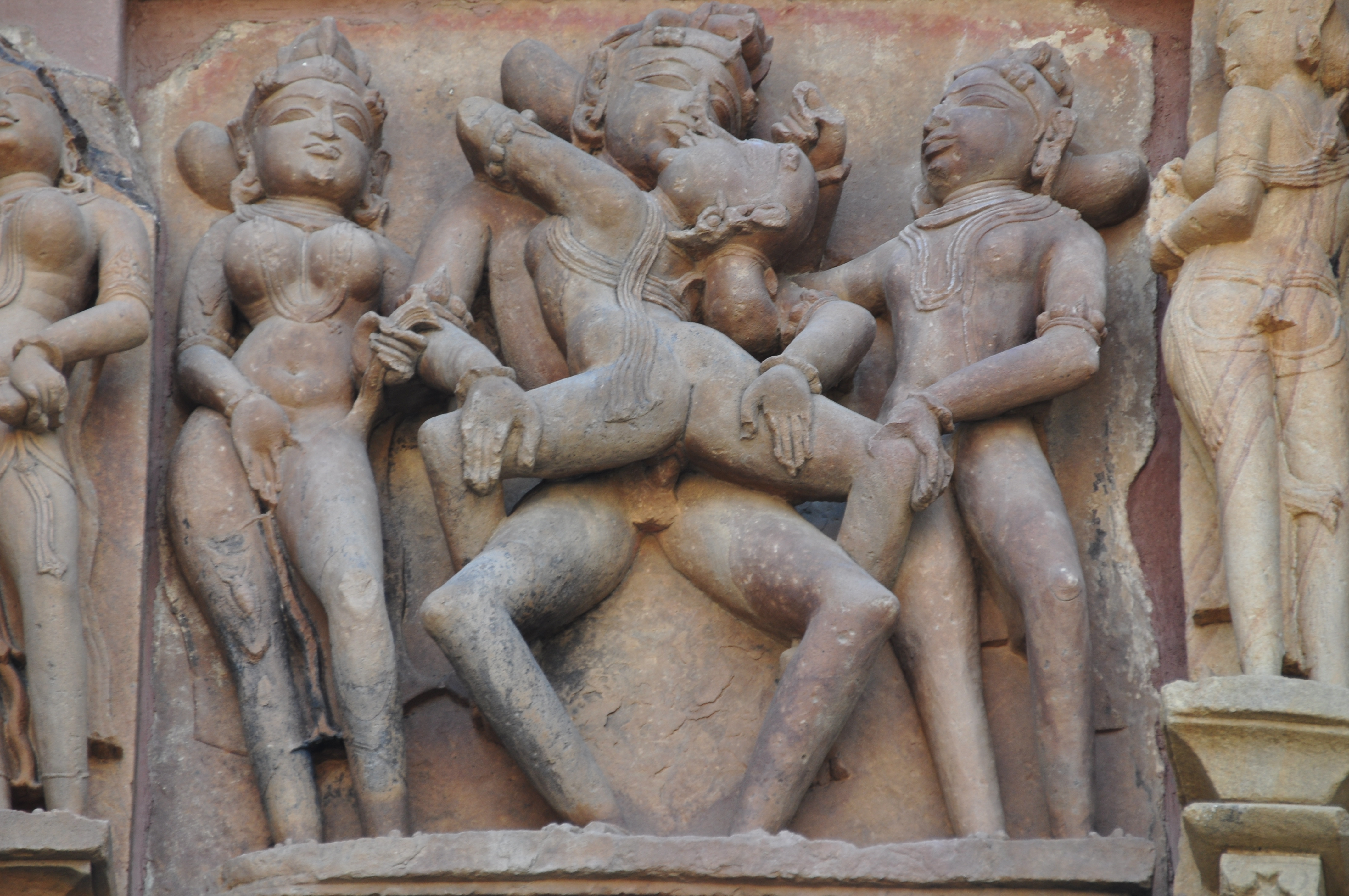
Original fileMaithuna Sculpture, Kandariya Mahadeva Temple
Orgia

About This Work
The relief shows a central pair in a vertical sexual embrace; the male figure stands with his legs apart, supporting the female figure whose legs are wrapped around his waist. Both central figures are carved with ornate jewelry, including necklaces and armbands, and exhibit stylized, slender bodies typical of Chandela-era architecture. To the left and right stand two female figures, adorned with necklaces and hip-belts, who gaze toward the central couple while gesturing with their hands. The sculpture is carved in high relief from sandstone, characteristic of the erotic ornamentation found on the exterior walls of the Khajuraho temple complex.
This relief represents the 'maithuna' (ritual sexual union) imagery common to the Chandela dynasty temple architecture, often interpreted within Tantric traditions or as auspicious symbols of creation and cosmic unity. Such carvings at Khajuraho are frequently linked to the integration of physical pleasure (kama) within the broader framework of Hindu life and spiritual pursuit.
Connected Texts
Kamasutra
The poses and aesthetic depiction of human intimacy in Indian sculpture are often studied alongside classical treatises on desire and social life.