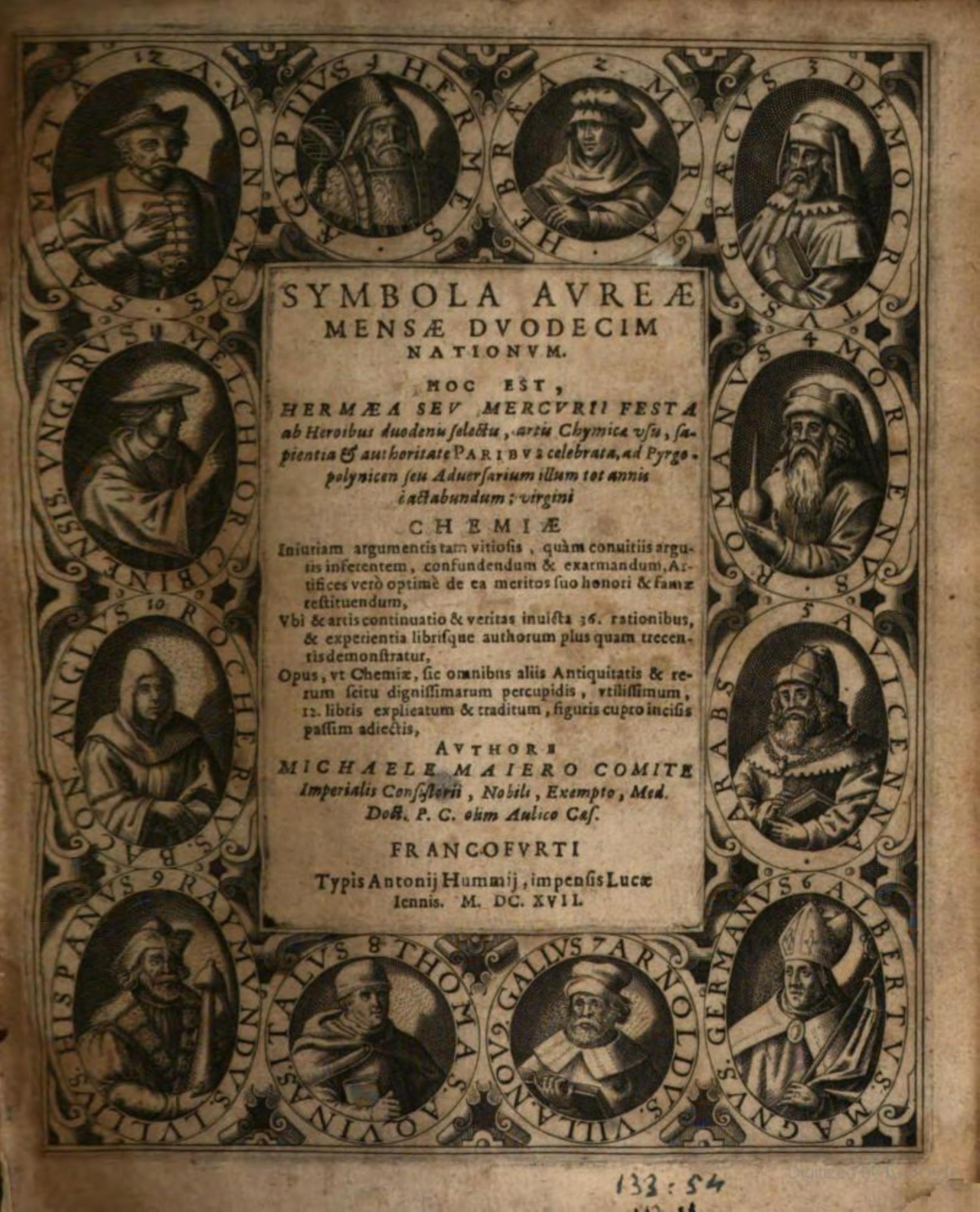
Source Library has identified nearly 2,500 books that appear to be first-ever English translations — over 1,200 of which are now fully translated. This is a strong claim, and it deserves a transparent explanation of how we arrive at it. This post describes the methodology — the AI classification system, the multi-stage verification pipeline, the confidence levels, and the known limitations.
If you haven't read the companion post, First English Translations describes what these books are and why they matter. This post is about how we find them.
The problem
Determining whether a book has ever been translated into English is a surprisingly difficult bibliographic question. For famous works — the Corpus Hermeticum, Paracelsus's major treatises, the Rosicrucian manifestos — the answer is well documented. But for the vast majority of pre-1800 Latin, German, French, and Sanskrit texts in a collection like ours, there is no central registry of translations. You cannot look up “has this book been translated into English” in a database.
Scholarly bibliographies cover the major works. WorldCat can sometimes surface obscure translations. But for a 1621 German alchemical pamphlet or a 15th-century Sanskrit jyotish manuscript, the absence of evidence really is, in most cases, evidence of absence. If no English translation appears in WorldCat, COPAC, the Universal Short Title Catalogue, or the major subject bibliographies, and no scholar has mentioned one, it almost certainly does not exist. The economics of translation before AI simply did not support rendering thousands of niche historical texts into English.
The classification system
Every book in Source Library passes through an AI metadata enrichment step. After OCR is complete, the system reads the first 25 pages of transcribed text and asks Google's Gemini model to classify the book across several dimensions: language, subject categories, estimated publication year, author detection, and — crucially — first-translation status.
The AI is prompted to act as a “rare books librarian and translation scholar” and to classify the first-translation status using one of six values:
| Status | Meaning |
|---|---|
| confirmed_first | No known English translation exists. The model has high confidence based on the text's obscurity, language, and subject matter. |
| likely_first | Probably no English translation exists, but the model cannot be certain. The text is obscure enough that a translation is unlikely but not impossible. |
| uncertain | The model cannot determine whether a translation exists. The text may be well-known enough that a translation could plausibly exist but the model isn't sure. |
| has_partial | Fragments or excerpts have been translated, but no complete English translation exists. Common for anthologized texts. |
| has_translation | A known English translation already exists. |
| not_applicable | The text is already in English. |
Each classification includes a reasoning field (1–2 sentences explaining the assessment), a list of any known English translations the model is aware of, and an independent confidence rating (high, medium, or low). The classification is only applied to the book record when the overall enrichment confidence is medium or higher.
What the model knows
The AI's assessment rests on several types of knowledge:
Bibliographic training data. Large language models have been trained on vast corpora that include library catalogues, bibliographic databases, scholarly articles, book reviews, and publisher listings. When the model encounters a Latin text by Athanasius Kircher, it can draw on its knowledge of Kircher scholarship to assess whether the specific work has been translated. This is the model's strongest signal for well-known authors and canonical texts.
The prior probability of translation. The prompt includes an important heuristic: “Most pre-1800 Latin, German, and other non-English texts on alchemy, Hermeticism, Kabbalah, astrology, and natural philosophy were NEVER translated to English.” This is historically accurate. The translation industry before the 20th century was small, and it was heavily biased toward texts that fit the evolving scholarly canon. A German alchemical pamphlet from 1621 had essentially zero chance of being translated into English unless it was unusually famous.
The text itself. The model reads the actual OCR text from the book's pages — title page, preface, and opening chapters. This gives it direct evidence of the language, subject matter, author, and approximate date, all of which bear on translation likelihood. A 400-page Latin commentary on Pseudo-Dionysius from 1593 is far less likely to have been translated than a 30-page English summary of alchemical principles from 1650.
Negative evidence. For truly obscure texts, the model's inability to recall any English translation is itself informative. If a text is so obscure that a model trained on the internet's worth of text has never encountered a reference to an English translation, the probability that such a translation exists and has simply escaped notice is very low.
The gold badge
Books classified as confirmed_first or likely_first are surfaced throughout the site with a gold “First Translation” badge. This appears on book cards in the library and collection pages, in search results, and on the book detail page. The badge is also available as a search filter — you can search for books and filter to show only first translations.
We chose to group confirmed_first and likely_first together because the practical difference between them is small for readers. Both indicate that no prior English translation is known to exist. The distinction matters for bibliographic precision, but not for the reader who wants to know whether this text has been available in English before.
Deep verification
The AI classification is a first pass. To move from AI intuition to evidence-backed claims, every non-English book in the library passes through a second verification stage that searches real bibliographic databases using Gemini function calling.
The verification model is given eight tools it can call autonomously:
- Local translation catalogs — a database of ~14,000 records from UNESCO's Index Translationum, the Loeb Classical Library, Brill's translations, Penguin Classics, HathiTrust, and other standard translation catalogs
- Open Library API — searches for English-language editions by title and author, returns ISBNs, publishers, and edition history
- Google Books API — broad coverage, including out-of-print and academic works with language filtering
- Internet Archive — searches 30 million+ digitized texts for public domain translations, older academic editions, and reprints that other catalogs miss
- OpenAlex — an open catalog of 250 million scholarly works, excellent for finding academic press translations (Brill, De Gruyter, Cambridge, Oxford) and translations published in journals or edited volumes
- Library of Congress — the authoritative US library catalog, catching recent cataloging and translations held by research libraries
- Universal Short Title Catalogue (USTC) — verifies the identity of the original work in the standard catalog of early printed books
- make_determination — a structured output tool the model calls when it has gathered enough evidence to render a verdict, citing specific translations found (with URLs) or explaining why none were found
The model decides which tools to call and in what order, typically running 3–8 searches per book. It evaluates results semantically — not just checking whether a title appears, but whether the result is actually a translation of the specific work in question, as opposed to a book about the work, a translation of a different work by the same author, or a secondary study that shares a similar title.
This tool-calling approach replaced an earlier pipeline that used separate catalog search and LLM validation stages. The integrated approach is both more accurate (the model can follow leads across databases) and more efficient (typically 3–5 API calls per book vs. 6–9 in the old pipeline).
Automated catalog verification
For each of the 4,300 non-English books in the library, the verification model searches multiple catalog APIs and databases for English-language editions of the same work:
| Source | What it searches | Strength |
|---|---|---|
| Translation catalogs | ~14,000 records from UNESCO Index Translationum, Loeb Classical Library, Brill, Penguin Classics, HathiTrust, and other standard catalogs | Best for canonical translations; includes translator, publisher, and year |
| Open Library | Title + author search, filtered to English-language results | Good coverage of published books; includes ISBNs and edition data |
| Google Books | Title + author search with language filter | Broad coverage; includes out-of-print and academic works |
| Internet Archive | Advanced search across 30M+ digitized texts | Public domain translations, older academic editions, and reprints |
| OpenAlex | 250M+ scholarly works including books, articles, and book chapters | Academic press translations; finds translations in journals and edited volumes |
| Library of Congress | Live catalog search filtered to English-language holdings | Authoritative US library catalog; catches recent cataloging |
| USTC | Early printed book records, verifies identity of the original work | Standard catalog of pre-1601 books; confirms work identity |
The search uses both the original-language title and the English display title (when available) to maximize recall. The model evaluates results semantically: a search for Ficino's De Vita returns dozens of results, most of which are about Ficino rather than translations of Ficino. The model filters these in real time, examining each hit to determine whether it represents an actual English translation of the specific work.
When a translation is found, the model cites the specific translator, publication year, publisher, and — when available from catalog searches — a direct URL to the catalog record. This makes every claim independently verifiable.
Five dispositions
After verification, each book receives one of six dispositions:
| Disposition | Meaning | Badge |
|---|---|---|
| confirmed_first | No English translation found in any catalog or database. Strong evidence that this is a first translation. | First Translation |
| first_complete_translation | Partial translations exist (excerpts in anthologies, selected chapters, scholarly quotations), but no complete English rendering has been published. | First Translation |
| first_modern_translation | An English translation exists, but only from before 1800. This is the first modern translation using current scholarly standards. | First Modern Translation |
| first_from_source | English translations exist from a different source language, but not from this specific text. For example, a Latin translation of a Greek work where the Greek has been translated to English but the Latin has not. | First from Latin |
| translation_found | At least one verified English translation was found. The book page links to the catalog record. | No badge |
| needs_review | The model could not reach a confident determination. These books are not badged and require manual review. | No badge |
The distinction between confirmed_first, first_complete_translation, and first_modern_translation captures a bibliographic reality that binary first/not-first classifications miss. Many canonical texts have had parts translated — Ficino's Opera Omnia has never been fully translated, but individual dialogues within it have been translated separately. Paracelsus's collected Latin works have never been translated as a whole, but Arthur Edward Waite rendered roughly 30% of them in 1894. All three dispositions receive the first-translation badge because the contribution is genuinely novel.
Why tool calling, not plain prompting
An earlier version of this pipeline asked the model a simple question: “Do you know of an English translation of this work?” The model sometimes produced plausible-looking but fictitious references — a real translator paired with a nonexistent book, or a real publisher with a fabricated publication year. In our sampling, roughly two-thirds of the model's unsourced claims could not be verified.
The tool-calling approach solves this by grounding every claim in external evidence. When the model calls search_open_library and gets back a record for “Shackleton Bailey, Harvard University Press, 2000,” that record exists. When it searches and finds nothing, the empty result set is itself documented evidence. The model cannot hallucinate a catalog entry because the catalogs respond with real data.
This also catches a subtle class of near-miss hallucinations: the model might “know” that Stephen Skinner and David Rankine translated something for Golden Hoard Press in 2008, and all of those elements are real, but the actual book is a translation of a different work. When the model searches the catalogs, it finds the real entry and can determine whether it matches the work in question.
What readers see
For books where verification found existing English translations, the book's bibliographic information panel shows a “Known English Translations” section. Each entry includes the English title, translator, publication year, publisher, and — when available from catalog searches — a link to the record on Open Library, Google Books, or Internet Archive. This allows readers to compare Source Library's AI translation with existing scholarly translations of the same work.
For books confirmed as first translations, the panel notes that no prior English translation was found, naming the sources that were checked. This makes the basis for the first-translation claim explicit and auditable.
Known limitations
The model can be wrong. AI language models have broad but imperfect knowledge of bibliographic history. A translation published in a small-circulation journal in the 1930s, or included in an unpublished PhD thesis, could easily be missed. We expect occasional false positives — books classified as first translations where an obscure prior translation does exist. We welcome corrections.
Partial translations are a grey area. Many canonical texts have been partially translated — selected chapters in anthologies, key passages quoted in secondary literature, or abridged versions. The has_partial status captures this, but the line between “partial translation” and “no translation” is blurry. A book that has had three pages quoted in a scholarly article is not “translated” in any meaningful sense, but neither is it entirely unknown to English readers.
Confidence is unevenly distributed. The model is most reliable for texts that are either very famous (it knows the translation history) or very obscure (the absence of any mention is itself strong evidence). It is least reliable for texts of intermediate fame — well-known enough that a translation might exist, but not so famous that the model can definitively say. These cases are typically classified as uncertain and do not receive the first-translation badge.
The classification is a snapshot. A book classified as a first translation today could have a human translation published tomorrow. The classification reflects the state of knowledge at the time of enrichment. We do not currently re-run the classification automatically, though books that pass through the pipeline again will receive updated assessments.
Catalog coverage has limits. The verification pipeline now searches seven major sources — including Internet Archive, OpenAlex, and the Library of Congress — but cannot find translations that exist only in unpublished dissertations, private archives, or out-of-print anthologies with no digital footprint. Our March 2026 accuracy evaluation suggests the false positive rate is under 0.5%, but a small number of edge cases will inevitably be missed.
Why transparency matters
Claiming that something is a “first translation” carries weight in scholarly contexts. We take that seriously. Every first-translation classification in Source Library is:
- •Stored with provenance — the model used, the confidence level, the reasoning, and the date of classification are all preserved in the book's metadata record.
- •Based on actual text analysis — the model reads the OCR text, not just the title. This catches cases where a title might suggest familiarity but the actual content is a different or expanded work.
- •Conservative by default — only
confirmed_firstandlikely_firstreceive the badge. Books classified asuncertainare not badged, even if the balance of probability suggests no prior translation exists. - •Correctable — if a specialist identifies a prior translation we missed, the classification can be updated. The original text and translation remain valuable regardless.
The numbers
As of March 2026, the enrichment system has classified every non-English book in the collection, and the tool-calling verification pipeline has processed virtually all 4,300 non-English books. The initial AI classification identified roughly 1,000 first translations. The tool-calling verification significantly refined the picture in both directions:
| Disposition | Books | What it means |
|---|---|---|
| Confirmed first translation | 1,727 | No English translation found in any catalog or database searched |
| First complete translation | 609 | Partial translations exist, but no complete English rendering published |
| First modern translation | 119 | Only pre-1800 English translations exist |
| Existing translation found | 1,527 | At least one verified English translation exists |
| Needs review | 106 | Insufficient evidence for a confident determination |
2,455 books — roughly 57% of the non-English collection — are classified as first translations of some kind. This is significantly higher than the initial AI classification alone (which flagged ~1,000 books) because the tool-calling verification discovered hundreds of new first translations: books where the initial AI enrichment was too conservative, marking them as uncertain when a thorough catalog search would have revealed no prior translation.
The verification also works in the opposite direction: 1,527 books were found to have existing translations that the initial classification had not identified. Several of these were recent publications (2020s) that postdate the training data of any AI model, demonstrating why catalog search is essential — no amount of parametric knowledge can catch translations published after training cutoff.
Of the 2,455 first translations, 1,276 are now fully translated — readable from the first page to the last. Another 223 are 80% or more complete. The translations span 670 Latin works, 430 German, 420 Chinese, 182 French, 144 Greek, 135 Sanskrit, and dozens of other languages including Syriac, Dutch, Italian, Armenian, Hebrew, and Arabic.
Accuracy evaluation (March 2026)
How reliable are our first-translation claims? We conducted a systematic evaluation in March 2026 to answer this question. The evaluation had two parts: a cross-check against our own catalog data, and a re-verification of flagged cases using an expanded set of catalog sources.
Catalog cross-check
We cross-referenced all 5,836 books claiming first-translation status against the 13,862 entries in our translation catalog database. For each book, we checked whether the catalog contained a translation of a plausibly matching work by the same author, using surname matching and title-keyword similarity scoring. The results:
| No catalog match at all | 3,797 | No known translations by this author in any catalog |
| Same author, different work | 377 | Author has translated works, but not this specific text |
| Surname collision | 556 | Different person with the same surname |
| Probable same work (review needed) | 77 | Catalog has a translation that may match this specific text |
77 cases out of 5,836 — 1.3% — were flagged for manual review. On inspection, the majority turned out to be correct nuanced classifications: collected works where only excerpts had been translated (first_complete_translation), or Latin versions of Greek texts where only the Greek had been translated to English (first_from_source). The tool's reasoning on these hard cases — Paracelsus's collected works, Boccaccio's Italian volgarizzamento, Mersenne's French adaptation of Galileo — was precise and defensible.
Expanded verification pipeline
In late March 2026, we expanded the verification pipeline from 4 catalog sources to 7, adding Internet Archive (30M+ digitized texts), OpenAlex (250M scholarly works), and the Library of Congress live catalog. We then re-verified the 77 flagged cases with the expanded pipeline.
The results were significant: 34 out of 77 dispositions changed (44%). Of those, 12 books changed from “first translation” to “translation found” — genuine corrections. Examples:
- •Marsilio Ficino's De Christiana Religione — Google Books found a 2022 University of Toronto Press translation the old pipeline missed
- •Leonhard Euler's Einleitung in die Analysis des Unendlichen — the German title didn't match the English catalog entry; with more sources, the tool found Blanton's translation
- •Cesare Ripa's Iconologia — Open Library surfaced the 1709 English translation that the old pipeline overlooked
The new tools are being used heavily: Internet Archive is called on 70% of verifications, OpenAlex on 61%, and Library of Congress on 42%. All three are finding translations that the original four sources miss.
We are now re-running the full pipeline with the expanded tool set across all previously verified books, starting with the Latin corpus (2,400+ books). The estimated false positive rate for outright errors is under 0.5%. The remaining edge cases are legitimate scholarly judgment calls about what constitutes “the same work” — whether a partial anthology counts as a translation, whether a Latin rendering of a Greek text is distinct from the Greek original, and similar questions that reasonable bibliographers could disagree on.
An invitation
This methodology is imperfect by design. No automated system can match the depth of a specialist who has spent years working with a particular corpus. What the system can do is scale: it can classify thousands of books in hours, surfacing the most likely first translations for further review.
If you are a specialist in any of the fields covered by Source Library — Renaissance Latin literature, Early Modern German, Sanskrit philosophical traditions, alchemical bibliography — we would welcome your review of our classifications. If you know of a prior English translation that we missed, or if you can confirm that our classification is correct, that information makes the library more reliable for everyone.
Explore: Search all first translations or read the companion post on what these first translations contain. Every book preserves the original text alongside the translation for verification.
Source Library is a project of the Embassy of the Free Mind. Corrections and feedback are welcome — derek@sourcelibrary.org.