


Illustrations
Browse all7 images extracted from 4 books
This is the official seal of the Theosophical Society, founded in 1875. It incorporates several ancient symbols: the hexagram (interlaced triangles), the Egyptian ankh, the swastika, and the ouroboros (a serpent biting its tail), collectively representing the unity of all religions and the cyclical nature of existence.
This illustration depicts Ardhanarishvara, the composite androgynous form of the Hindu deities Shiva and Parvati, representing the essential unity of masculine and feminine principles. The figure is framed within a hexagram and a triangle, geometric symbols that in this context signify the intersection of the divine and the material worlds. This image reflects the 19th-century fascination with comparative mythology and the synthesis of Eastern and Western mystical traditions.
This emblem is the official seal of the Theosophical Society, founded in 1875. It incorporates symbols from various traditions—the Egyptian ankh, the Hindu swastika, the Jewish hexagram, and the Gnostic ouroboros—to represent the synthesis of science, religion, and philosophy.
This intricate publisher's device for J.W. Bouton features a personification of learning alongside symbols of stability and growth. The seated figure with a book and the anchor entwined with a sea monster represent the firm's commitment to scholarly pursuits and enduring quality, marking the establishment of the business in 1857.
This intricate engraving presents a complex esoteric emblem centered on a hexagram and an inverted triangle. It features a central human countenance flanked by lion heads, surmounted by a crowned eagle, and inscribed with the divine name 'ADONAI'. This illustration from Helena Blavatsky's 'Isis Unveiled' synthesizes various mystical traditions, including Kabbalah and Gnosticism, to represent divine emanations and spiritual hierarchy.
This intricate emblem features a hexagram containing the four living creatures of the Tetramorph—the man, eagle, lion, and bull—surrounding a central human face. The word 'ADONAI,' a Hebrew name for God, is inscribed across the top, signifying the divine nature of this symbolic synthesis. This illustration from H.P. Blavatsky's 'Isis Unveiled' reflects the 19th-century synthesis of Kabbalistic, Gnostic, and Hermetic traditions.
Helena Petrovna Blavatsky arrived in New York in 1873, a Russian émigré with claims of years spent studying with Himalayan adepts she called the Mahatmas. Within four years she had produced Isis Unveiled, a 1,300-page assault on scientific materialism that drew on Hermetic philosophy, Hindu scripture, and Kabbalistic symbolism to argue that an ancient wisdom tradition underlay all religions. The Secret Doctrine followed in 1888 — two volumes of cosmogenesis and anthropogenesis built around the mysterious Stanzas of Dzyan, a text Blavatsky said she had seen in a Tibetan monastery.
Around her gathered a circle of early Theosophists who amplified and systematized her teachings. A. P. Sinnett, a British journalist in India, published The Occult World and Esoteric Buddhism based on letters he claimed to have received from the Mahatmas themselves — letters later collected as The Mahatma Letters, one of the most debated documents in the history of Western esotericism. William Q. Judge carried the movement to America with The Ocean of Theosophy, a lucid primer that remains the most widely read introduction to Blavatsky's system. T. Subba Row, a Brahmin scholar and early member, offered a Hindu philosophical perspective in his lectures on the Bhagavad-Gita that sometimes challenged Blavatsky's own interpretations.
Essential Reading
The foundational texts of this tradition

Isis Unveiled: A Master-Key to the Mysteries of Ancient and Modern Science and Theology
Helena Blavatsky, 1877
Blavatsky's first major work (1877): a vast synthesis of Hermetic, Hindu, and Kabbalistic sources against scientific materialism.
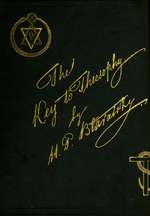
The Key to Theosophy
Helena Blavatsky, 1889
The most accessible introduction to Theosophy, in dialogue form.
Important Works
Significant texts that deepen understanding
Theosophical Glossary
H.P. Blavatsky, 1906
Essential glossary of Sanskrit, Tibetan, and esoteric terms.
The stanzas of Dzyan (From The Secret Doctrine)
Unknown, 1892
The enigmatic cosmogonic verses at the heart of the Secret Doctrine.
From the caves and jungles of Hindostan
Blavatsky, H.P., 1892
Blavatsky's vivid travel accounts from India, written before her fame.

All Books
Browse Full Catalog→13 books in this collection
The Secret Doctrine: Synthesis of Science, Religion and Philosophy Vol. 2
Helena Blavatsky

Secret Doctrine Vol. III - Esoterica
H.P. Blavatsky
Key to Theosophy
H.P. Blavatsky
The Key to Theosophy
Helena Blavatsky
From the caves and jungles of Hindostan
Blavatsky, H.P.
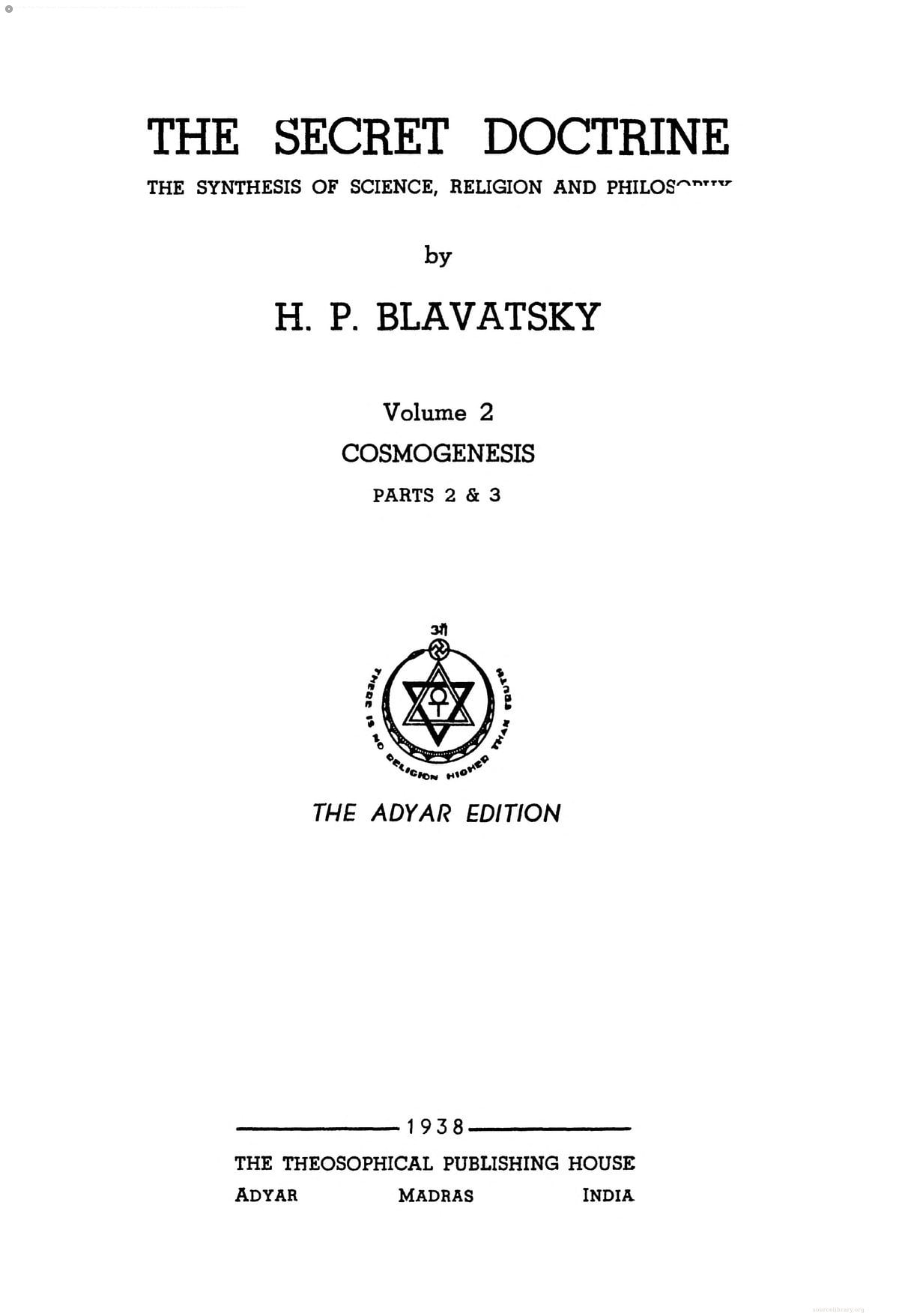
The Secret Doctrine Vol. II
Helena Petrovna Blavatsky
Theosophical Glossary
H.P. Blavatsky
Isis Unveiled Vol. I - Science
H.P. Blavatsky
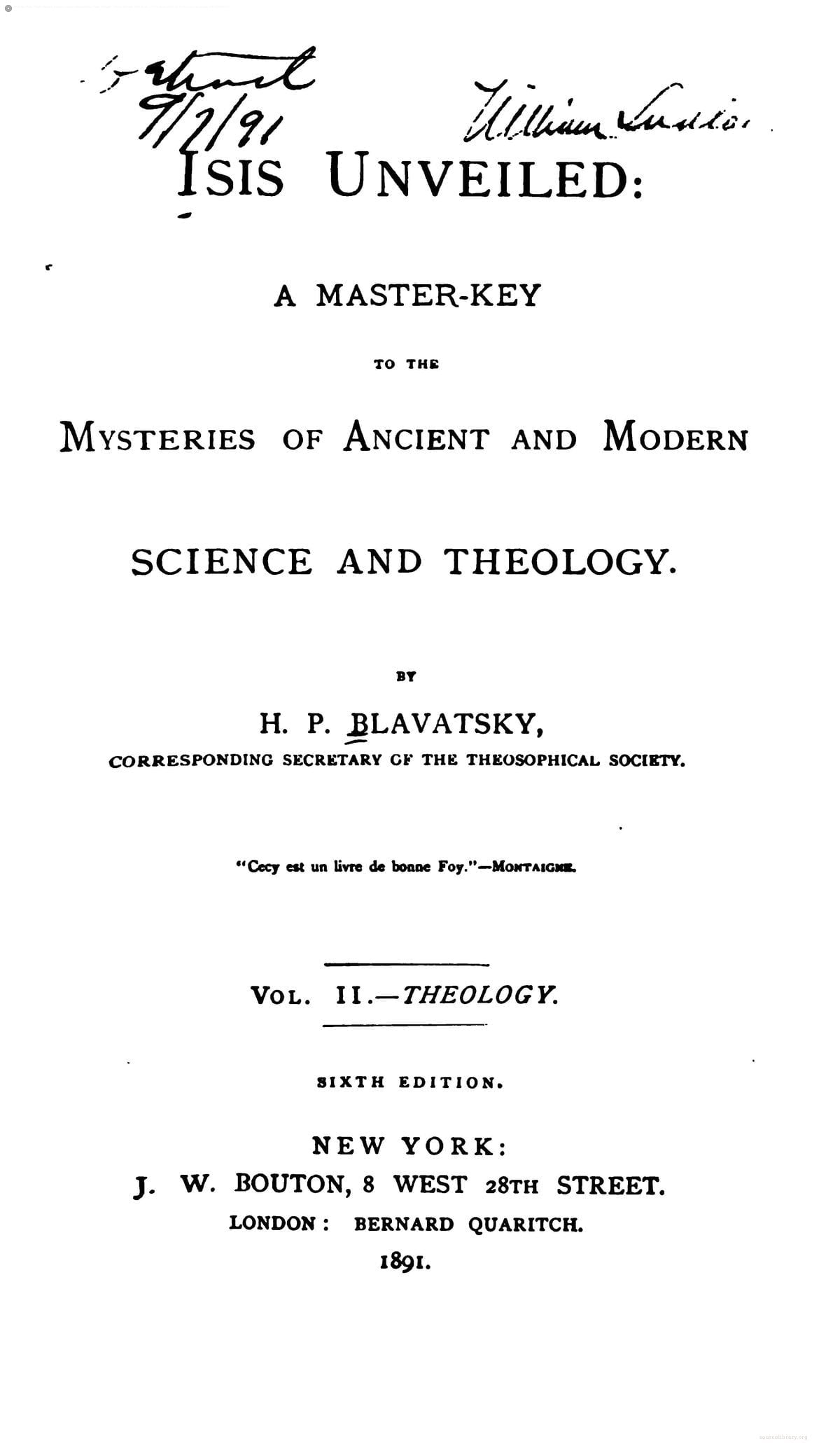
Isis Unveiled Vol. II - Theology
H.P. Blavatsky

Isis Unveiled: A Master-Key to the Mysteries of Ancient and Modern Science and Theology
Helena Blavatsky

Secret Doctrine Vol. I - Cosmogenesis
H.P. Blavatsky
The Secret Doctrine Vol. I
Helena Petrovna Blavatsky
The stanzas of Dzyan (From The Secret Doctrine)
Unknown