Wikimedia Commons · Public domain · Hover to magnify, click for fullscreen
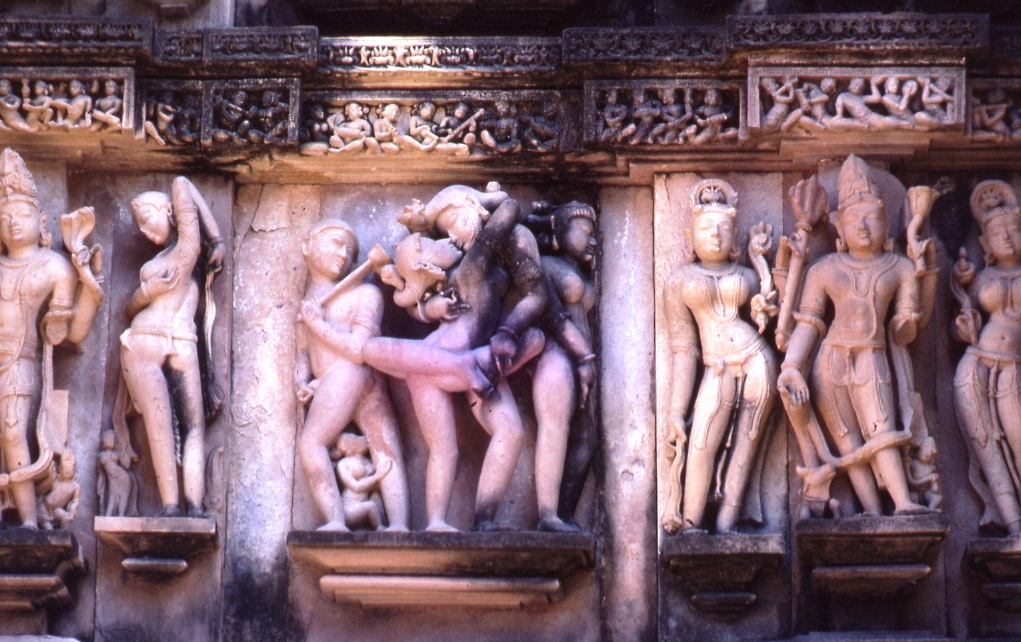
Original fileMithuna Relief, Lakshmana Temple, Khajuraho
38.Khajuraho Laksmana south wall mithuna

About This Work
The relief shows a group of figures carved in high sandstone relief. In the center, a couple is intertwined in sexual union; the female figure is positioned with her legs wrapped around the male's waist, and they are shown kissing. This central group is surrounded by several female attendants or surasundaris who stand in graceful, contrapposto-like postures, some holding objects or touching their hair. The figures are adorned with traditional jewelry and elaborate headgear, characteristic of the Chandela period architectural style.
This sculpture is located on the outer walls of the Lakshmana Temple (c. 954 CE), built by the Chandela dynasty. These mithuna sculptures are interpreted within the context of Tantric practices and the Hindu concept of 'kama' (pleasure) as one of the four legitimate goals of life (purusharthas), often seen as a protective or auspicious element on temple exteriors.