Wikimedia Commons · Public domain · Hover to magnify, click for fullscreen
Original file
About This Work
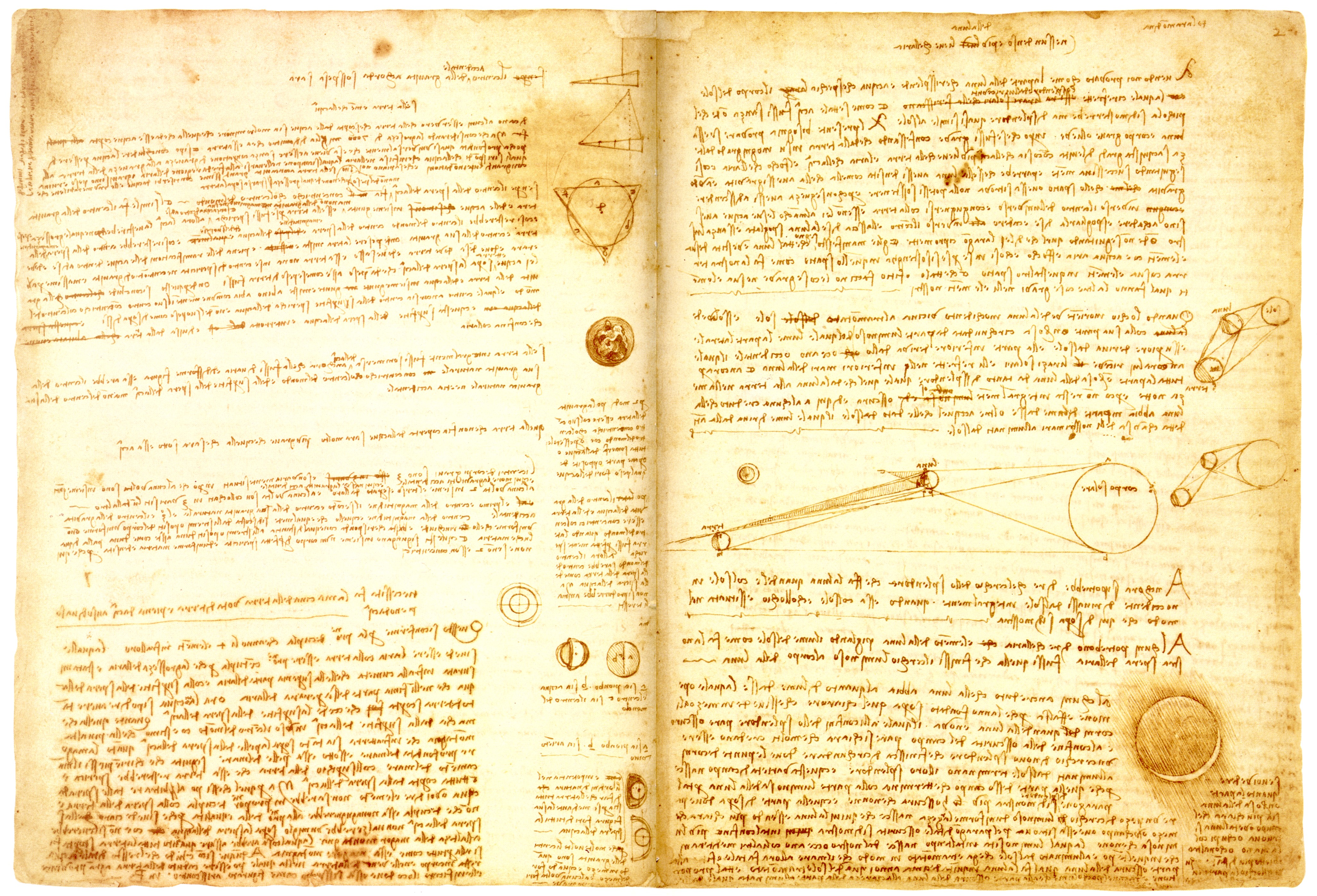
This manuscript page features dense mirror-written text surrounding geometric sketches that model the Earth-Moon-Sun system. The diagrams illustrate how light rays are reflected from the 'body of the Earth' to illuminate the dark portion of the lunar surface. Leonardo uses these drawings to argue that the Moon is an opaque body covered in water, reflecting light like a giant mirror.
This page marks a shift in natural philosophy toward empirical observation and geometry to explain the macrocosm. Leonardo’s treatement of the Earth as a 'star' among others and his focus on the material properties of celestial bodies challenged the Aristotelian distinction between the terrestrial and celestial realms.
Inscriptions(Italian)
terra
luna
sole
[Extensive Italian mirror-script text begins: 'La luna non à lume da sé...']