Sub-collections

Illustrations
Browse all60 images extracted from 10 books

This frontispiece from Bernard de Montfaucon's 'Palaeographia Graeca' (1708) depicts an idealized scene of scholars studying ancient Greek manuscripts within a grand classical portico. Designed by Sébastien Le Clerc and engraved by Pierre-François Giffart, the image allegorically represents the birth of Greek palaeography as a formal discipline. The presence of Greek text on the scrolls, such as 'ΕΠΙΣΤΟΛΑΣ' (Letters), underscores the book's foundational role in the history of manuscript study.

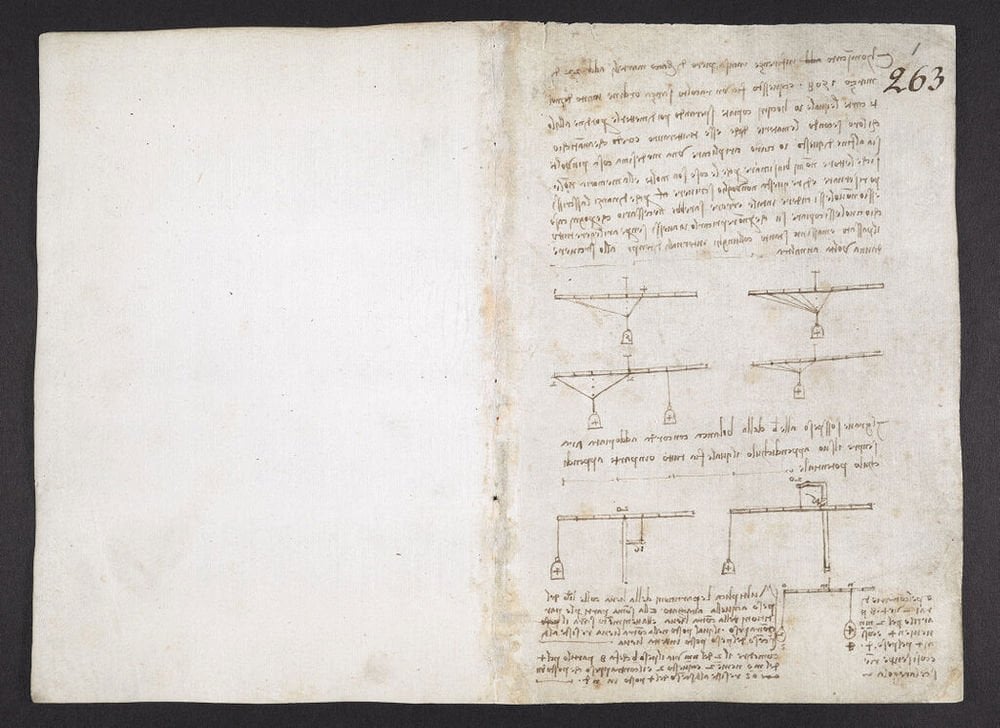
This manuscript page displays a series of technical diagrams exploring mechanical engineering concepts. The intricate pen-and-ink sketches, paired with characteristic mirror-image handwriting, exemplify the innovative scientific inquiry of the Italian Renaissance, most notably associated with Leonardo da Vinci.

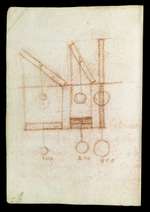
This page features a series of technical sketches executed in red chalk, characteristic of the working methods of Leonardo da Vinci. The central drawing depicts a complex wooden frame, possibly a component of a loom or a lifting mechanism, accompanied by his signature mirror-writing. Such drawings offer a direct window into the analytical mind of a Renaissance polymath, documenting the intersection of art, science, and engineering.

This illuminated portrait likely depicts Flavius Josephus, the author of the text. He is shown with a long white beard and a distinctive pointed hat, holding a book that signifies his role as a historian and scholar. The use of vibrant green and red pigments is characteristic of high-quality medieval manuscript production.

This plate reproduces miniatures from the 12th-century Seraglio Octateuch (Codex Smyrnensis), a masterpiece of Byzantine manuscript illumination. The scenes depict pivotal moments from the Pentateuch, including Moses receiving the Tablets of the Law, the worship of the Golden Calf, and detailed renderings of the Tabernacle's sacred vessels. These illustrations serve as a vital record of medieval Byzantine iconography and the architectural interpretation of biblical descriptions.

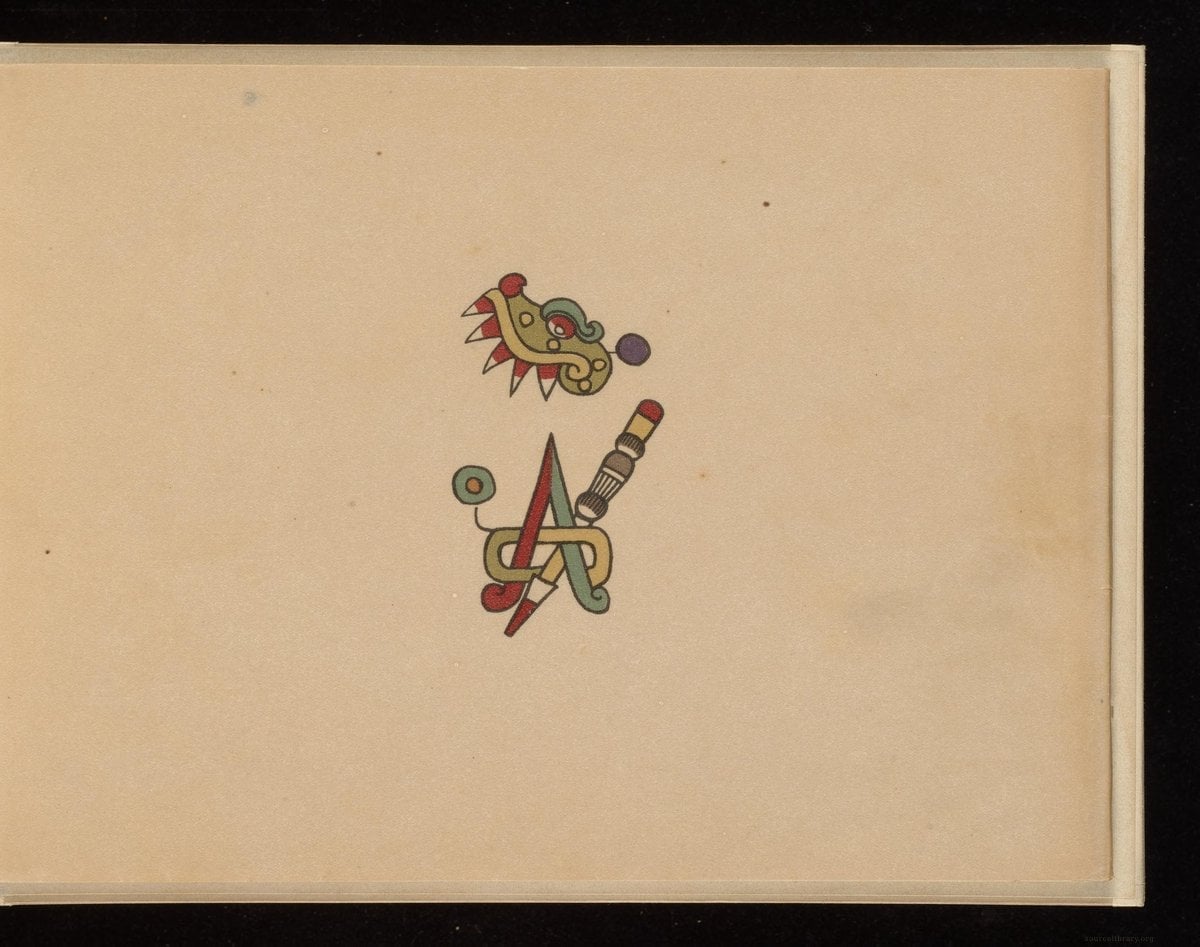
This panel from the Codex Laud depicts Mictlantecuhtli, the skeletal Lord of the Land of the Dead, engaged in a ritual exchange. He holds a small red figure toward a seated figure in a stylized temple, accompanied by calendrical day signs and a descending bird. The scene illustrates the complex relationship between life, death, and the sacred 260-day calendar cycle known as the tonalpohualli.

This engraving from Montfaucon's 'Palaeographia Graeca' reproduces a 10th-century Byzantine miniature depicting the Prophet Isaiah. He is flanked by the personifications of Night (Nyx), draped in a starry mantle, and Dawn (Orthros), representing the spiritual transition from darkness to the light of prophecy as he receives divine inspiration.

A dominant deity figure, identified by elaborate headdress and ritual implements, presides over this scene. The presence of winding speech scrolls and symbolic animals highlights the communicative and transformative nature of Mesoamerican religious ceremonies.

A series of delicate red chalk sketches exploring the anatomy of the human shoulder and its mechanical equivalents. These drawings exemplify the Renaissance fascination with the intersection of biology and engineering, likely serving as preparatory studies for a larger scientific or artistic project.
Visual Art
Browse all art →60 works of visual art in this collection
 drawing
Alchemical Conjunction — Donum Dei
Anonymous
A glass alchemical vessel containing a couple in coitus, surrounded by detached human heads, with an angel on the neck and a flowering plant emerging from the top.
 drawing
Homo Signorum — The Zodiac Man
Anonymous
A 'Zodiac Man' illustration depicting the human body as the locus of astrological influence, with the twelve signs of the zodiac distributed across specific anatomical regions.
 drawing
Zodiac Wheel — Breviari d'Amour
Anonymous
This illumination depicts a circular zodiac wheel containing the twelve signs of the zodiac, each accompanied by a short text indicating the calendar dates when the sun enters that sign.
 object
Monkey General Hanuman — Chola Bronze
Anonymous (Chola, South India)
This object is a small, rectangular bronze plaque featuring champlevé enamel decoration in geometric and floral patterns, likely used as an architectural or furniture fitting.
 painting
Bahram Chubineh Captured by Khusrau Parviz — Shahnama
Anonymous (Ilkhanid)
A dense block of Persian calligraphy from the Shahnama, detailing the capture of the usurper Bahram Chubineh by the Sasanian King Khusrau Parviz.
 painting
Bahram Gur Slays a Dragon — Shahnama
Anonymous (Ilkhanid)
The Sasanian king Bahram Gur is depicted slaying a dragon with his sword while his horse stands nearby.
 painting
Khusrau Parviz Fleeing Bahram Chubineh, Saved by Angel Sarush — Shahnama
Anonymous (Ilkhanid)
This painting depicts the Persian king Khusrau Parviz fleeing from the rebel general Bahram Chubineh, while the angel Sarush appears to guide and protect him.
 painting
Portrait of Nushirwan the Just — Shahnama
Anonymous (Ilkhanid)
The Sasanian King Nushirwan (Khosrow I) is depicted seated on a throne in court, surrounded by his advisors and attendants.
 painting
Rustam Captures the Shah of Sham and the Shah of Berber — Shahnama
Anonymous (Ilkhanid)
The Persian mythological hero Rustam engages in combat with the Shah of Sham and the Shah of Berber.
 painting
Rustam Pleads for Tus Before Kai Khusrau — Shahnama
Anonymous (Ilkhanid)
The legendary Persian hero Rustam pleads with the king Kai Khusrau on behalf of the commander Tus.
 painting
Rustam is Thrown into the Sea by the Div Akvan — Shahnama
Anonymous (Ilkhanid)
The Persian hero Rustam is being hurled into the sea by the demon Akvan, as described in the Shahnama.
 painting
The Combat between the Khan of Chin and the Haitalians — Shahnama
Anonymous (Ilkhanid)
A page from the Shahnama featuring the epic combat between the Khan of Chin and the Haitalians, presented as an illuminated text block.
 painting
Bahman Taking Revenge on the Sistanians — Majma' al-Tavarikh
Anonymous (Timurid)
A battle scene from the Majma' al-Tavarikh depicting the prince Bahman leading his forces against the Sistanians.
 painting
Muhammad's Call to Prophecy and the First Revelation
Anonymous (Timurid)
The Prophet Muhammad receives the first revelation from the Archangel Gabriel on Mount Hira.
 painting
Royal Reception in a Landscape — Shahnama Frontispiece (Right)
Anonymous (Timurid)
A royal reception scene from the Shahnama, depicting a monarch seated under a canopy in a garden, surrounded by courtiers and attendants.
Facsimile editions of the most important manuscripts in the world — from the Codex Sinaiticus and Codex Gigas to Leonardo's notebooks and the Book of Kells. These are the physical objects that transmitted knowledge across centuries: hand-copied, illuminated, and preserved in the great libraries of Europe and beyond.
All Books
Browse Full Catalog→63 books in this collection
The Devil's Bible
Herman the Recluse (attr.)
Codex Alexandrinus (Greek)
British Museum
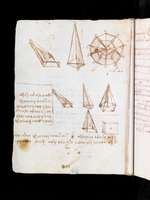
Forster Notebook I
Leonardo da Vinci
Codex Sinaiticus
Constantin von Tischendorf
Compendium of Alchemy and Natural Philosophy
Arnold of Brussels (compiler)
Book of Kells (Codex Kenanensis)
Thomas Kingsmill Abbott
Codex Alexandrinus Facsimile, Vol. II (New Testament)
Frederic G. Kenyon
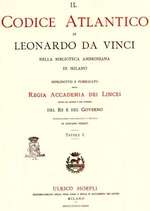
The Atlantic Codex
Leonardo da Vinci
The Forster Notebook III
Leonardo da Vinci
Notebook on Mechanics and Natural Philosophy
Leonardo da Vinci
Codex Nuttall
Zelia Nuttall
Codex on the Flight of Birds
Leonardo da Vinci
Codex Sinaiticus: Old Testament (Facsimile)
Helen & Kirsopp Lake
Codex Vercellensis - Anglo-Saxon Manuscript Facsimile
Max Theodor Wilhelm Förster