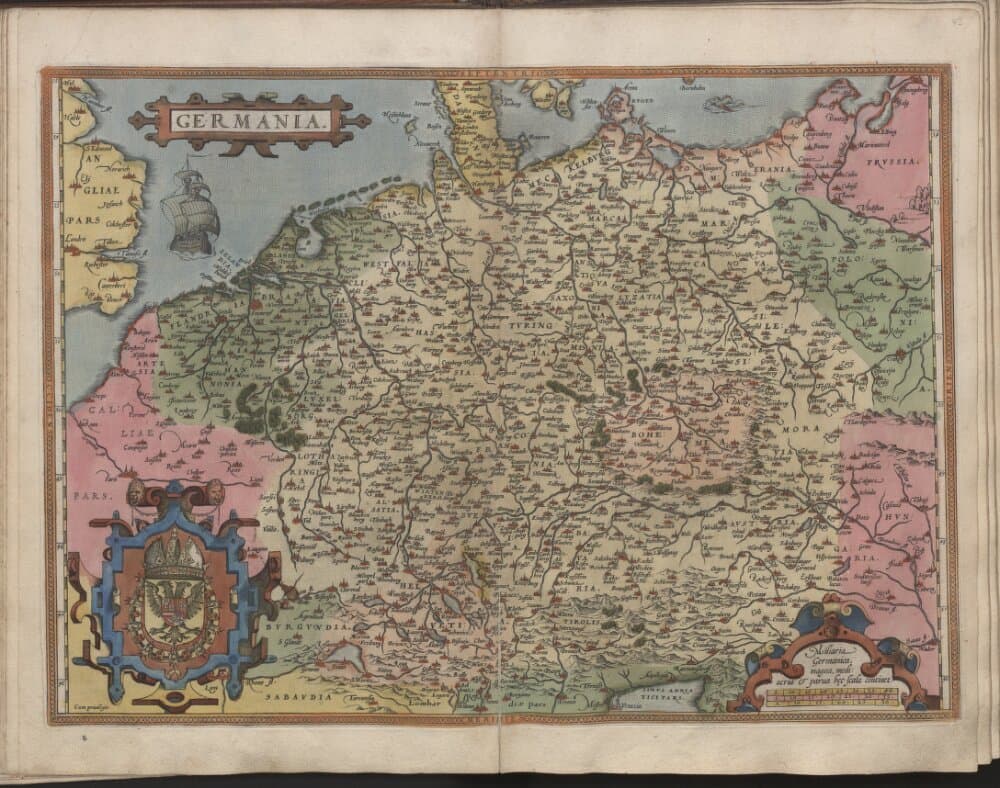
Germany (Germania)
Germania
Latin
1575
2 pages
First Translation
No prior complete English translation of this text has been found.
The provided text appears to be a map or a cartographic description titled 'Germania' attributed to 'Theatrum Sympatheticum'. 'Theatrum Sympatheticum' is a well-known 17th-century collection of works on sympathetic medicine (often associated with Kenelm Digby and others), not an author of a geographical work titled 'Germania'. It is highly likely that the provided metadata misidentifies the work or the author. Extensive searches for a work titled 'Germania' by an author named 'Theatrum Sympatheticum' yielded no results, confirming that no such English translation exists.
Verified Apr 1, 2026 via local catalogs, open library, google books, internet archive, ustc · methodology
About This Book
alchemygeographyhistoryart
About "Germania": Germania, also more specifically called Magna Germania, Germania Libera, or Germanic Barbaricum to distinguish it from the Roman provinces of Germania Inferior and Germania Superior, was a historical region in north-central Europe during the Roman era, which was associated by Roman authors with the Germanic peoples. According to Roman geographers, this region stretched roughly from the Rhine in the west to the Vistula in the east, and to the Upper Danube in the south, and the known parts of southern Scandinavia in the north. Archaeologically, these people correspond roughly to the Roman Iron Age of those regions.
Pages
OverviewPages
Showing 2 of 2
1

2