


Confucian Classics
The Five Classics, Four Books, and their vast commentary tradition — Confucius, Mencius, Zhu Xi, Wang Yangming
Illustrations
Browse all60 images extracted from 7 books
This refined engraving portrays a scholar surrounded by the tools of his trade, emphasizing the connection between physical exploration and literary knowledge. The inclusion of the terrestrial globe and the surrounding volumes serves as a visual testament to the intellectual ambitions of the early modern period.
This grand engraving presents a portrait of the philosopher Confucius, standing prominently within a vast library filled with traditional Chinese texts. Above him, a decorative pediment adorned with dragons and calligraphic inscriptions underscores his intellectual and moral authority. This work is a prime example of how early modern European scholars and artists sought to visualize and interpret Chinese culture and its foundational figures.
This elaborate engraving displays the royal arms of France, featuring the iconic three fleurs-de-lis surmounted by a crown. The shield is supported by two dynamic winged putti, a common Baroque motif that lends an air of divine or celestial authority to the text it introduces.
This woodcut depicts a traditional Zhou dynasty war chariot, complete with armored horses and an array of ceremonial and combat weaponry. It serves as a visual aid for the 'Classic of Poetry,' illustrating the martial culture and statecraft idealized by scholars of the Ming period.
This evocative woodcut captures a traveler pausing in a rural landscape, his gaze directed toward a distant, fortified city. The stark lines and expressive posture of the figures exemplify the narrative power of early Renaissance printmaking, inviting the viewer to contemplate the themes of journey and destination.
This finely detailed engraving captures a scholar in his private study, surrounded by the tools of his trade, including globes and open volumes. The composition emphasizes the intellectual rigor and contemplative nature of the early modern academic, serving as a testament to the period's reverence for knowledge and discovery.

A formal portrait of the Ming dynasty philosopher Wang Yang-ming, depicted in the traditional attire of a scholar-official. He is shown wearing a distinctive ceremonial cap and holding a ritual tablet (hu), symbols of his status and intellectual authority. This image is a reproduction from a Chinese edition of his works, serving as a 'transmitted picture' to connect readers with the historical teacher.

The official seal of Columbia University, depicted here on a 1911 title page, features an allegorical figure of Wisdom instructing students. It incorporates the university's motto 'In Lumine Tuo Videbimus Lumen' and reflects the classical traditions of American higher education at the turn of the century.

This woodcut depicts a ritual bronze vessel adorned with an intricate scene of Lei Gong, the Chinese god of thunder, striking his drums amidst swirling clouds. Such illustrations in the 'Shijing Shuyi Huitong' serve to visually interpret the classical texts by linking poetic imagery to traditional mythological motifs and material culture.
All Books
Browse Full Catalog→25 books in this collection
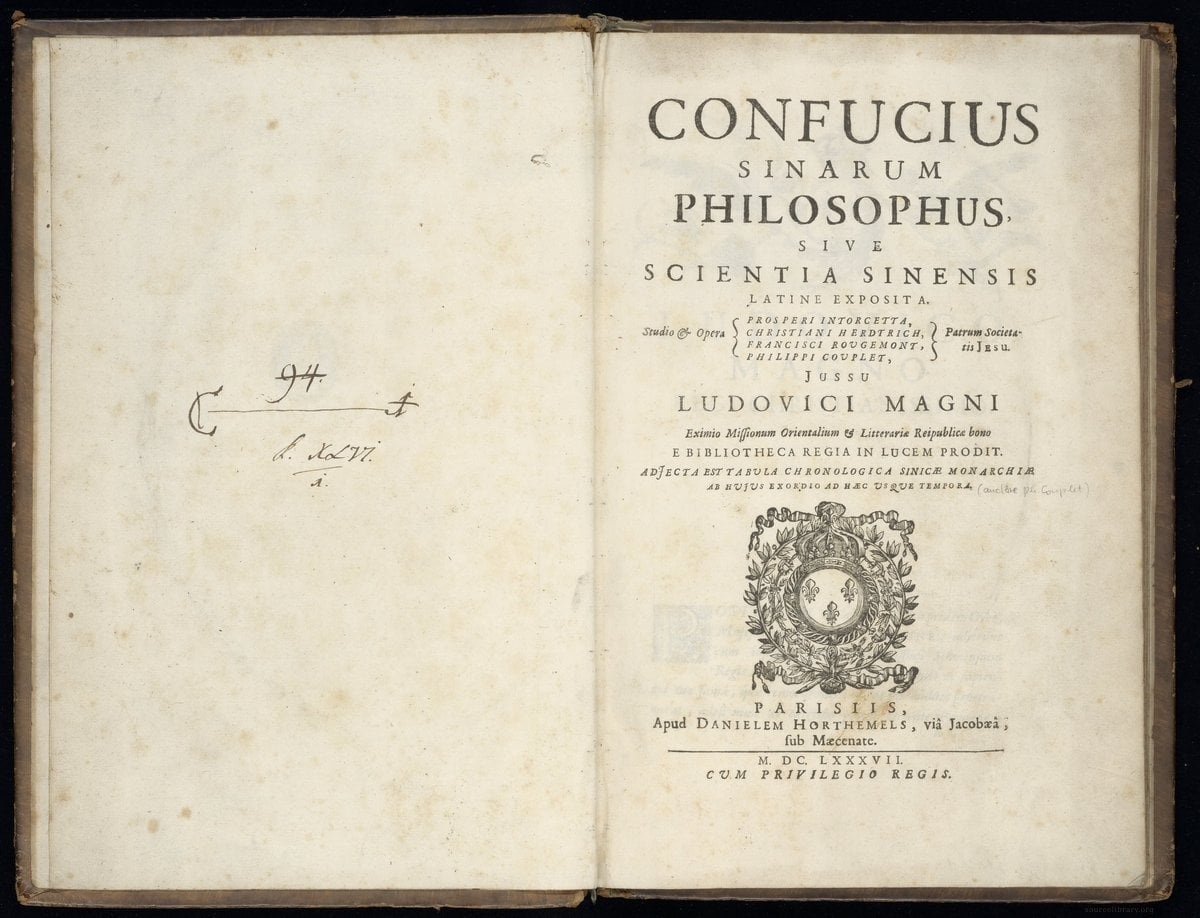
Confucius, Philosopher of the Chinese
Intorcetta, Prosperus|Herdtrich, Christianus|Rougemont, Franciscus Couplet, Philippus
Collected Illustrations of the Three Powers: Ceremonial Systems
王圻, 王思義
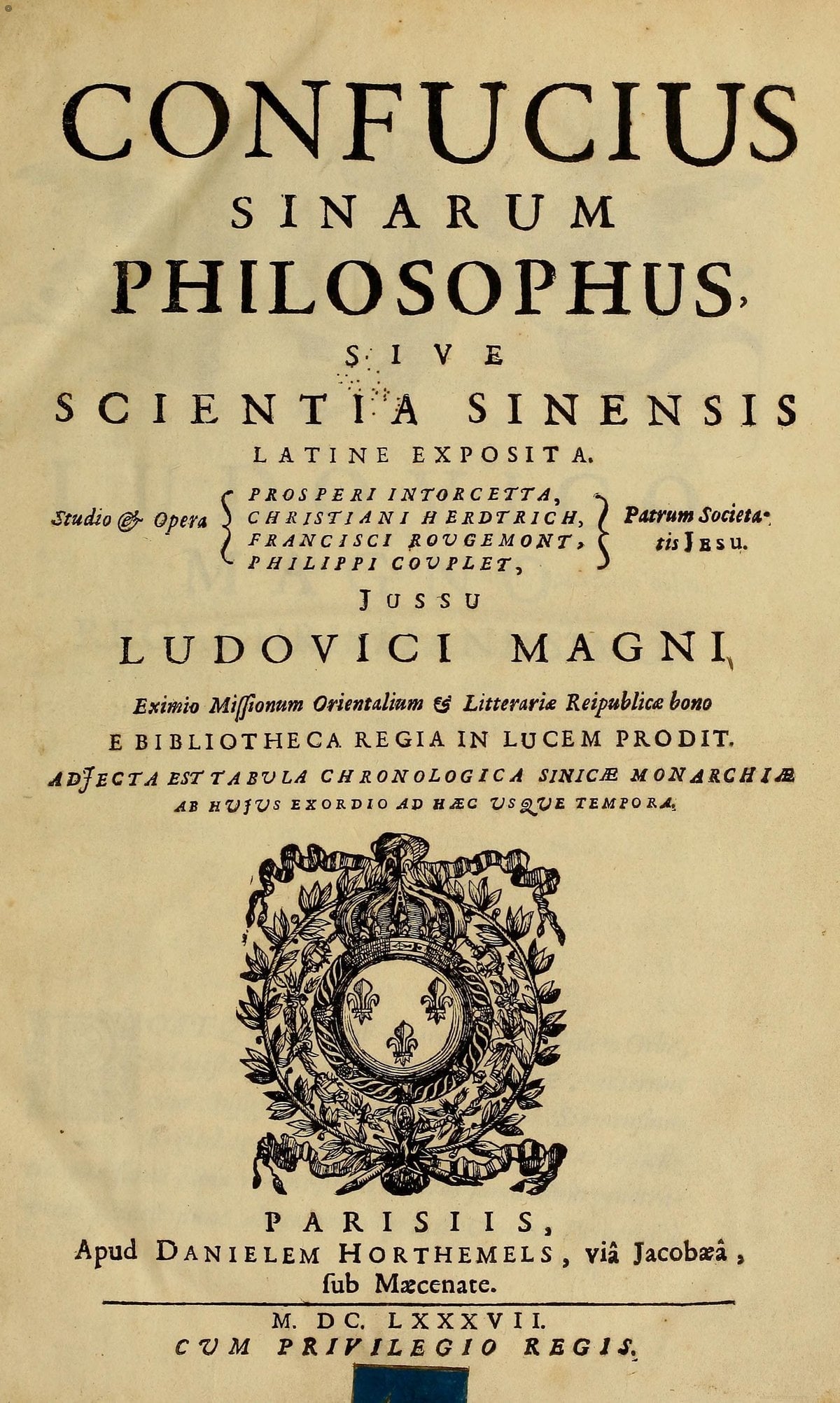
Confucius, Philosopher of the Chinese (Confucius Sinarum Philosophus)
Confucius; Jesuit Missionaries
The Sacred Books of China: Li Ki, Part 2 (SBE Vol. 28)
James Legge (trans.)
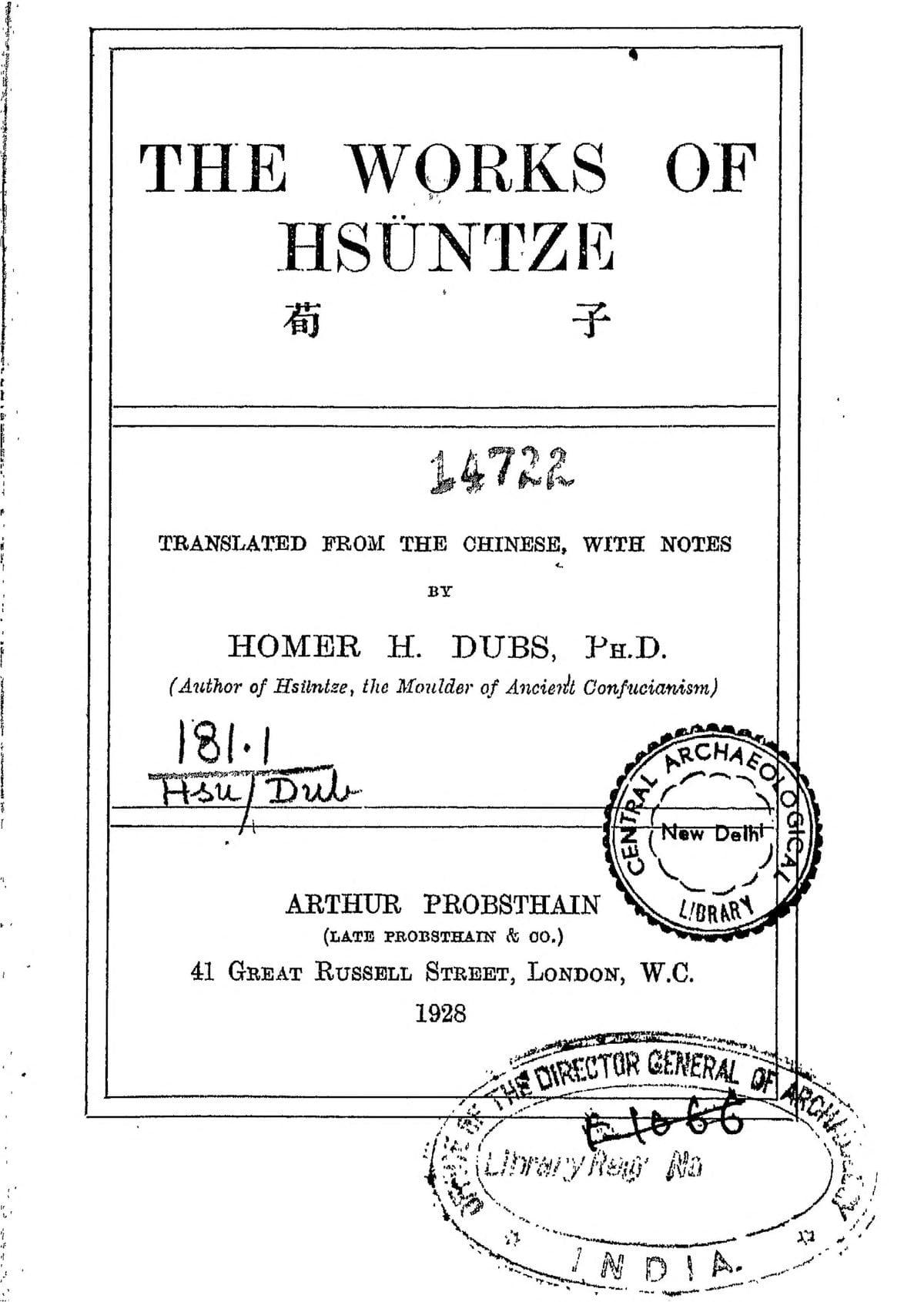
The Works of Hsüntze (Xunzi)
Homer H. Dubs (trans.)
The Economic Principles of Confucius and His School
Chen Huan-Chang
Four Books of Confucius - Analects, Great Learning, Doctrine of Mean, Mencius
James Legge
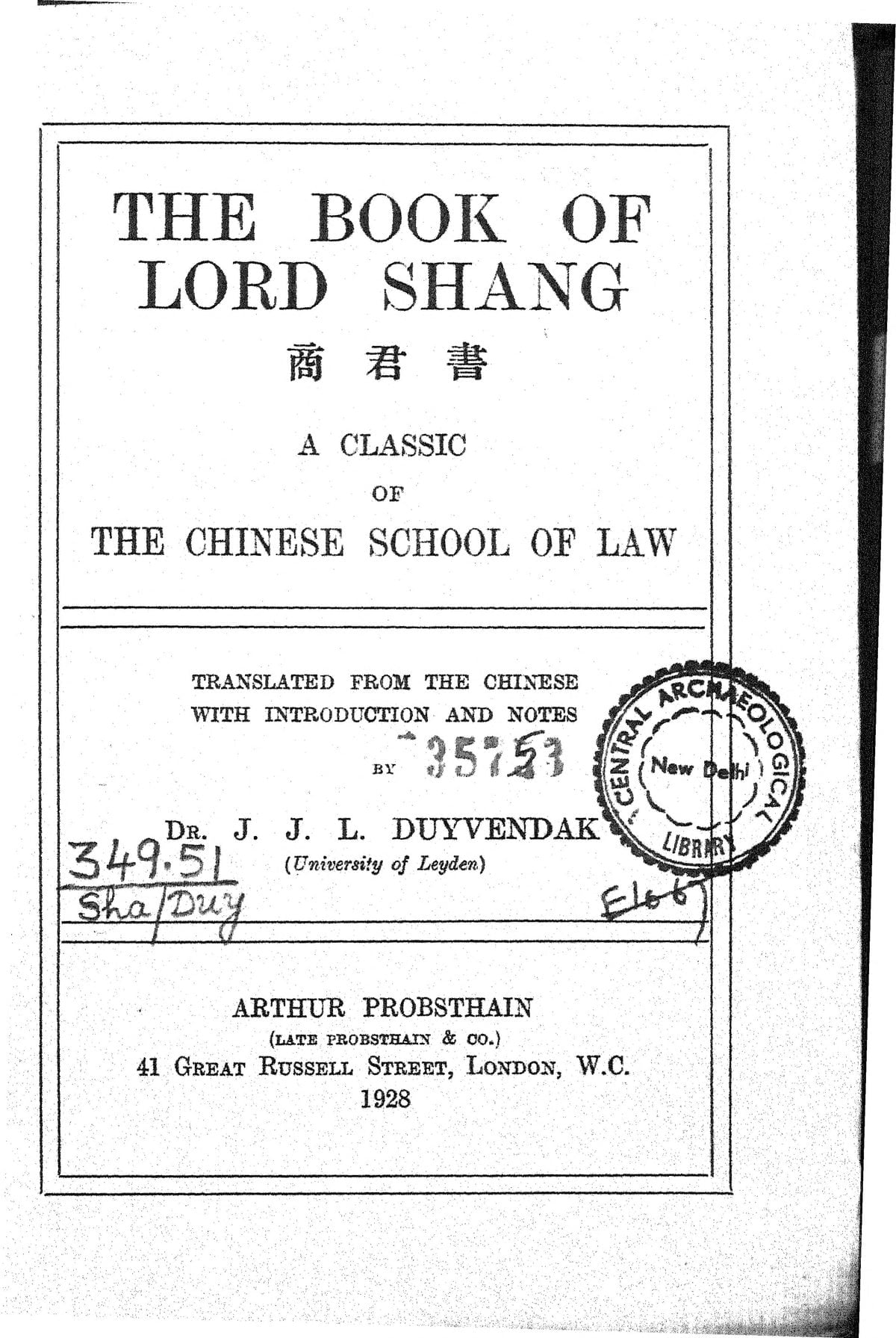
The Book of Lord Shang: A Classic of the Chinese School of Law
J.J.L. Duyvendak (trans.)
Analysis of Doubts in the Artificers' Record
江永
Li Ki: Mémoires sur les bienséances et les cérémonies
Séraphin Couvreur
The Confucian Analects
Confucius / James Legge
The Ethical and Political Works of Motse
Y.P. Mei
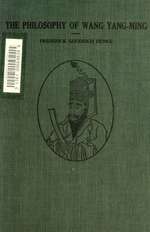
The Philosophy of Wang Yang-ming (Instructions for Practical Living)
Frederick Goodrich Henke (trans.)
The Sacred Books of China: Li Ki, Part 1 (SBE Vol. 27)
James Legge (trans.)