


Illustrations
Browse all500 images extracted

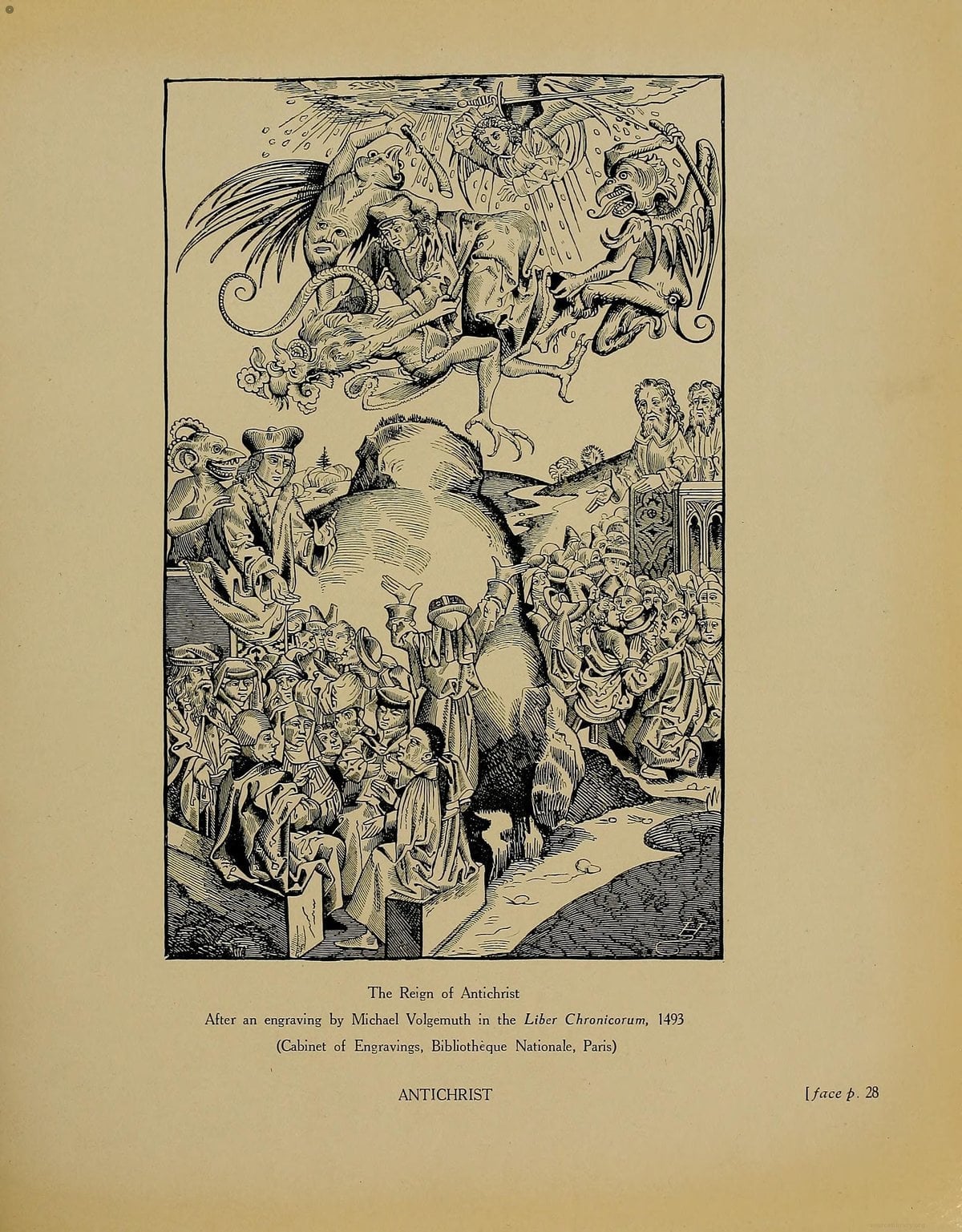
This intricate woodcut, reproduced from the 1493 'Liber Chronicorum' (Nuremberg Chronicle), depicts the apocalyptic 'Reign of Antichrist.' The scene shows the Antichrist preaching to a diverse crowd while being prompted by a demon, as divine retribution looms above in the form of an angel with a sword. It serves as a powerful example of late medieval eschatological imagery and the masterful printmaking of Michael Wolgemut's workshop.

This iconic illustration, known as the Sabbatic Goat or Baphomet, was originally designed by the French occultist Eliphas Levi. It represents the synthesis of the universe, balancing opposing forces such as light and dark, male and female, and spiritual and material realms through its dense symbolic language, including the caduceus and the alchemical terms 'Solve' and 'Coagula'.

This striking illustration from the 'Kitab al-Bulhan' (Book of Wonders) personifies the experience of a nightmare. A formidable, dark-skinned jinn with horns and wings is shown pressing down upon a sleeping figure, a literal interpretation of the 'night-mare' or sleep paralysis. The surrounding talismanic symbols and grotesque heads reflect the medieval Islamic world's complex understanding of the unseen realm and its influence on human life.

This striking woodcut from a 1612 pamphlet depicts three women accused of witchcraft riding upon a pig. Such illustrations were used to sensationalize the accounts of trials and executions, reinforcing popular fears and stereotypes about the supernatural powers of those accused. It serves as a powerful visual record of the intense social and religious anxieties surrounding witchcraft in early 17th-century England.

This detailed color portrait depicts an Ekoi woman from Southern Nigeria, showcasing elaborate traditional adornment. She wears a complex headdress featuring feathers and white pom-poms, complemented by distinctive facial markings and an intricate ceremonial harness. Such illustrations were crucial in early 20th-century ethnographic studies for documenting the rich cultural heritage and aesthetic practices of West African peoples.

This poignant portrait depicts a woman who, according to the caption, was rescued from a ritual sacrifice to 'Juju Mfuor.' It serves as a stark example of early 20th-century colonial ethnographic documentation, capturing both the individual's likeness and the sensationalized narratives often attached to such images by Western observers.

This intricate grid of miniatures serves as a visual compendium of various trades and social roles in the early modern Islamic world. Each cell depicts a figure engaged in a specific occupation—ranging from weaving and metalworking to hunting and music—providing a rich record of material culture and daily life. The combination of descriptive imagery and identifying text highlights the manuscript's function as an educational or encyclopedic resource.

This dramatic engraving by William Faithorne illustrates the biblical account from 1 Samuel 28, where King Saul seeks the counsel of the deceased prophet Samuel through the Witch of Endor. The composition captures the poignant moment of recognition, with Saul bowing in reverence before the radiant, kneeling spirit of Samuel, while the witch looks on from the shadows holding a torch. Faithorne's masterful use of crosshatching and fine lines creates a somber, atmospheric interior, emphasizing the supernatural and solemn nature of this illicit encounter.

This woodcut from Ulrich Molitor's 1489 treatise 'De lamiis et phitonicis mulieribus' (Of Witches and Diviner Women) depicts a scholarly or legal consultation. A seated authority figure, possibly representing the author or a judge, engages in dialogue with two men, one of whom presents an open book, reflecting the intellectual and legal frameworks used to debate the reality of witchcraft in the late 15th century.
Visual Art
Browse all art →55 works of visual art in this collection
 print
printLo Stregozzo (The Witches' Procession)
Agostino Veneziano
A group of witches and fantastic creatures process through a dark landscape, carrying a skeletal chariot composed of bones and organic debris.
 print
printRevelation of St. John: St. Michael Fighting the Dragon
Albrecht Dürer
St. Michael the Archangel and a host of other angels engage in battle against a multi-headed dragon and several demonic figures in the sky above a landscape.
 print
printSt. Michael Fighting the Dragon, from The Apocalypse
Albrecht Dürer
The Archangel Michael leading a host of angels in battle against the dragon and multi-headed beasts of the Apocalypse.
 print
printThe Angel with the Key of the Bottomless Pit, from The Apocalypse
Albrecht Dürer
A woodcut depicting an angel descending to bind the dragon (Satan) with a key and chain, based on the Book of Revelation.
 print
printThe Four Witches (Four Naked Women)
Albrecht Dürer
Four naked women stand in an interior space near a flaming hearth, accompanied by a sphere suspended from the ceiling and a skull on the floor.
 print
printWitch Riding Backwards on a Goat
Albrecht Dürer
A nude witch with flowing hair rides a goat backwards through the air, holding a staff topped with a bundle of sticks emitting sparks, while four putti below interact with one another and hold various objects.
 print
printFortune-Teller
Andries Stock (after Jacques de Gheyn II)
A gnarled old fortune-teller holds the hand of a young, elegantly dressed woman while reading her palm beneath a large tree.
 print
printWitches Preparing for Sabbath
Andries Stock (after Jacques de Gheyn II)
A chaotic scene depicting witches preparing for a nocturnal sabbath, featuring various supernatural creatures, demons, and occult transformations in a rocky landscape.
 print
printWitch's Sabbath (Sabbat)
Auguste Rodin
A central female figure sits with her legs spread wide, straddling a broomstick that extends vertically between her legs.
 print
printMinos and Demons, from the Last Judgment
Cherubino Alberti (after Michelangelo)
The mythological judge Minos is depicted standing, nude, and coiled by a serpent, flanked by two demons in an underworld setting.
 print
printWitches' Sabbath, from "Les Sabbats"
Claude Gillot
A Witches' Sabbath scene featuring a central enthroned devil, dancing figures, hybrid creatures, and occult paraphernalia.
 painting
A Witches' Sabbath
Cornelis Saftleven
A witch riding a goat leads a gathering of hybrid creatures, satyrs, and demonic figures in a nocturnal ritual within a dark, rocky landscape.
 print
printFaust and Mephistopheles in the Hartz Mountains
Eugène Delacroix
A lithograph depicting the scholar Faust and the demon Mephistopheles traveling together through the rugged landscape of the Hartz Mountains.
 print
printMacbeth Consulting the Witches
Eugène Delacroix
The Scottish general Macbeth stands before three witches who are chanting over a steaming cauldron.
 print
printMacbeth and the Witches
Eugène Delacroix
The Scottish general Macbeth stands with arms folded while confronting three witches who hover over a boiling cauldron.
From Juridical Torture to the Birth of Modern Psychology
Before he was King of England, James VI of Scotland published a manual on how to identify and execute witches to protect his divine right to rule from the 'assaults of Satan.'
The literature of demonology represents one of the darkest and most complex chapters in Western intellectual history. It began not as folklore, but as a rigorous legal and theological project. In 1486, Heinrich Kramer and Jacob Sprenger codified the persecution of women in The Hammer of Witches, a text that provided the judicial framework for centuries of trials. This collection traces how these ideas spread across Europe, from the 'Malleus Maleficarum Tradition' to the specific 'English Witchcraft Trials' that haunted the 17th century.
However, the collection also preserves the voices of those who risked their lives to stop the madness. Johann Weyer, a physician, argued in On the Illusions of Demons that those accused of witchcraft were not agents of evil but victims of 'melancholy' and mental illness. His work was later expanded upon by Reginald Scot, whose The Discovery of Witchcraft systematically debunked the 'magical' feats of the era as mere sleight-of-hand and superstition, laying the groundwork for the Age of Enlightenment.
Beyond the courtroom, the collection explores the 'Solomonic Grimoires' and the ritual attempts to command spirits. From the Arabic esoteric wisdom in the Book of Wonders to the intricate engravings of Robert Fludd in the History of the Macrocosm and Microcosm, we see a world where the boundary between the natural and the supernatural was constantly being negotiated through ink and ritual.

The Architects of the Witch Hunts
1475-1600The theological and legal foundations that transformed local superstitions into a pan-European crisis.
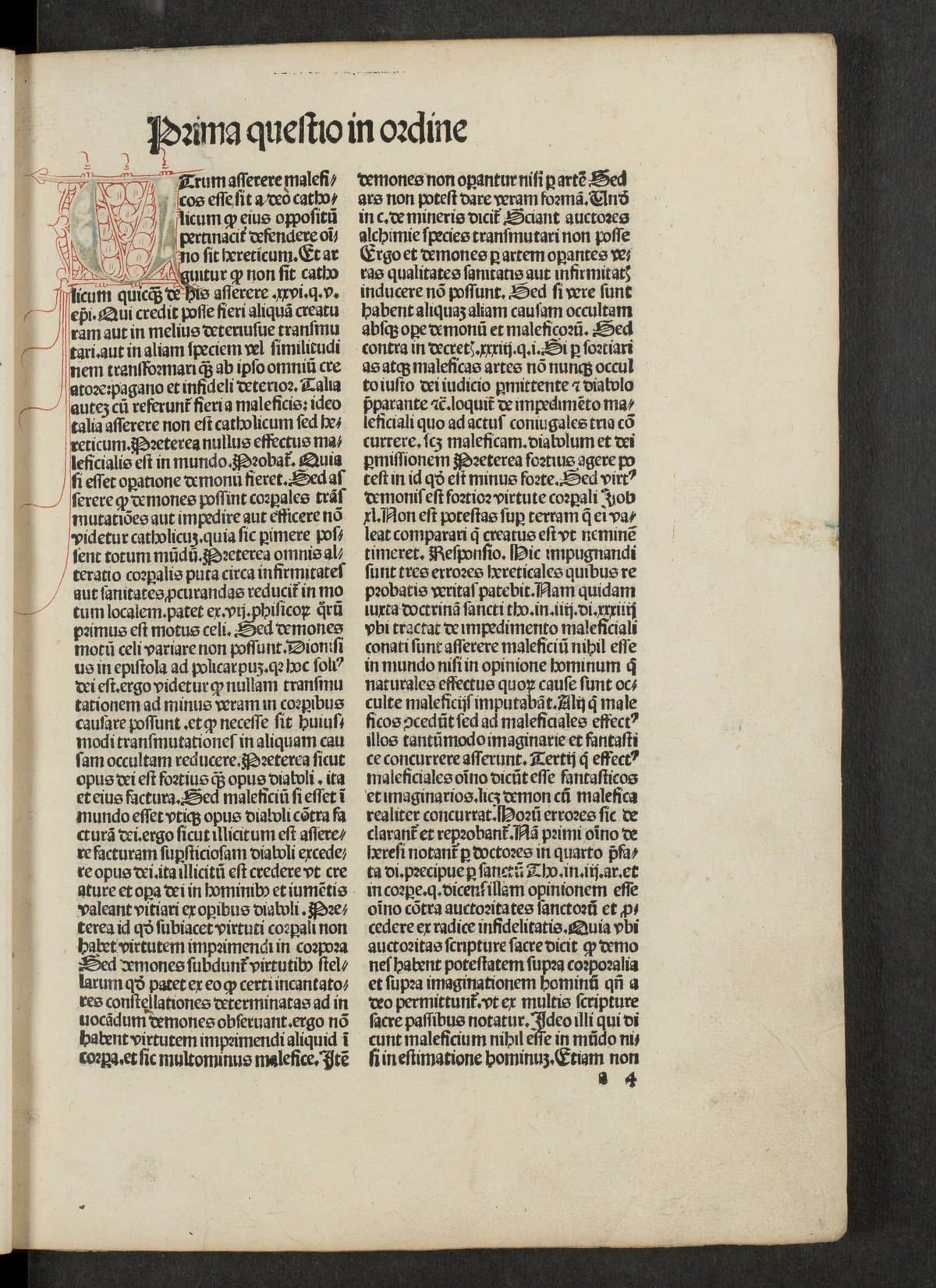
The Hammer of Witches
Heinrich Kramer & Jacob Sprenger, 1486
The definitive manual for the interrogation and execution of witches, blending misogyny with legal precision.
The Anthill (Formicarius)
Johannes Nider, 1475First Complete Translation
One of the earliest printed works to describe the 'Sabbath' and the flight of witches on broomsticks.
King James: Daemonologie (1597 First Edition)
King James I of England, 1597
A royal treatise defending the reality of witchcraft against growing skepticism in the late 16th century.
The Grimoire Tradition & Ritual Magic
1300-1850While the law persecuted witches, scholars and occultists sought to categorize and command the demonic hierarchy.
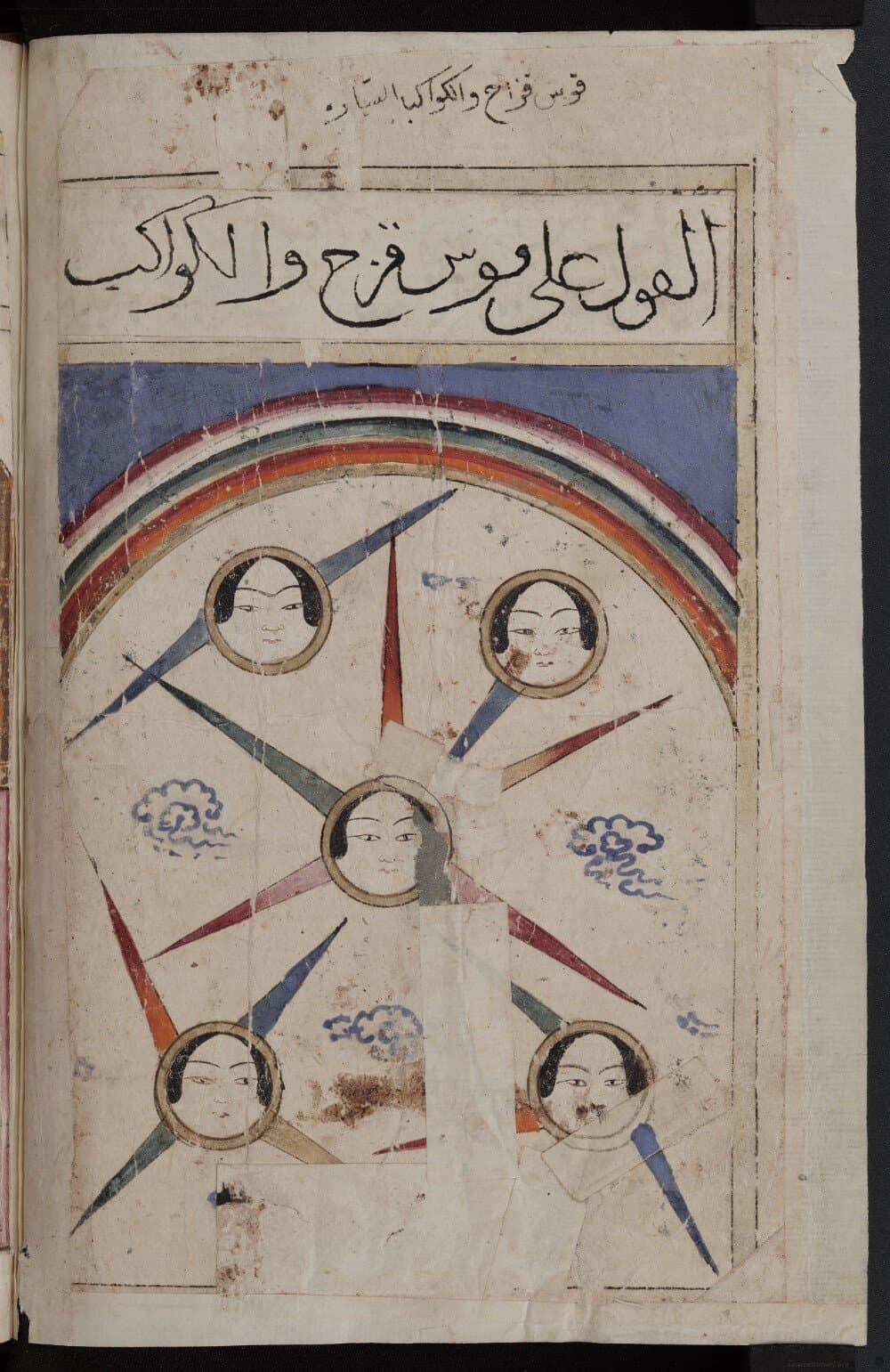
Book of Wonders
Abd al-Hasan al-Isfahani, 1400
A rare glimpse into Islamic demonology and planetary spirits, featuring vivid illustrations of jinn.
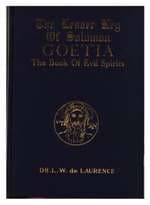
The Lesser Key of Solomon (Goetia)
Anonymous; L.W. de Laurence, 1916
The most famous of the Solomonic handbooks, detailing the 72 spirits of the Goetia and their seals.
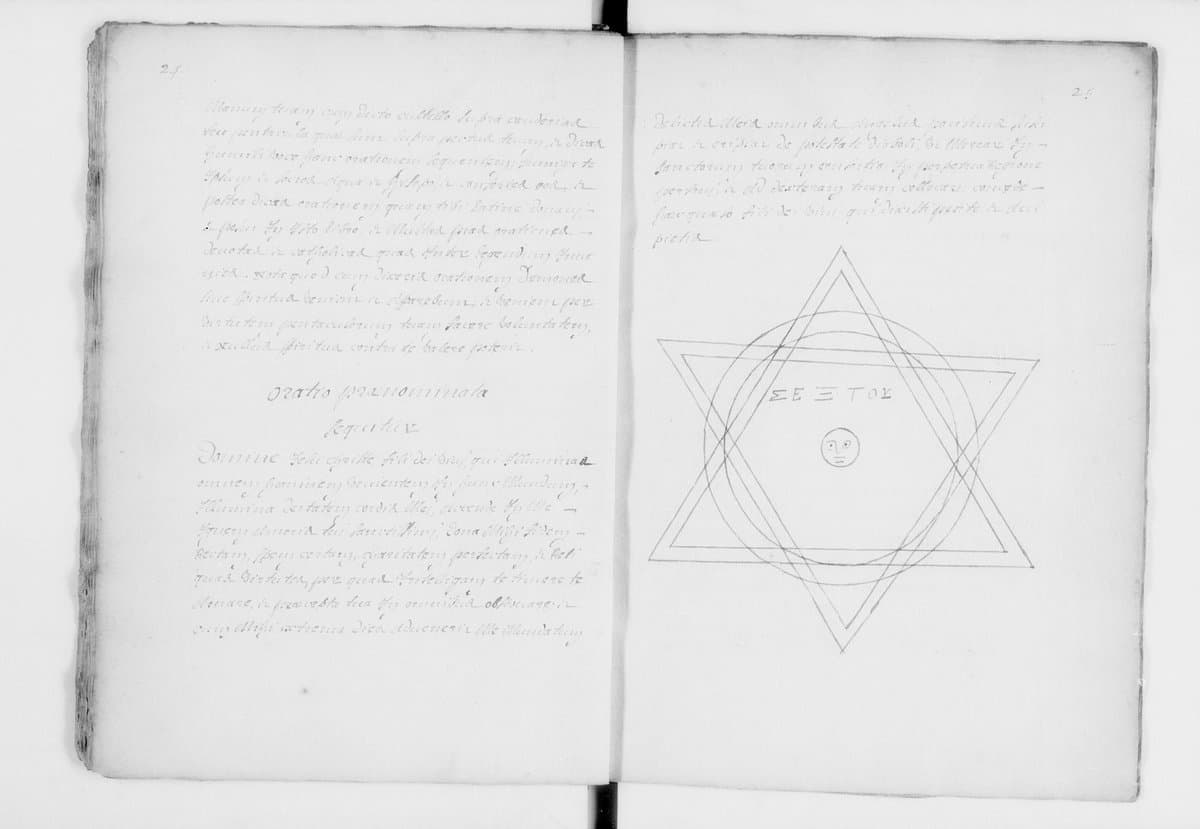
The Key of Solomon
Pseudo-Solomon, 1601
A primary source for the 'Key of Solomon' lineage, focusing on planetary pentacles and ritual purity.
The Rise of Skepticism and Reason
1560-1750The brave physicians and philosophers who argued that the 'devil' was a product of the human mind.

On the Illusions of Demons
Johann Weyer, 1563First Complete Translation
Weyer's radical argument that the 'confessions' of witches were the result of mental illness and torture.
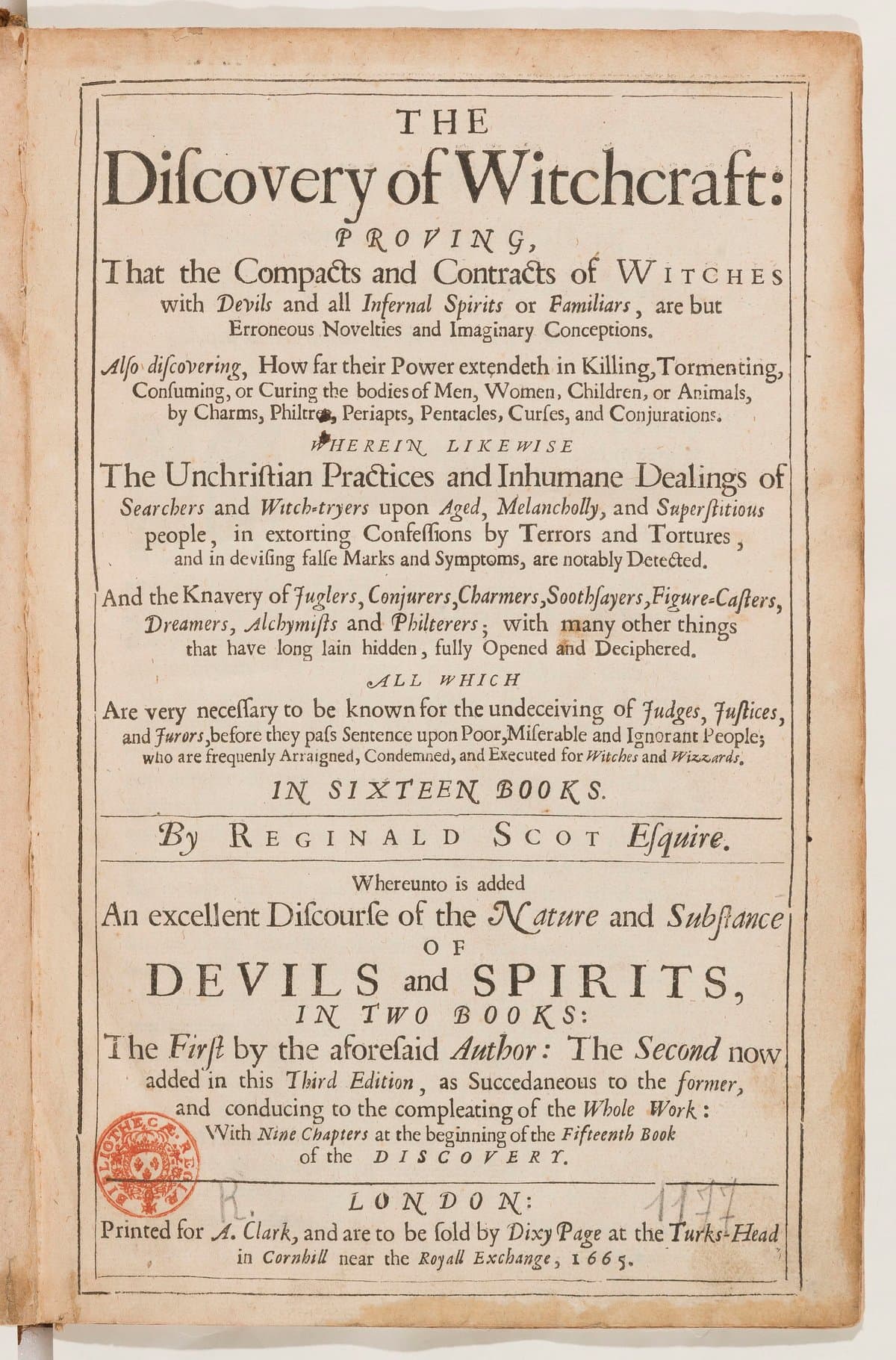
The Discovery of Witchcraft
Reginald Scot, 1665
A massive compendium that exposed the tricks of jugglers and the fallacies of the witch-hunters.
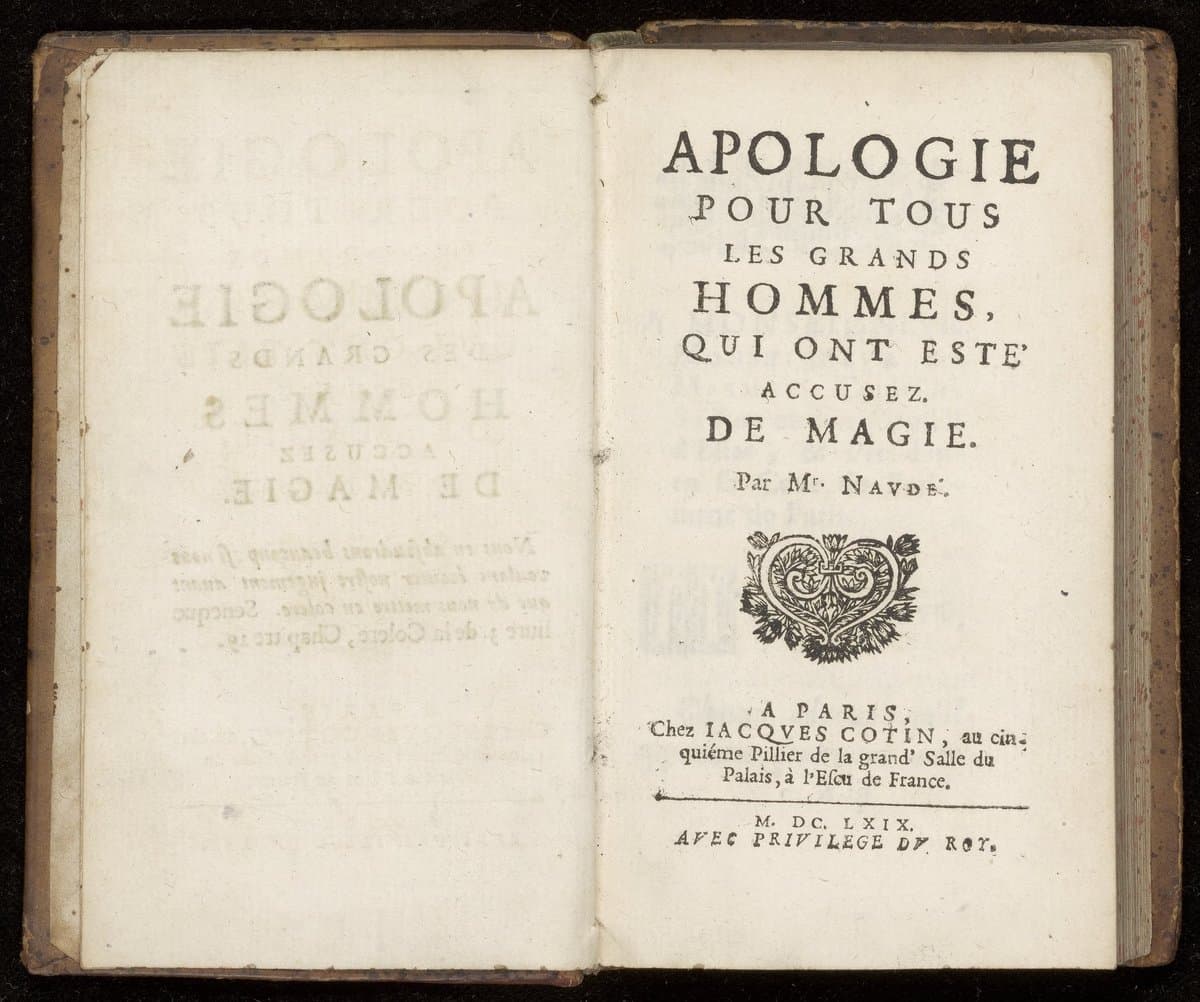
Apology for All the Great Men Accused of Magic
Naudé, Gabriel, 1669
A defense of legendary figures like Agrippa and Merlin against charges of black magic.
“For while the Devil’s intention in these actions is always to destroy either the soul or the body—or both—of those he is permitted to deal with, God, on the contrary, always draws glory to himself out of that evil.”
Key Figures
Johann Weyer
1515–1588
A Dutch physician and student of Agrippa who became the first major voice to oppose the witch trials on medical grounds.
On the Illusions of DemonsKing James I
1566–1625
The only English monarch to author a formal study of demonology, which directly influenced the Witchcraft Act of 1604.
King James: Daemonologie (1597 First Edition)Reginald Scot
1538–1599
An English country gentleman whose skeptical masterpiece was so controversial that King James I ordered all copies burned.
The Discovery of Witchcraft


Timeline
Related Collections
All Books
Browse Full Catalog→298 books in this collection
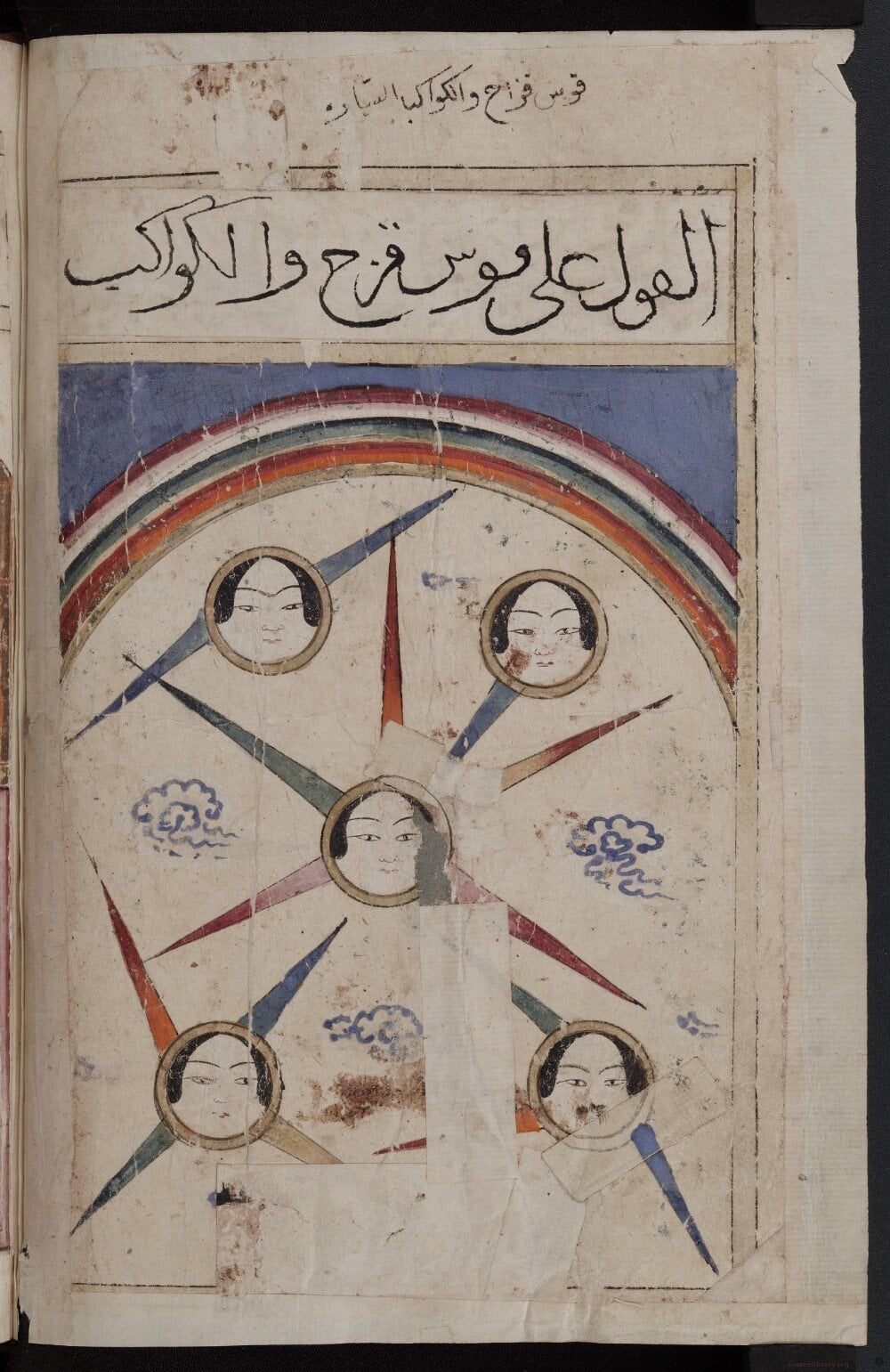
Book of Wonders
Abd al-Hasan al-Isfahani
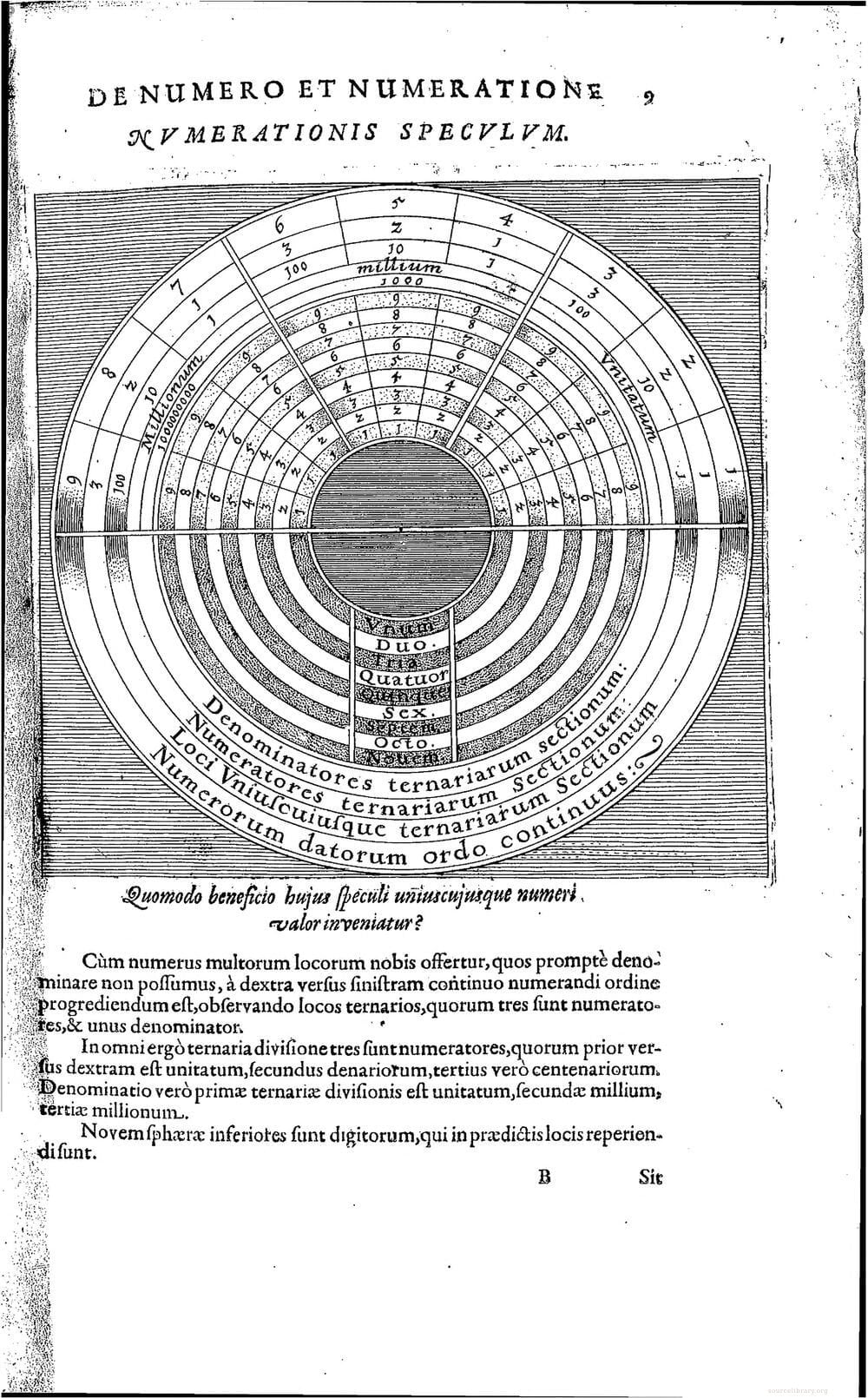
History of the Macrocosm and Microcosm
Robert Fludd
An Encyclopaedia of Occultism
Lewis Spence
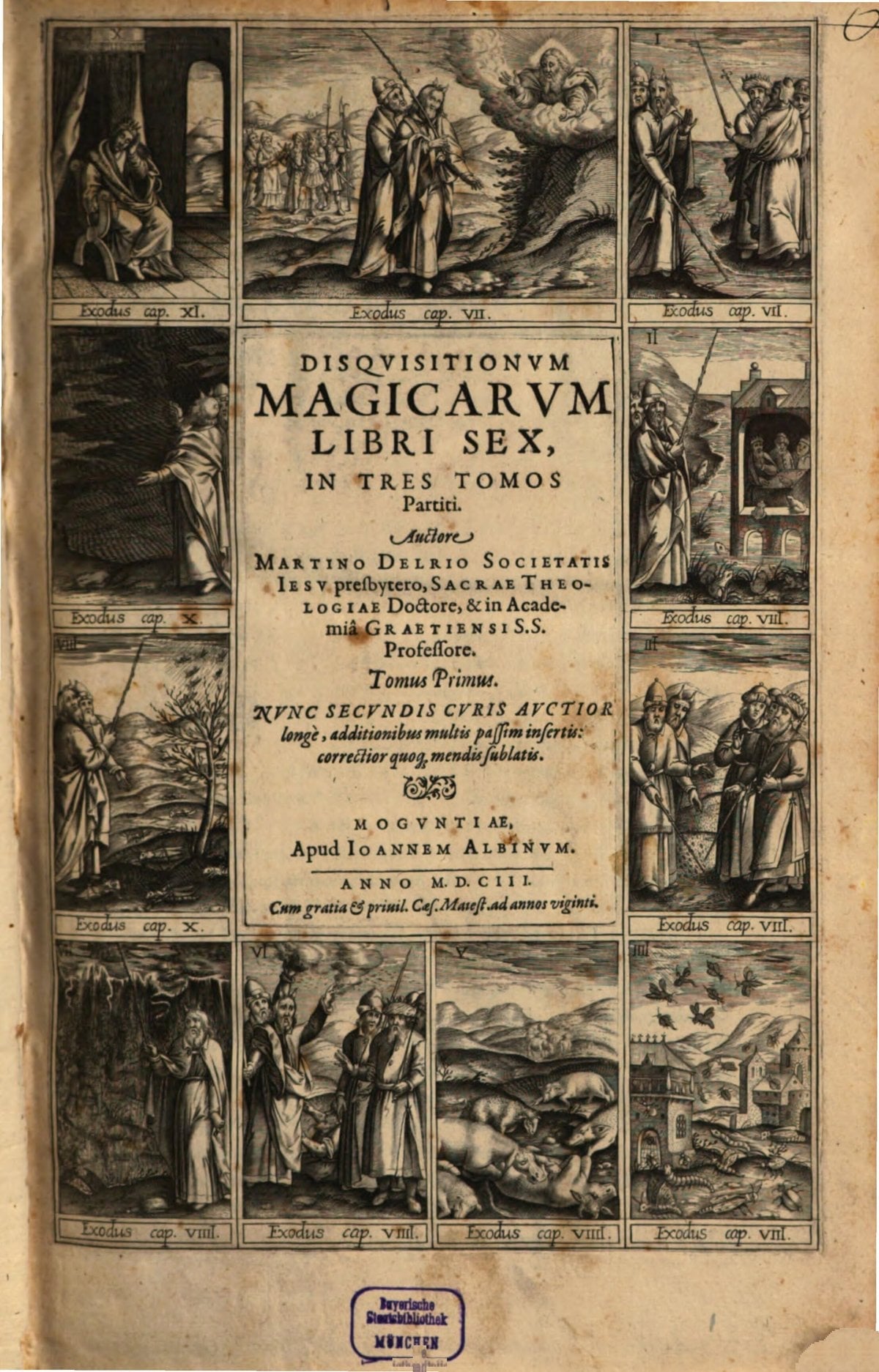
Disquisitionum Magicarum Libri Sex
Martin Del Rio
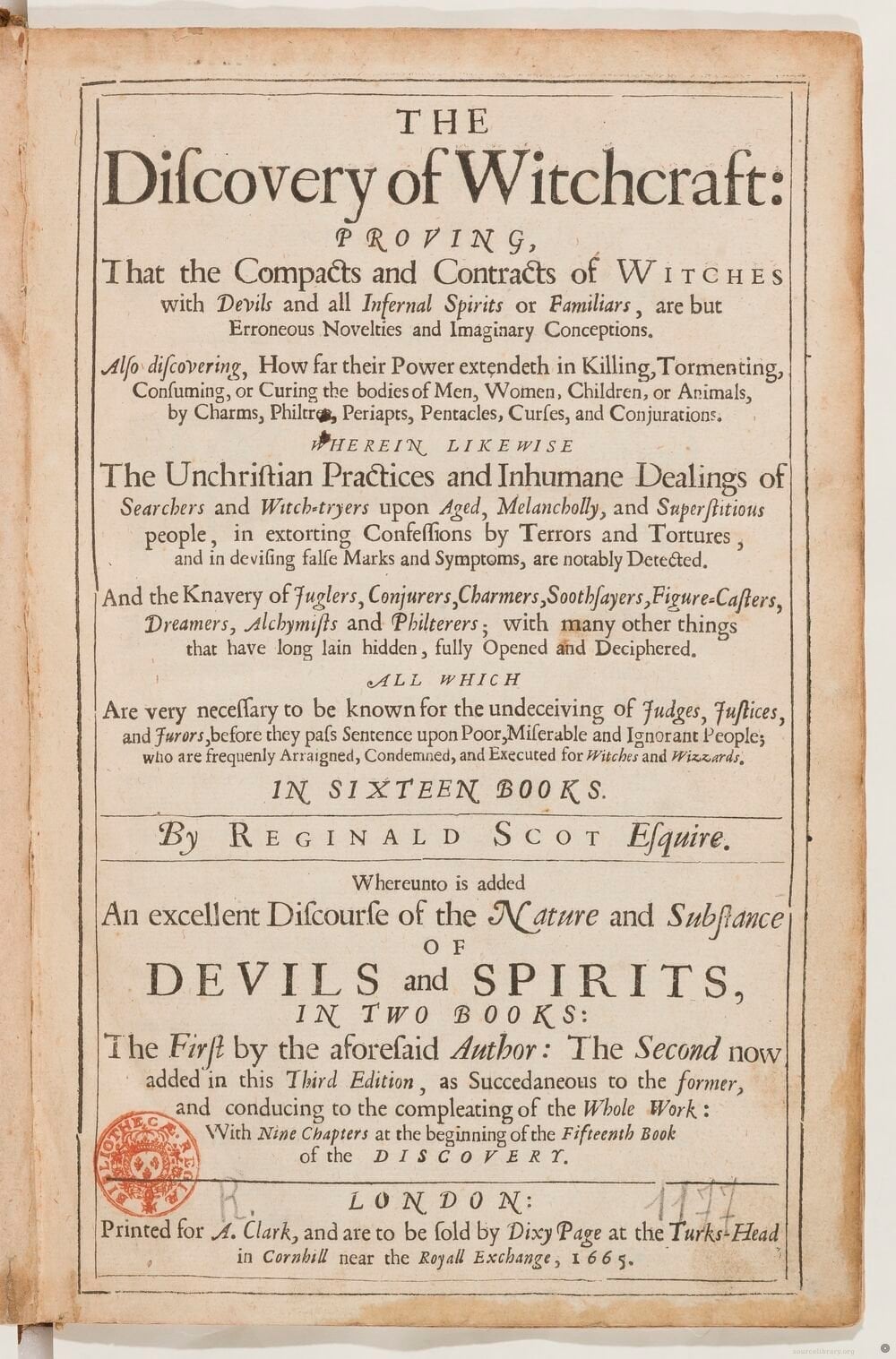
The Discovery of Witchcraft
Reginald Scot
King James: Daemonologie (1597 First Edition)
King James I of England
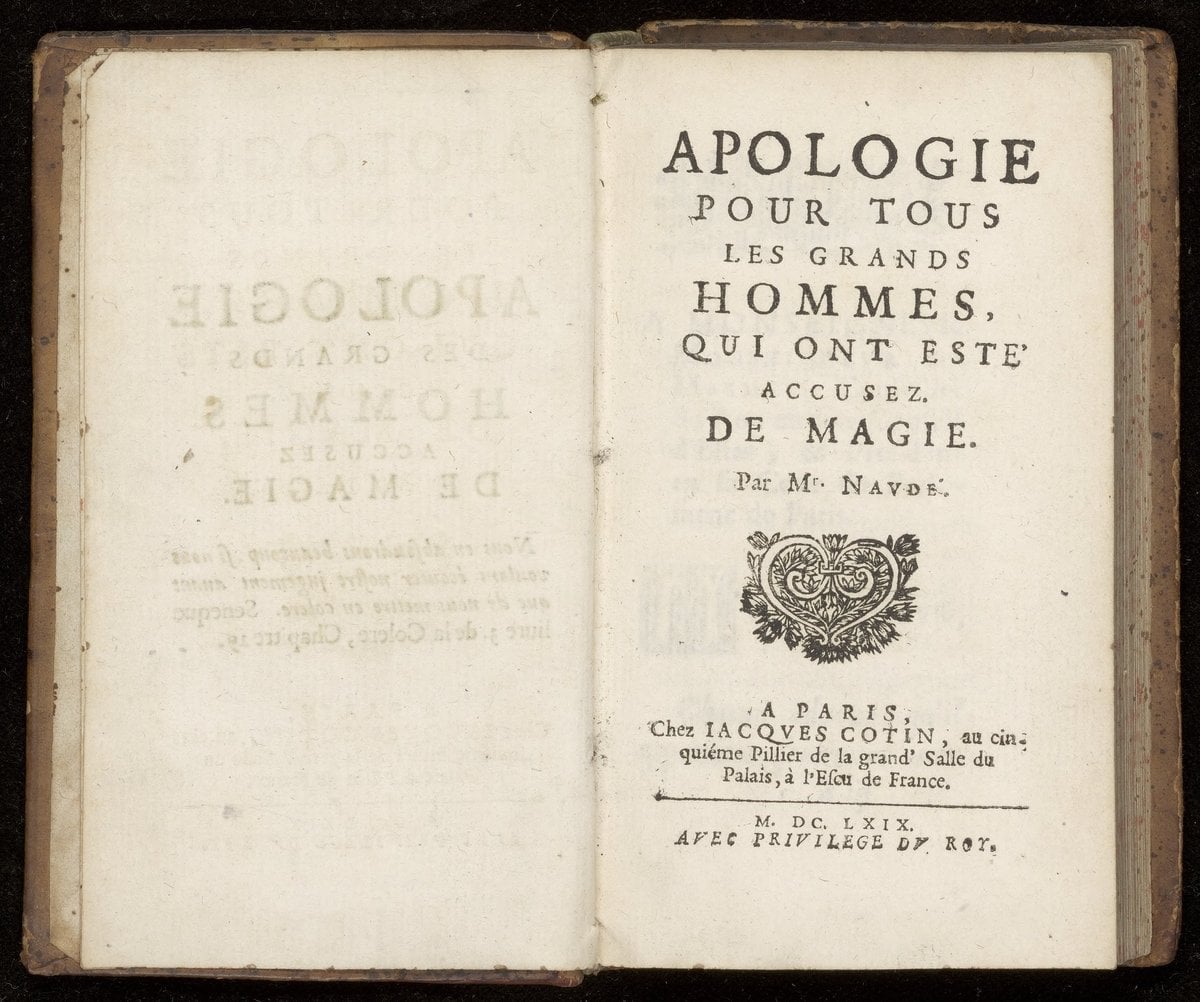
Apology for All the Great Men Accused of Magic
Naudé, Gabriel

On the Mysteries of the Egyptians, Chaldeans, and Assyrians
Iamblichus | Proclus | Porphyry
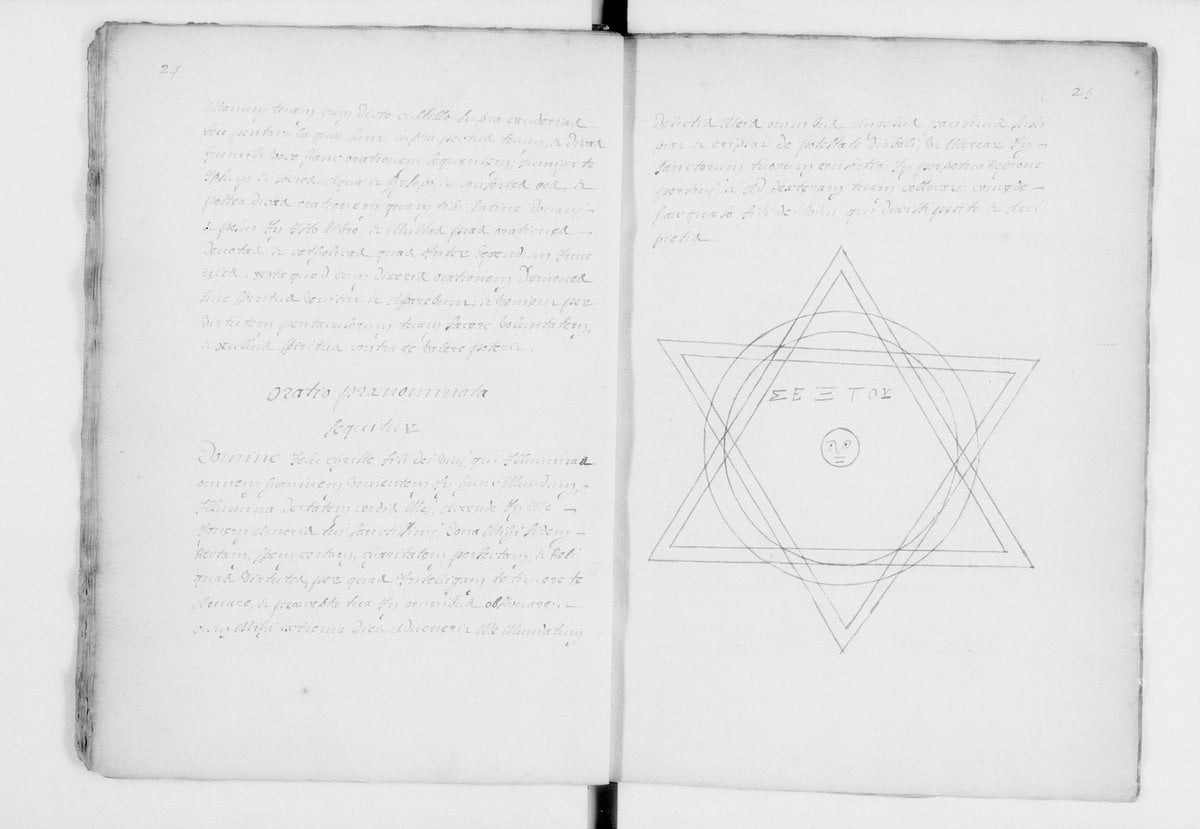
The Key of Solomon
Pseudo-Solomon

Scourge of Demons
Girolamo Menghi
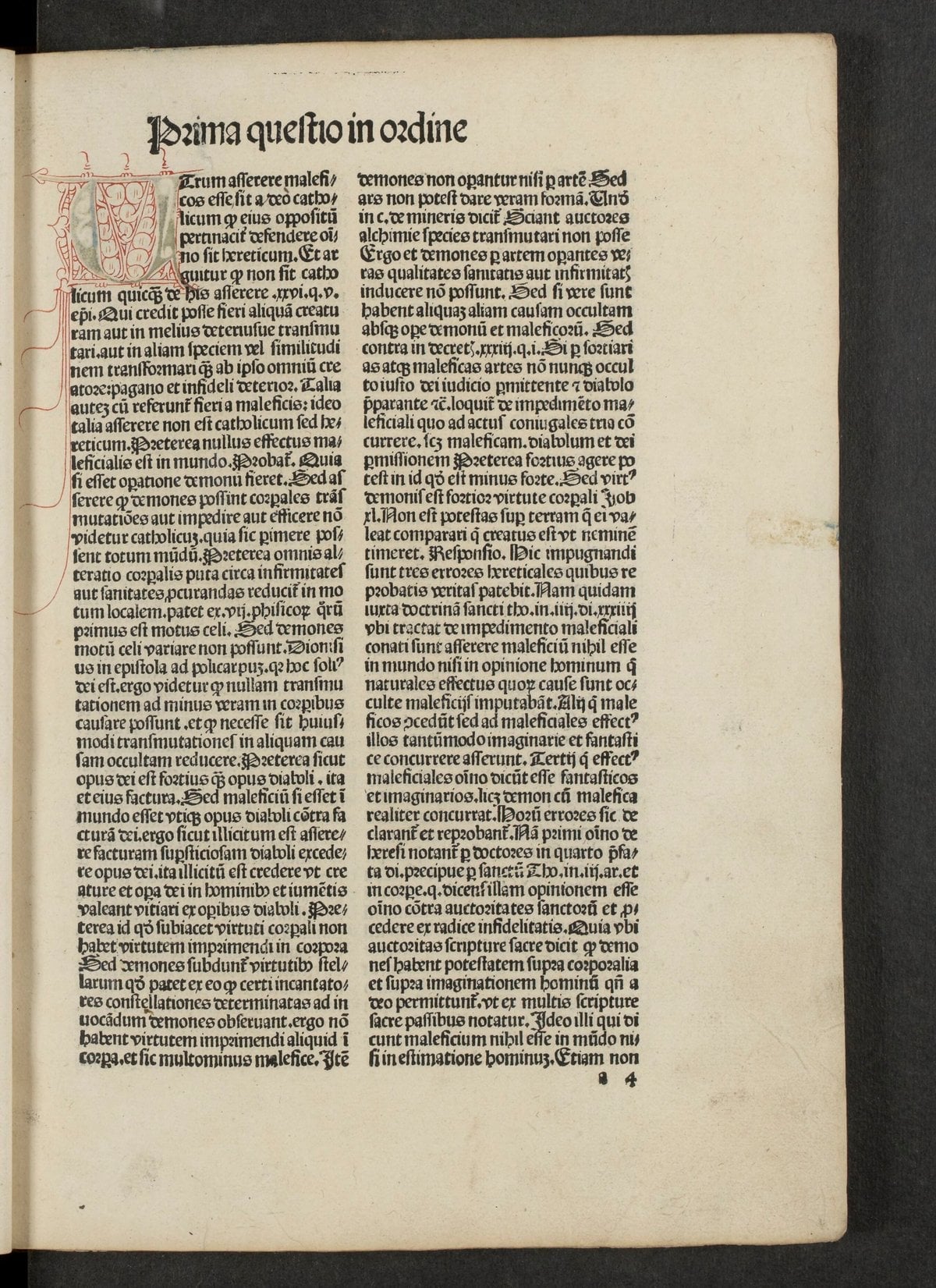
The Hammer of Witches
Heinrich Kramer & Jacob Sprenger
The Lesser Key of Solomon (Goetia)
Anonymous; L.W. de Laurence
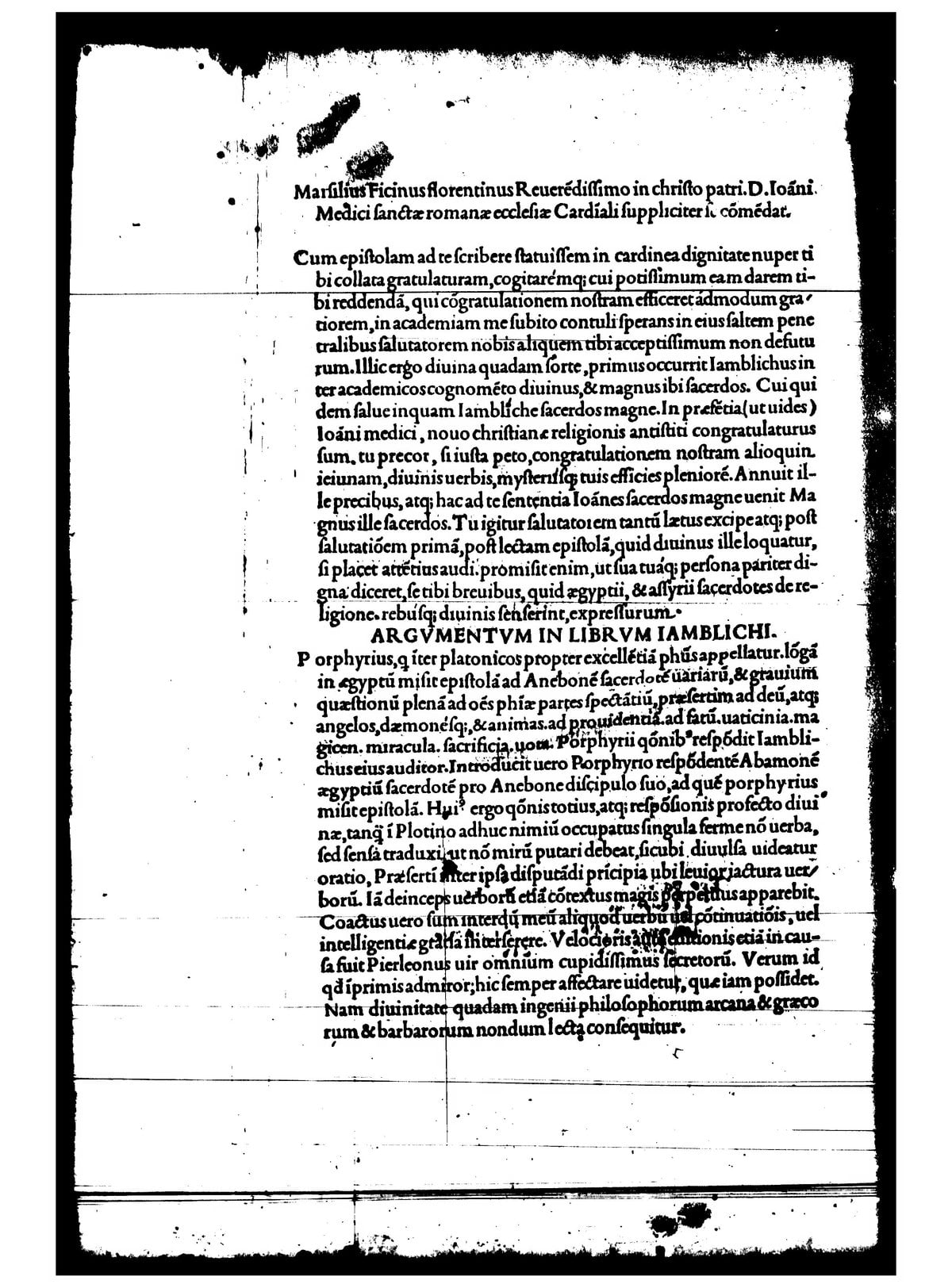
De Voluptate
Marsilio Ficino
The Anthill (Formicarius)
Johannes Nider