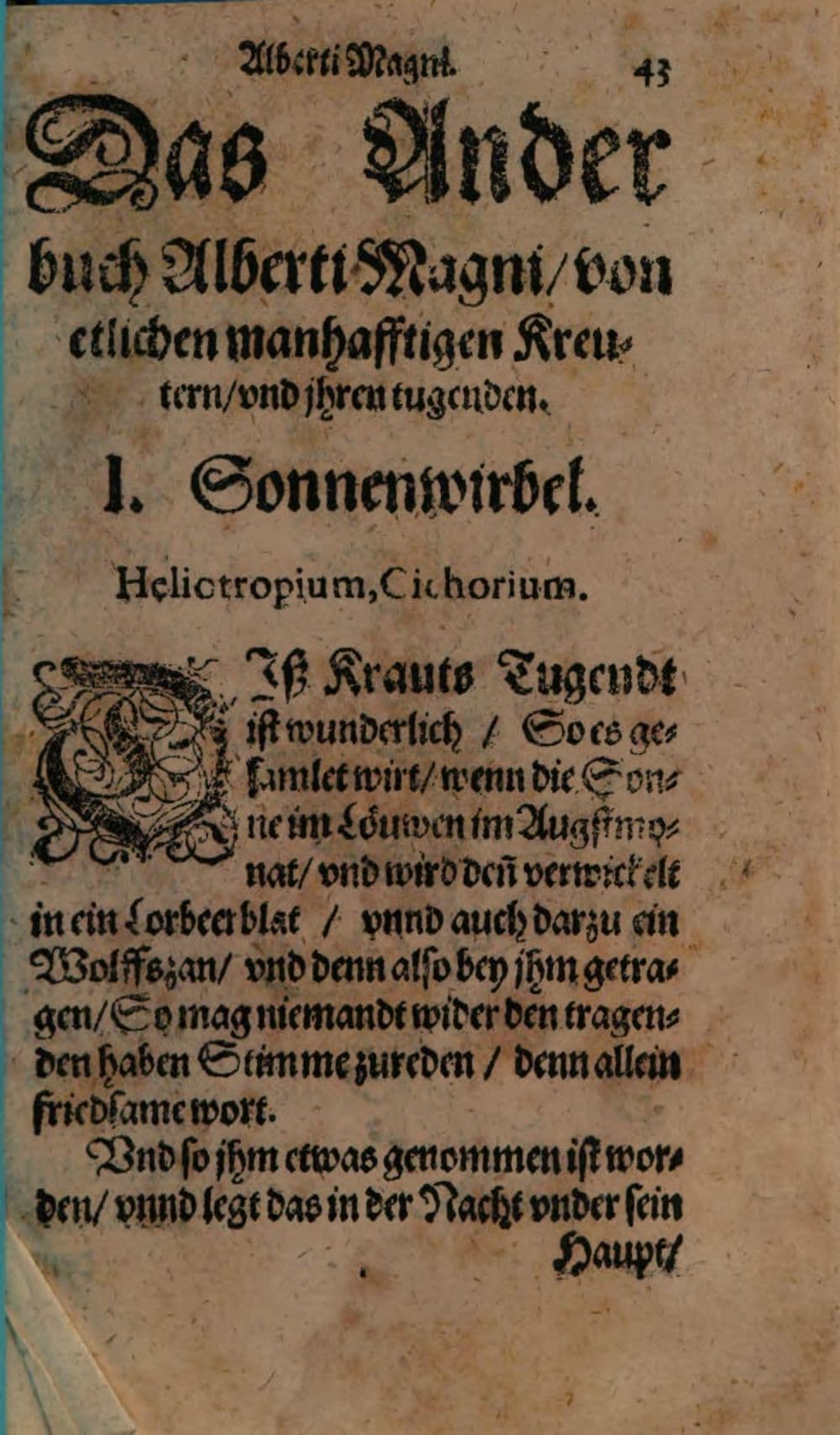
The Secrets of Albertus Magnus on the Nature of Women and the Virtues of Herbs
Albertus Magnus, darauß man alle Geheimnuß und Gebrechen deß Weiblichen Geschlechts erlernen mag : deßgleichen von ihrer Geburt und Kindern, wie denselbigen zu helffen und zu artzneyen ; samt mancherley Krafft der fürnemsten Kreuter, Tugent der edlen Gestein, Art und Natur der Thier ; mit angehencktem bewertem Regiment für die Pestilentz ; sampt einer ... Laßtaffel für alle Gebresten deß gantzen Leibs ...
German
Pseudo-Albertus Magnus 13th century · published 1604
154 pages
First from German
English translations of this work exist from another source language, but this specific text has never been translated.
The work in question is a 1604 German vernacular adaptation of the Latin 'De secretis mulierum' and 'Liber aggregationis' (often attributed to Pseudo-Albertus Magnus). While English translations of the original Latin texts exist (such as Helen Rodnite Lemay's 1992 translation of 'De secretis mulierum'), there is no evidence of a translation of this specific 1604 German edition into English. Therefore, this is a first translation from the German source text.
Related translations found:
Women's secrets: a translation of Pseudo-Albertus Magnus's De secretis mulierum with commentaries, trans. Lemay, Helen Rodnite (1992) [complete]
Verified Apr 1, 2026 via local catalogs, open library, google books, internet archive, ustc · methodology
Magic & Occult ArtsNatural Philosophy & ScienceMedicine & Natural HistoryHerbalism & BotanyWomen of the Secret Tradition
About This Book
natural-magicoccult-philosophybotanymedicinedivination
Unlock the hidden mechanics of the medieval world through the eyes of Albertus Magnus. This text reveals how ancient masters used herbs, stones, and animal parts to command health, social standing, and the secrets of the future.
Pages
OverviewPages
Showing 24 of 154
1

2
3

4

5

6

7

8

9

10

11

12

13

14

15

16

17

18

19

20

21

22

23

24