


Illustrations
Browse all495 images extracted
This illustration depicts the constellation Orion, known in Arabic as al-Jabbar (The Giant). Gold leaf circles mark the positions of the stars across the figure's body, which is shown in a traditional pose holding a club and a sword. This page from the Kitab al-Bulhan reflects the sophisticated integration of scientific knowledge and artistic expression in 14th-century Islamic manuscripts.
This iconic engraving from Robert Fludd's 'Utriusque Cosmi Historia' presents a visual summary of the universe as a 'Mirror of Nature.' At the top, the hand of God holds a chain linked to the female personification of Nature, who in turn guides a monkey representing human Art or ingenuity. The surrounding concentric circles detail the hierarchy of existence, from the terrestrial elements and biological kingdoms to the celestial spheres of the planets and fixed stars.
This intricate engraving from Athanasius Kircher's 'Magnes' (1641) illustrates the 'Marriage of Art and Nature' through a series of magnetic experiments housed in glass spheres. A central Egyptian obelisk symbolizes ancient wisdom and the hidden forces of nature, while the 'Directorium Magneticum' at the base demonstrates Kircher's attempt to map magnetic phenomena. The Greek motto at the top, 'Nature delights in nature,' underscores the Hermetic belief in the underlying unity and sympathy of the natural world.
This vibrant illustration is a facsimile from the Papyrus of Ani, a version of the Egyptian Book of the Dead. It depicts the critical 'Weighing of the Heart' ceremony, where the deceased's heart is balanced against the feather of Maat (truth and justice) to determine their eligibility for the afterlife. The scene features the deceased and his wife entering the Hall of Judgment, overseen by a tribunal of gods and the jackal-headed Anubis at the scales.
This seminal engraving depicts the 'Monochordum Mundanum' or World Monochord, a central concept in Robert Fludd's philosophy of universal harmony. A divine hand reaches from a cloud to tune the single string of the universe, which spans from the earthly elements of Earth, Water, Air, and Fire at the base to the highest celestial realms. The diagram meticulously maps musical intervals—such as the diapason and diapente—onto the structure of the cosmos, visually representing the Renaissance belief that the universe is governed by divine mathematical and musical proportions.
This relief depicts a young initiate standing between the goddesses Demeter and Persephone, central figures of the Eleusinian Mysteries. The scene captures the solemnity and divine connection inherent in these ancient Greek religious rites, which promised initiates a better afterlife.

This illustration from the Kitab al-Bulhan represents the seventh climate, a geographical division in medieval Islamic science. It depicts a scribe at work below a celestial figure of Hermes, who is traditionally associated with knowledge, writing, and the planet Mercury. The scene is framed by stylized architectural towers and populated with birds and flowers, showcasing the refined aesthetic of late 14th-century Arabic manuscript illumination.

This intricate engraving, likely from Robert Fludd's monumental work 'Utriusque Cosmi' (1617-1621), illustrates a pneumatic experiment designed to demonstrate the principles of air expansion and contraction. The apparatus consists of a large leaden sphere (A) connected by a curved tube (E) to a water-filled vessel (C), showing how heat—symbolized by the sun in the upper corner—affects the pressure and movement of fluids. Fludd's work is a prime example of the early modern synthesis of empirical observation, mechanical philosophy, and hermetic mysticism.

This vibrant illustration depicts Tianguan (T'ien-koan), the 'Celestial Official who bestows happiness,' one of the Three Officer Deities (Sanguan Dadi) in Taoist tradition. He is shown in the formal attire of a high-ranking mandarin, holding a scroll that reads 'Tianguan Cifu,' a common auspicious phrase used during the Lunar New Year to invite divine blessings and prosperity into the home.
Visual Art
Browse all art →27 works of visual art in this collection
 print
printLo Stregozzo (The Witches' Procession)
Agostino Veneziano
A group of witches and fantastic creatures process through a dark landscape, carrying a skeletal chariot composed of bones and organic debris.
 print
printThe Four Witches (Four Naked Women)
Albrecht Dürer
Four naked women stand in an interior space near a flaming hearth, accompanied by a sphere suspended from the ceiling and a skull on the floor.
 print
printWitch Riding Backwards on a Goat
Albrecht Dürer
A nude witch with flowing hair rides a goat backwards through the air, holding a staff topped with a bundle of sticks emitting sparks, while four putti below interact with one another and hold various objects.
 print
printFortune-Teller
Andries Stock (after Jacques de Gheyn II)
A gnarled old fortune-teller holds the hand of a young, elegantly dressed woman while reading her palm beneath a large tree.
 print
printWitches Preparing for Sabbath
Andries Stock (after Jacques de Gheyn II)
A chaotic scene depicting witches preparing for a nocturnal sabbath, featuring various supernatural creatures, demons, and occult transformations in a rocky landscape.
 print
printWitch's Sabbath (Sabbat)
Auguste Rodin
A central female figure sits with her legs spread wide, straddling a broomstick that extends vertically between her legs.
 print
printWitches' Sabbath, from "Les Sabbats"
Claude Gillot
A Witches' Sabbath scene featuring a central enthroned devil, dancing figures, hybrid creatures, and occult paraphernalia.
 painting
A Witches' Sabbath
Cornelis Saftleven
A witch riding a goat leads a gathering of hybrid creatures, satyrs, and demonic figures in a nocturnal ritual within a dark, rocky landscape.
 print
printMacbeth Consulting the Witches
Eugène Delacroix
The Scottish general Macbeth stands before three witches who are chanting over a steaming cauldron.
 print
printMacbeth and the Witches
Eugène Delacroix
The Scottish general Macbeth stands with arms folded while confronting three witches who hover over a boiling cauldron.
 print
printA Way of Flying (Los Disparates)
Francisco de Goya
This print depicts three figures attempting to fly through a dark, empty sky using large, mechanical, bat-like wings or parachute-like apparatuses.
 print
printBon Voyage (Los Caprichos, Plate 64)
Francisco de Goya
A winged demon carries a cluster of wide-eyed, screaming human figures through a dark, turbulent sky.
 print
printFunereal Folly (Los Disparates)
Francisco de Goya
A ghoulish, skeletal figure in a shroud advances toward a small, kneeling figure in a dimly lit, chaotic scene filled with onlookers.
 print
printPretty Teacher! (Los Caprichos, Plate 68)
Francisco de Goya
An elderly, stooped witch carrying a younger, nude woman on a broomstick, accompanied by an owl flying above them.
 print
printThe Sleep of Reason Produces Monsters (Los Caprichos, Plate 43)
Francisco de Goya
A man slumbers with his head resting on a desk, surrounded by a swarm of owls, bats, and a lynx.
From Talismanic Science to the Architecture of the Invisible
Before the Enlightenment, magic was not the opposite of science, but its practical application—a method for decoding the hidden laws of the universe.

The Magic & Occult Arts collection documents the evolution of esoteric thought from 9th-century Arabic talismans to the 19th-century occult revival. At its core are the masterworks of the Renaissance, where Marsilio Ficino re-introduced the Neoplatonic concept of 'spiritus' in his Three Books on Life, framing magic as a vital tool for health and celestial harmony. This intellectual foundation allowed Heinrich Cornelius Agrippa to synthesize the disparate traditions of alchemy, Kabbalah, and natural philosophy into his definitive Three Books of Occult Philosophy.
The collection also highlights the visual language of the unseen. Polymaths like Athanasius Kircher and Robert Fludd utilized the printing press to create massive, intricate engravings that functioned as visual encyclopedias of the macrocosm and microcosm. From the early astrological insights of the Book of Wonders to the protective (and controversial) rituals found in The Key of Solomon, these texts represent a thousand-year attempt to bridge the gap between human agency and divine power.
“Magic is the practical part of natural science.”
“There is no science that better certifies us of the divinity of Christ than magic and Kabbalah.”
The Arabic and Medieval Roots
800-1450Before the Renaissance, magic was a technical discipline involving planetary timing and talismanic construction.
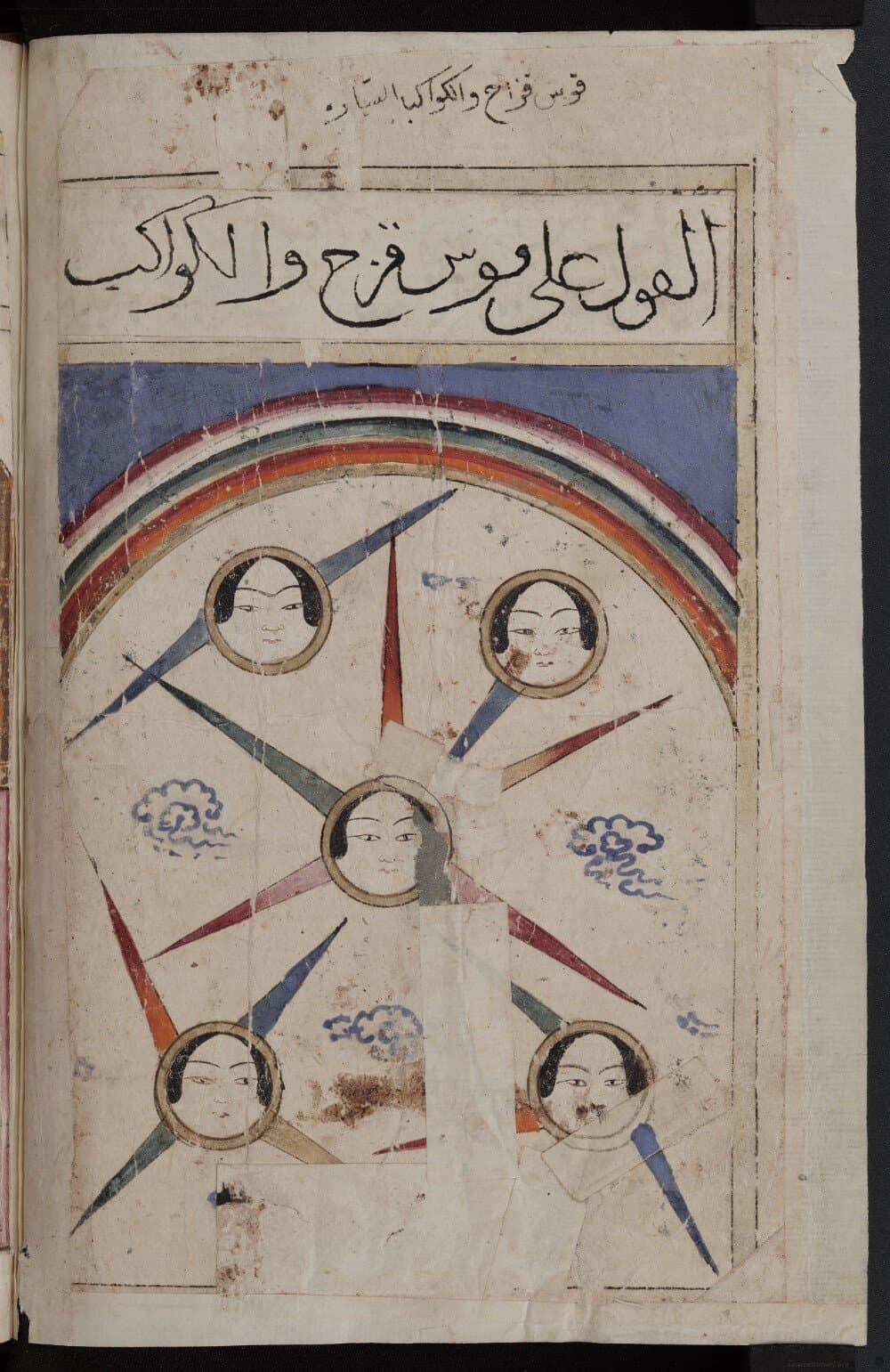
Book of Wonders
Abd al-Hasan al-Isfahani, 1400
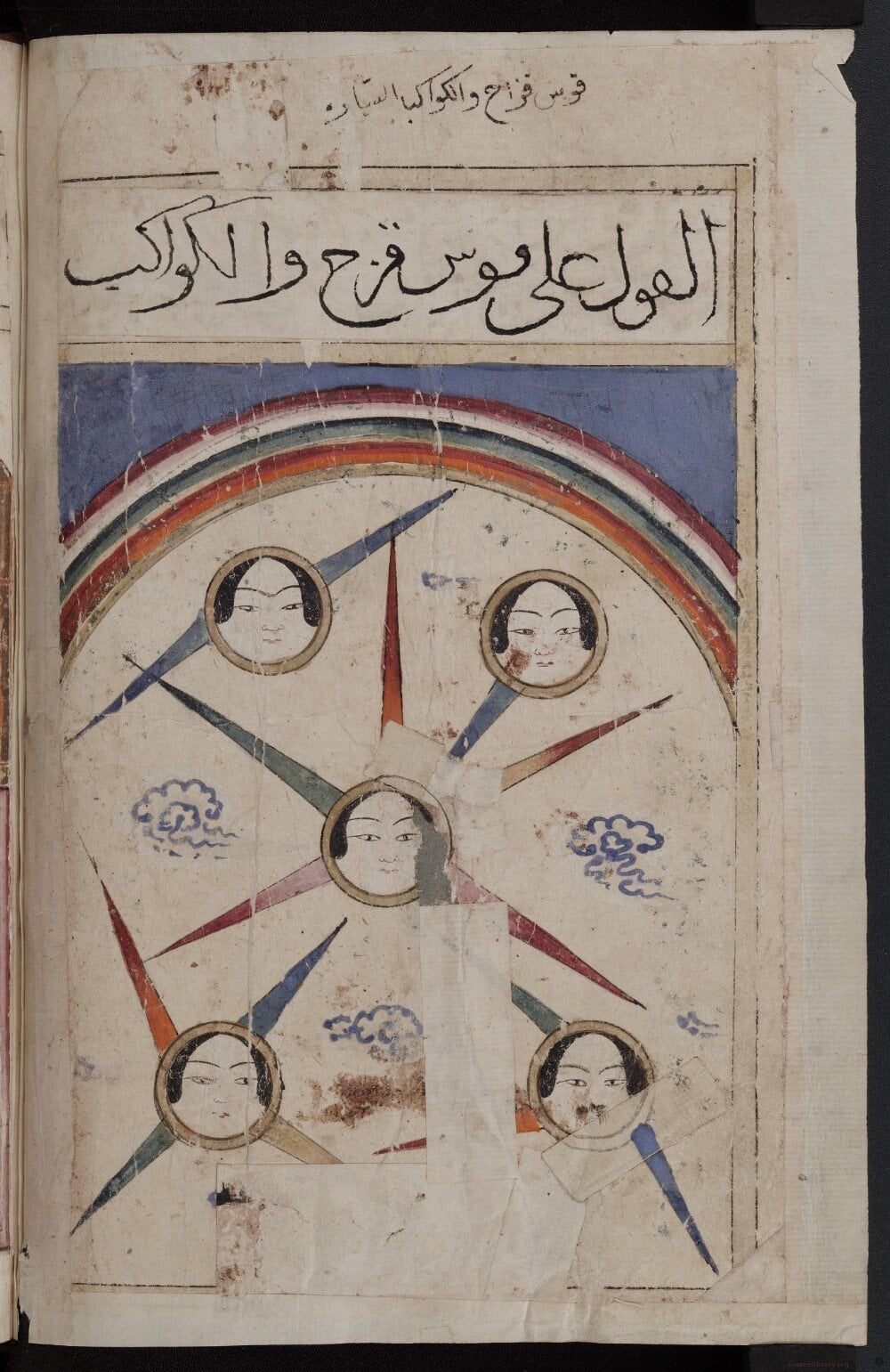
A 14th-century Arabic manuscript featuring vibrant illustrations of planetary jinn and astrological omens.
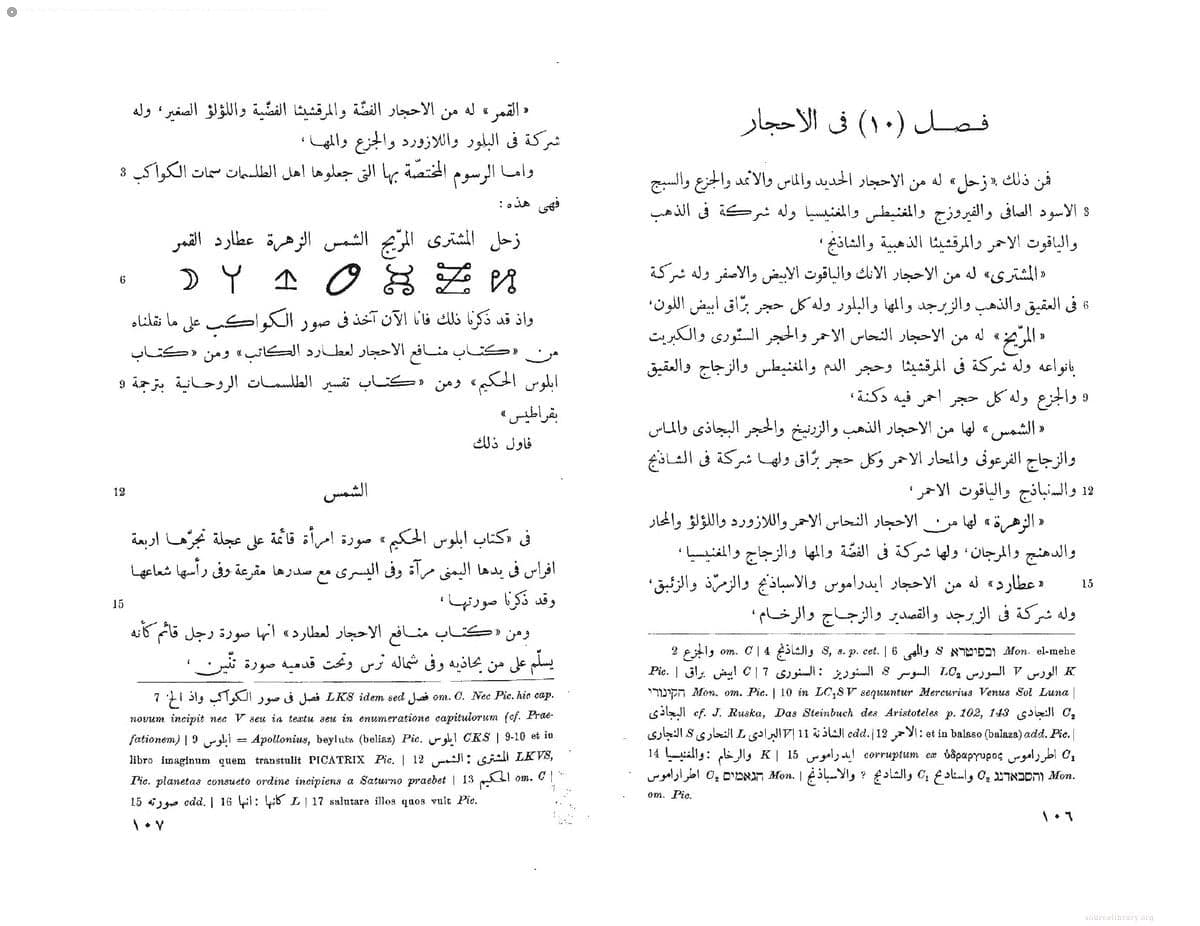
Picatrix (Ghāyat al-Ḥakīm)
al-Majriti (attrib.), 1000
The most influential medieval handbook of astral magic, detailing the infusion of celestial spirits into physical objects.
Renaissance Natural Magic
1450-1600The shift toward 'Natural Magic' where the magus operates through the hidden properties of herbs, stones, and the stars.
Three Books on Life
Ficino, Marsilio (1433-1499), 1489
Ficino's guide to longevity through the manipulation of 'spiritus' and planetary resonance.
Three Books of Occult Philosophy
Heinrich Cornelius Agrippa von Nettesheim, 1550
The foundational encyclopedia of the Western Esoteric tradition, organizing magic into elemental, celestial, and intellectual realms.
Visualizing the Macrocosm
1600-1700The Baroque era saw the rise of massive, diagrammatic works attempting to map the entire universe.
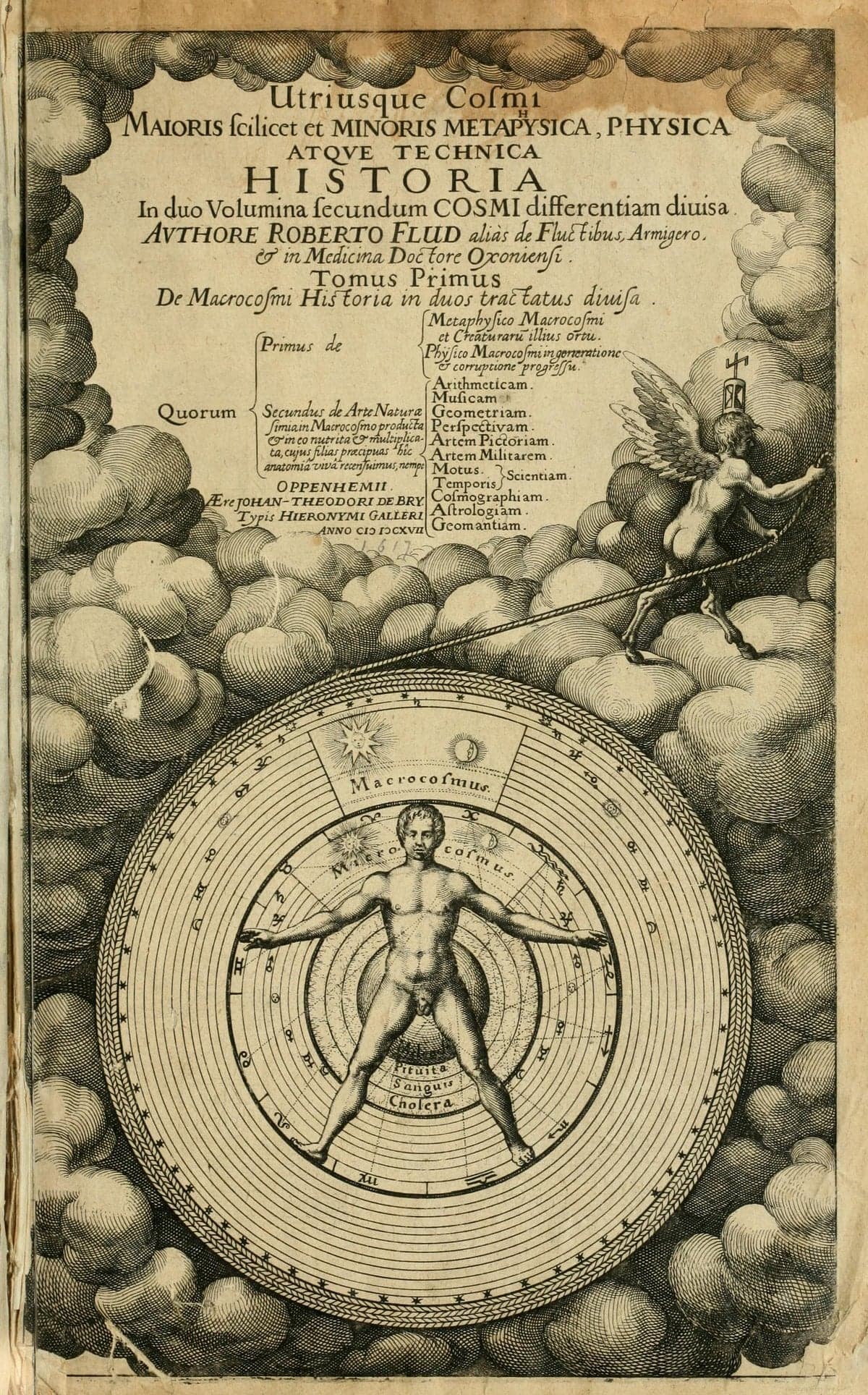
The History of the Two Worlds
Robert Fludd, 1617First Complete Translation
A monument of esoteric publishing, featuring Fludd's famous diagrams of the cosmic monochord and the human soul.
The Great Art of Light and Shadow
Athanasius Kircher, 1671First Complete Translation
Kircher's exploration of optics, projection, and the 'magic' of light and shadow.
The Grimoire and Witchcraft Trials
1550-1850As high magic flourished in the courts, the law and popular grimoires focused on the conjuration of spirits.
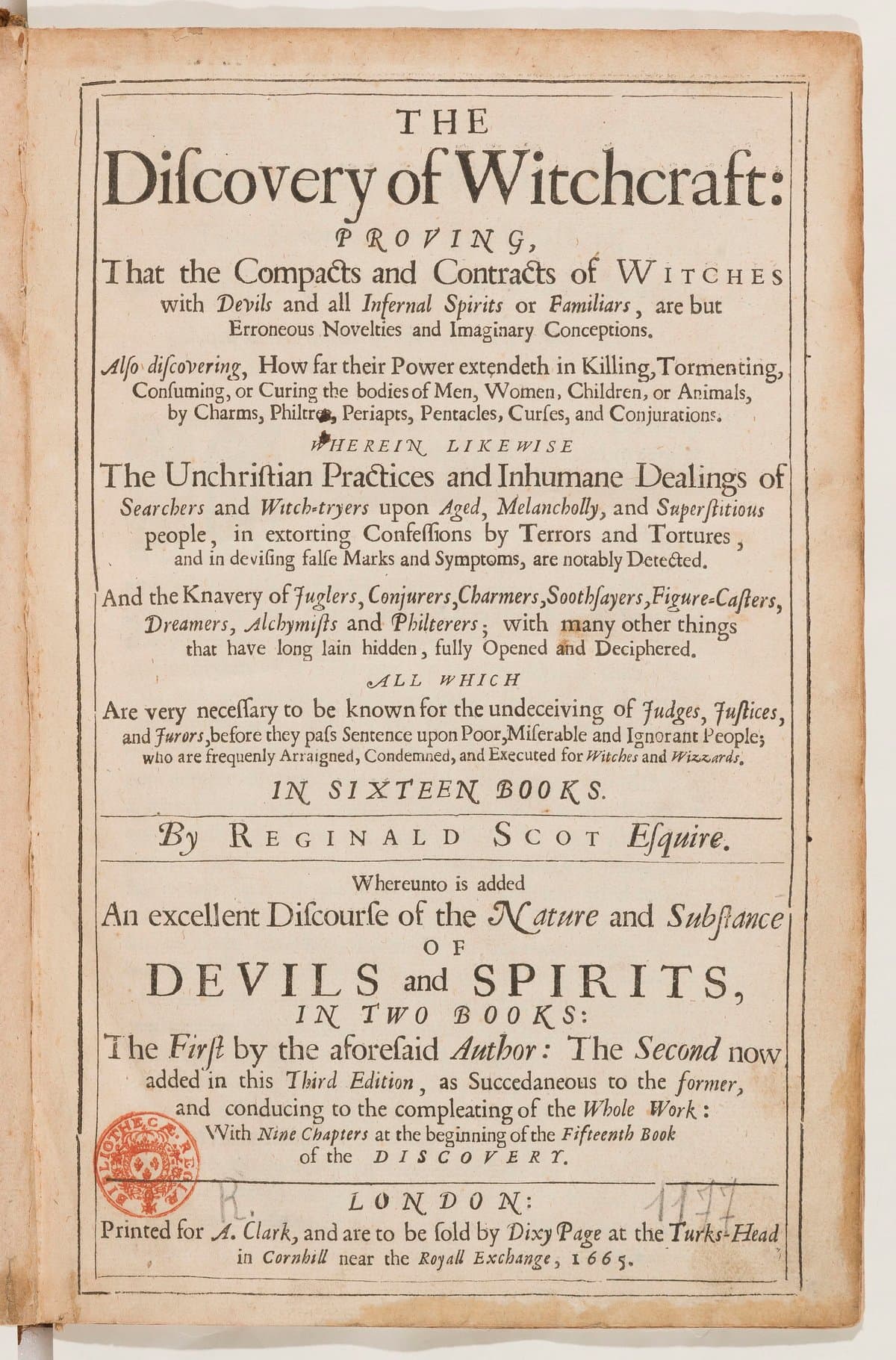
The Discovery of Witchcraft
Reginald Scot, 1665
An early English skeptical text that inadvertently preserved dozens of folk magic rituals while trying to debunk them.
The Key of Solomon
Anonymous, 1914First Complete Translation
The most famous of the Solomonic handbooks, focusing on the construction of pentacles and the invocation of planetary angels.
Key Figures
Heinrich Cornelius Agrippa
1486–1535
A soldier, physician, and theologian whose synthesis of occult arts defined the field for four centuries.
Three Books of Occult PhilosophyMarsilio Ficino
1433–1499
The head of the Platonic Academy in Florence who legitimized magic by framing it as a psychological and medical necessity.
Three Books on LifeAthanasius Kircher
1602–1680
The 'Last Renaissance Man,' a Jesuit priest who investigated everything from Egyptian hieroglyphs to the magic of the magnet.
The Great Art of Light and ShadowIllustrations from the Collection


Where to Start
The Scientific Historian
Trace how occult practices evolved into empirical sciences like optics and chemistry.
- 1The Great Art of Light and Shadow
Start with Kircher to see how the study of light began as a magical inquiry.
- 2History of the Macrocosm and Microcosm
Continue with Robert Fludd’s mathematical mapping of the human body.
- 3Sylva Sylvarum (Latin edition)
Conclude with Francis Bacon’s attempt to reform natural magic into a systematic science.
The Ritual Practitioner
Follow the development of ceremonial magic from its medieval origins to the 19th-century revival.
- 1Picatrix (Ghāyat al-Ḥakīm)
Begin with the Picatrix to understand the foundational role of the stars.
- 2Three Books of Occult Philosophy
Study Agrippa for the philosophical framework of ritual.
- 3Transcendental Magic: Its Doctrine and Ritual
See the 19th-century transformation of these ideas in the works of Eliphas Levi.
All Books
Browse Full Catalog→679 books in this collection
Book of Wonders
Abd al-Hasan al-Isfahani
Key to the Secrets of Nature
Eckartshausen, Karl von
Introduction to Primitive Cabalistic Science
Anonymous
The Great Art of Light and Shadow
Athanasius Kircher
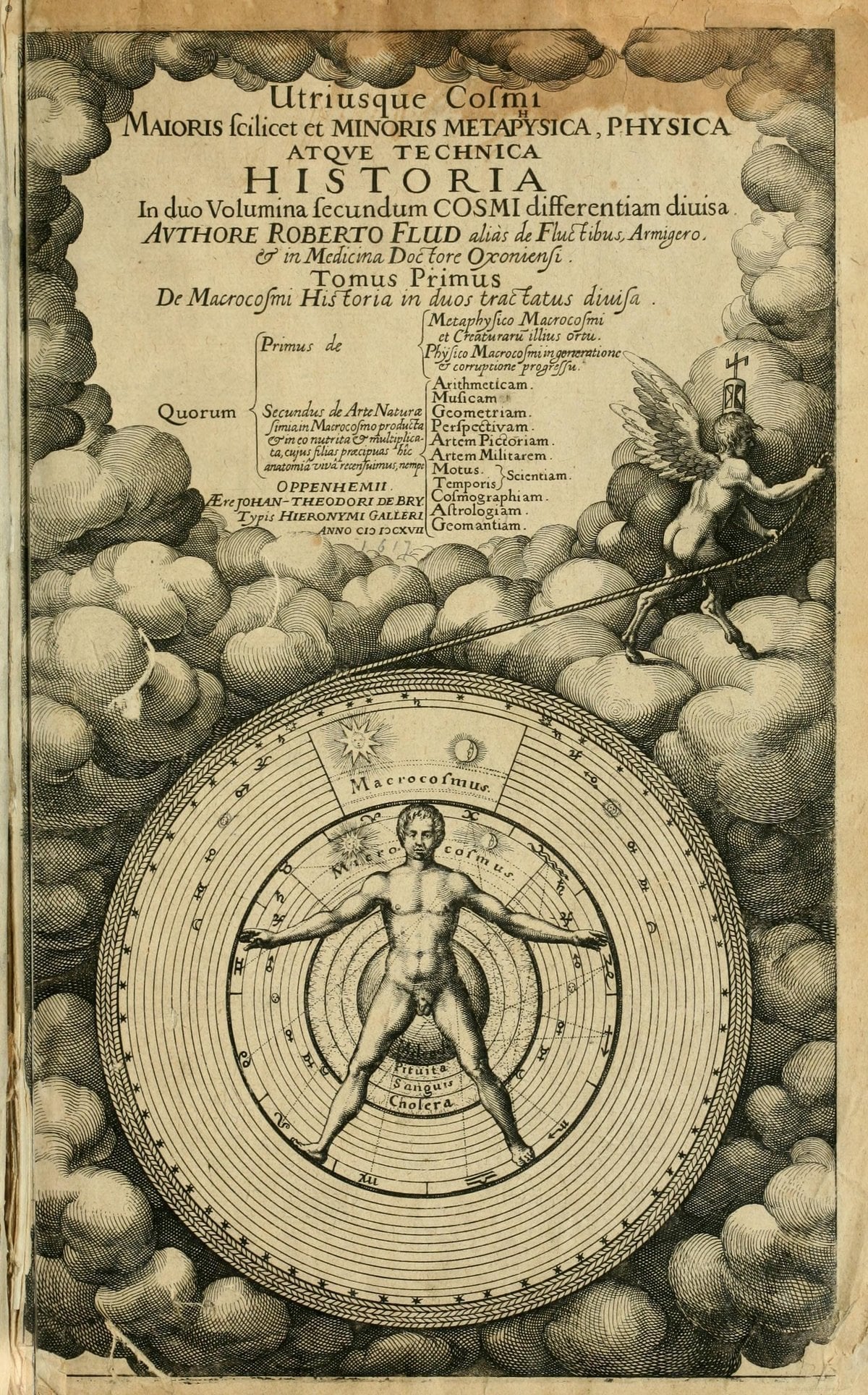
The History of the Two Worlds
Robert Fludd
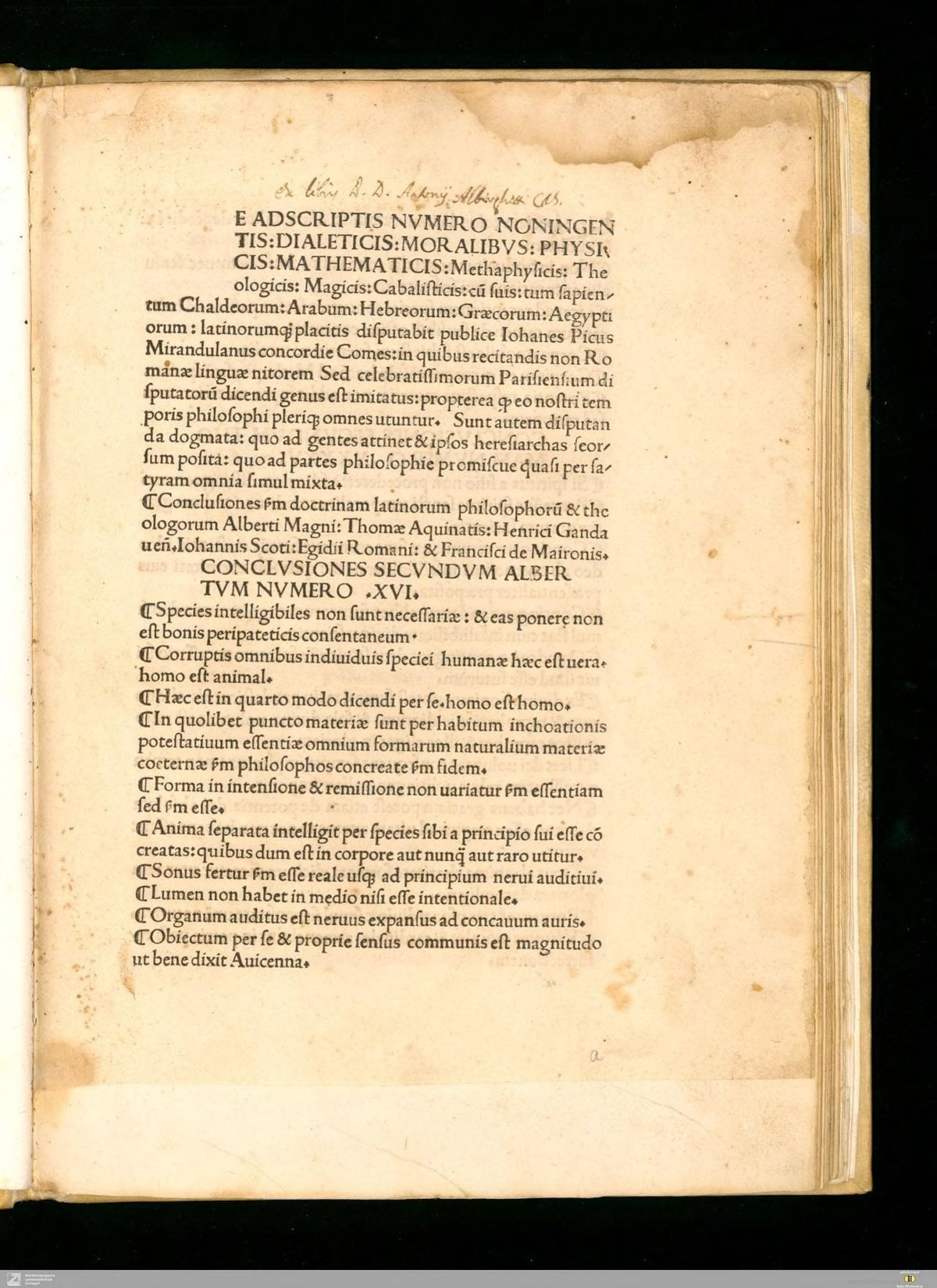
The 900 Theses
Pico della Mirandola, Giovanni (1463-1494)
On the Mysteries
Ficino
Three Books on Life
Ficino, Marsilio (1433-1499)
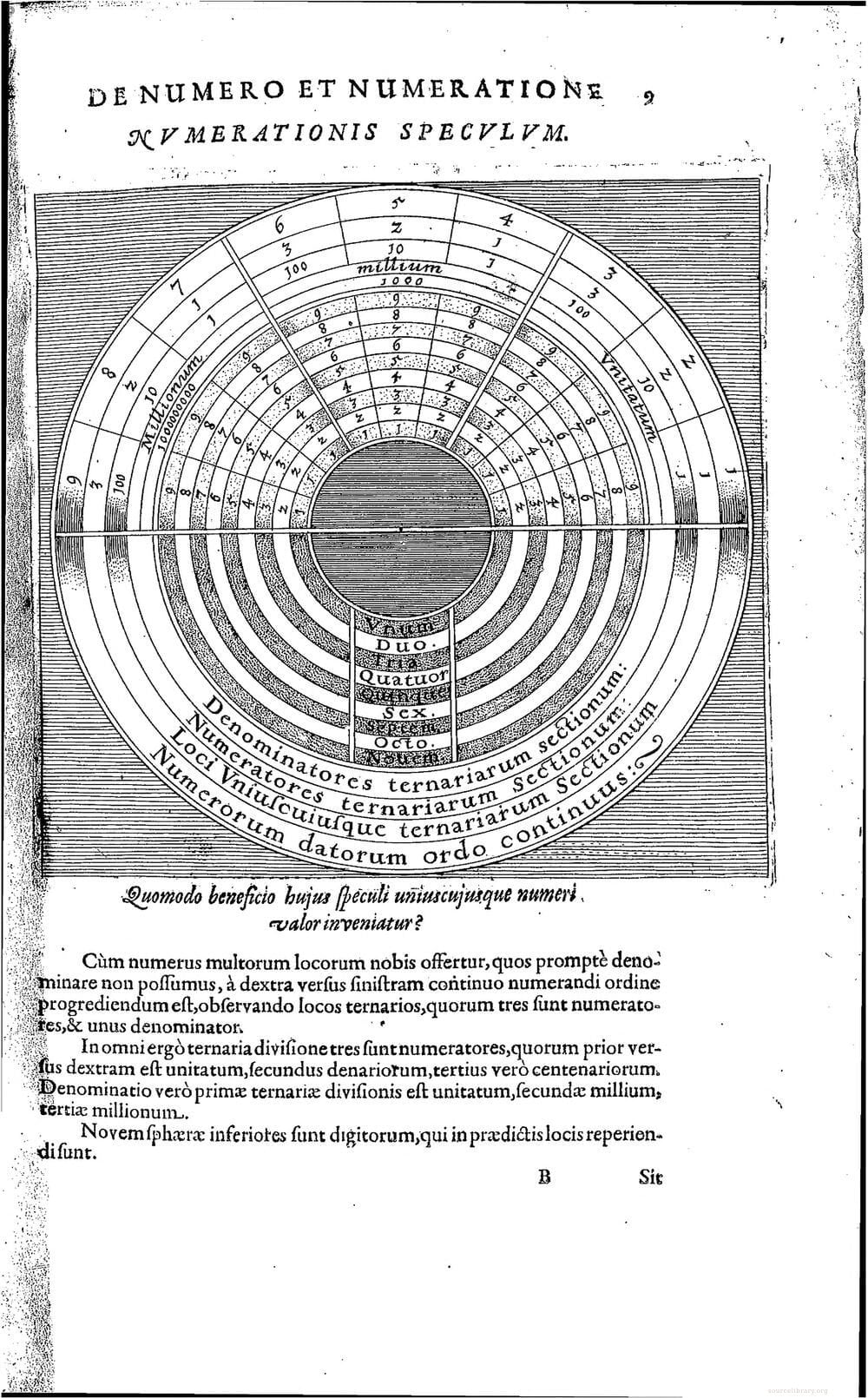
History of the Macrocosm and Microcosm
Robert Fludd
On Presages, Prophecies, and Divinations
Paracelsus, Theophrastus
Geomancy (Ramala Shastra)
Balakrishna Malhara Lada
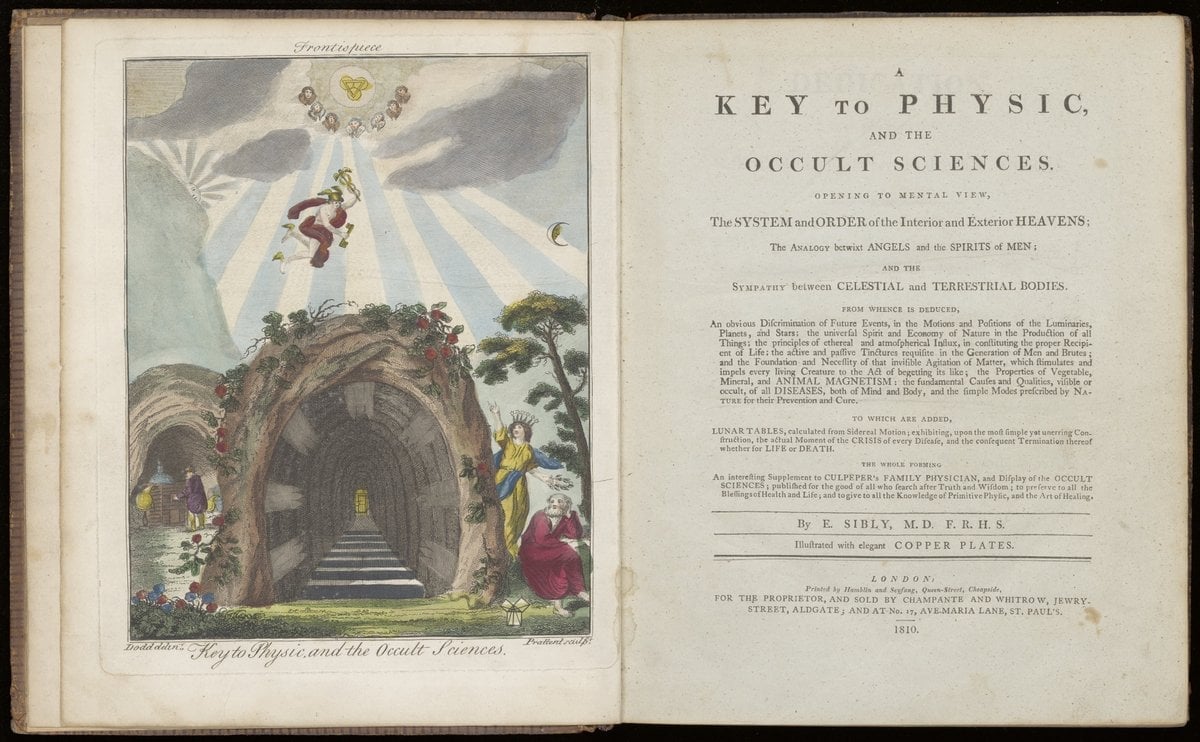
A key to physic, and the occult sciences
Sibly, Ebenezer
Three Books of Occult Philosophy
Heinrich Cornelius Agrippa von Nettesheim
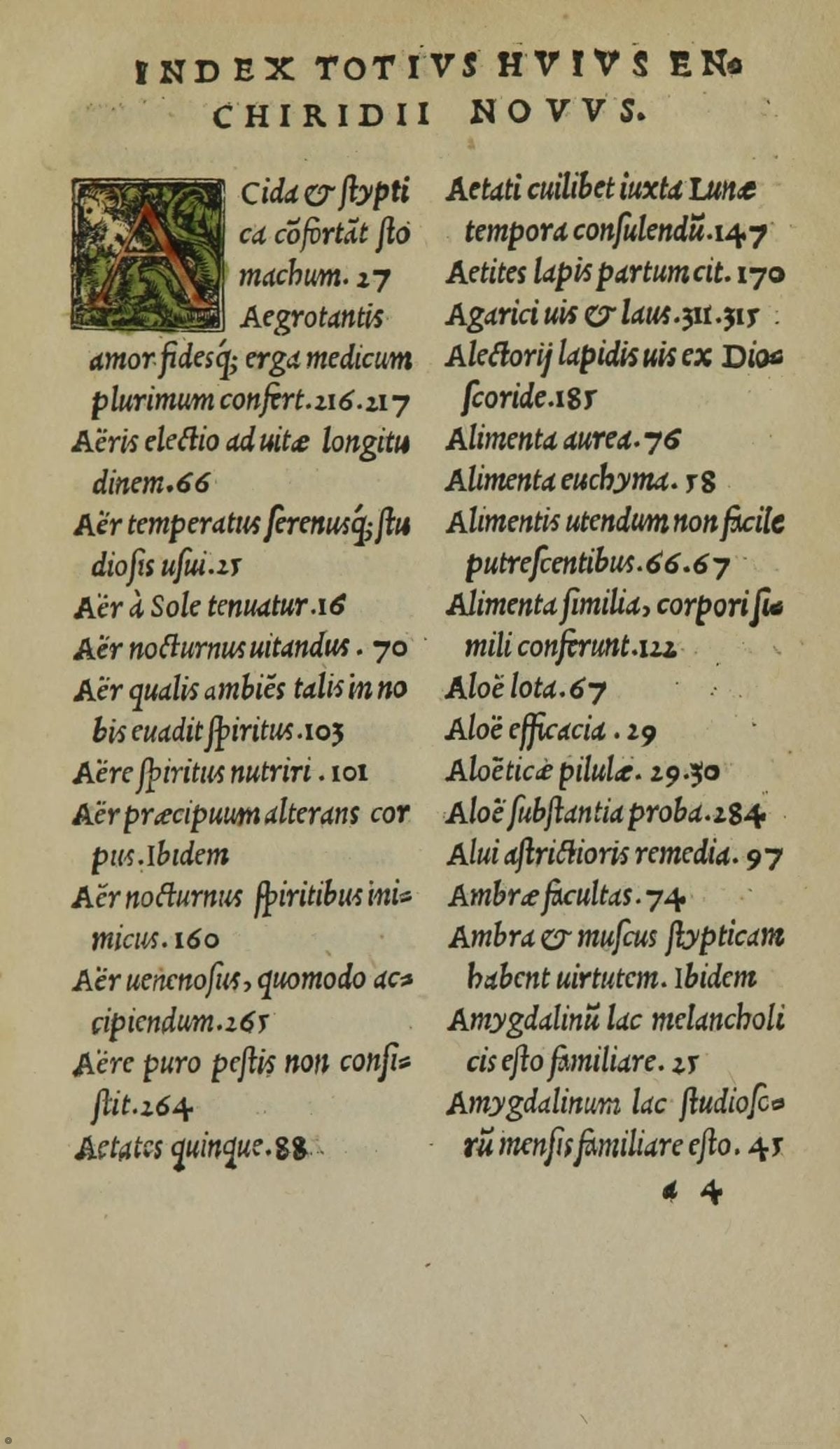
Three Books on Life
Ficino, Marsilio, 1433-1499