


Herbalism & Botany
Herbals, Materia Medica & the Science of Plants
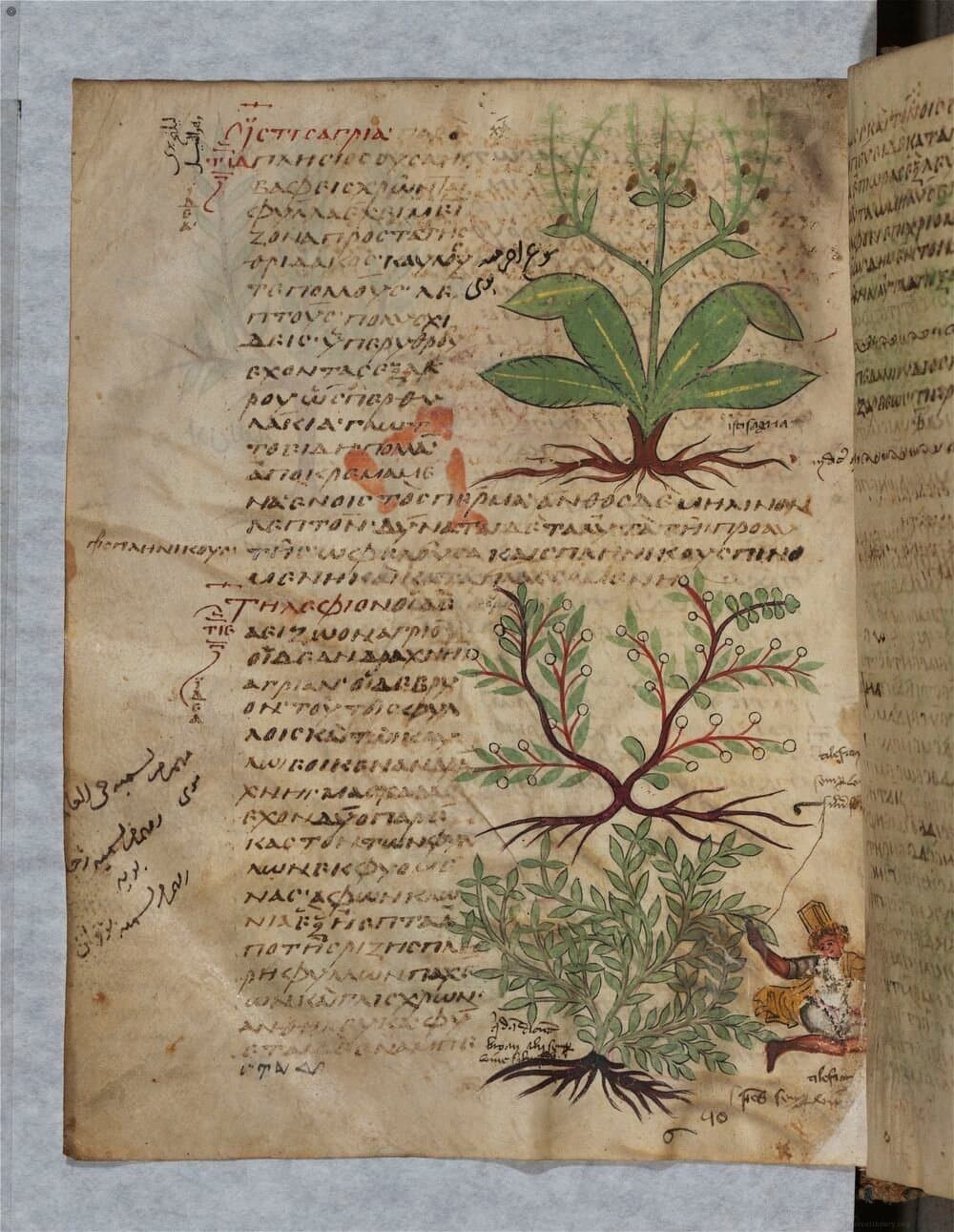
Illustrations
Browse all499 images extracted
This intricate illumination from a medieval medical treatise depicts various human figures marked with red dots, indicating specific points for cauterization to treat different maladies. The figures are arranged in a series of registers, accompanied by Latin inscriptions that identify the conditions being addressed, such as 'ad tertianas' (for tertian fever). This page serves as a vital historical record of early anatomical understanding and therapeutic practices in the Middle Ages.
This page features a stylized botanical illustration from the enigmatic Voynich Manuscript, dating to the early 15th century. It depicts a plant with distinctive bi-colored leaves and a prominent, textured root structure, accompanied by blocks of undeciphered text that likely describe the plant's properties or medicinal uses.
This detailed engraving from Basilius Besler's monumental 'Hortus Eystettensis' depicts three flowering bulbous plants: two varieties of Spanish Hyacinth and a Neapolitan Star of Bethlehem. The plate showcases the meticulous scientific observation characteristic of the work, illustrating the plants from their delicate blossoms down to their intricate root systems and bulbs.
These two panels provide a rare and vivid glimpse into medieval surgical practices. The upper scene depicts a surgeon performing an eye operation, possibly for cataracts, while the lower scene shows a procedure on a patient's nose, highlighting the practical application of medical knowledge during the Middle Ages.
This hand-colored woodcut from the 1491 edition of Ortus sanitatis depicts two scholars engaged in the study of ornithology. Surrounded by a variety of birds in a courtyard setting, the figures represent the transition toward empirical observation in natural history during the early Renaissance. The image serves as a visual introduction to the section on birds, illustrating the medieval and early modern desire to categorize the natural world.
This page from the Voynich Manuscript features a detailed botanical illustration of an unidentified plant, characterized by its large, peltate green leaf and a delicate white flower. The plant is depicted with its entire root system, a common practice in medieval herbals intended for medicinal identification. The surrounding text, written in an undeciphered script, continues to baffle scholars and cryptographers alike.
Visual Art
Browse all art →9 works of visual art in this collection
 painting
Male Papaya Tree
Anonymous (Indian, Company School)
A botanical study of a male papaya tree (Carica papaya), showing the vertical trunk, palmately lobed leaves, and pendulous inflorescences.
 painting
Botanical Painting: Dianthus
Anonymous (Mughal/Persian)
A botanical study of a flowering Dianthus (carnation) plant depicted with four blooms and several buds.
 painting
Botanical Painting: Geranium
Anonymous (Mughal/Persian)
A botanical study of a flowering plant, likely a species of Geraniaceae or Caryophyllaceae, rendered in isolation against a neutral ground.
 object
Ganesha — Chola Period
Anonymous (South India)
A botanical illustration of the Narrow-leaved Kalmia (Kalmia angustifolia) set against a mountainous landscape.
 drawing
Four Tulips — Boter Man, Joncker, Grote Geplumaceerde, Voorwint
Jacob Marrel
A botanical study depicting four distinct varieties of tulips alongside a butterfly and a grasshopper.
 drawing
Poppy in Three Stages of Flowering, with Caterpillar, Pupa, and Butterfly
Johanna Helena Herolt (née Graff)
A botanical study of a poppy plant featuring various stages of development alongside its associated insect life-cycle, including a caterpillar, chrysalis, and moth.
 drawing
Study of Capers, Gorse, and a Beetle
Maria Sibylla Merian
A botanical study featuring a caper plant with white flowers and green buds, a sprig of gorse with yellow blossoms, and a red beetle resting on a caper petal.
 drawing
Gloriosa Superba (Climbing Lily)
Pierre Joseph Redouté
A botanical study of the Gloriosa superba, or climbing lily, showing its foliage, a developing bud, and a blooming flower.
 mythological
Tornado — Zeus Battling Typhon
William Blake (after Erasmus Darwin)
A depiction of the mythological figure Typhon, appearing as a monstrous being with a serpent-coiled lower body and bat-like wings, wielding lightning against the heavens.
Botanical and pharmacological works from the early modern period, documenting the classification, illustration, and medicinal use of plants. These texts bridge the ancient herbal traditions transmitted through Arabic and Latin scholarship with the emerging empirical botany of the sixteenth and seventeenth centuries.
Holdings include Dominicus Chabrae's illustrated Stirpium (1678), Giambattista della Porta's Natural Magic (1560), Matthias de Lobel's Icons of Plants (1581), and Carl Peter Thunberg's pioneering Flora Japonica (1784) documenting Japanese botany. The collection also contains Pseudo-Albertus Magnus's widely circulated De Secretis Mulierum (1607 edition), which intertwines herbal lore with natural philosophy, and the twelfth-century Bodleian manuscript Ashmole 1462 — one of the earliest Latin herbals in the collection.
Essential Reading
The foundational texts of this tradition
On the Virtues of Herbs
Macer Floridus, 1150First Modern Translation
A vital medieval text, this poetic synthesis of classical authority and empirical observation remained a medical staple for five centuries, influencing European herbal traditions.
Traite des medicaments (Jami al-Mufradat)
Ibn al-Baytar, 1245First Complete Translation
As the definitive summit of Islamic pharmacognosy, this text expanded the known world of medicine with hundreds of original discoveries, showcasing the rich botanical knowledge of the medieval Islamic world.

Compendium of Materia Medica, Vol. 8
Li Shizhen, 1596
This masterwork of natural history from China rigorously classifies plants and corrects centuries of medical misconceptions through detailed botanical and clinical observations.
Living Images of Plants
Otto Brunfels, 1532First Complete Translation
A humanist battle cry for botanical truth, this work revolutionized Renaissance botany with its groundbreaking, lifelike illustrations, moving beyond mere textual copying to direct observation.
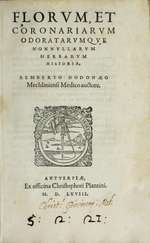
Florum et coronariarum historia
Rembert Dodoens, 1568First Complete Translation
This landmark Renaissance herbal bridges classical medicine and modern taxonomy, aggressively correcting ancient errors and advancing the systematic study of plants.
Important Works
Significant texts that deepen understanding
Phytognomonica
Giambattista della Porta, 1588First Translation
A daring departure from humoral medicine, this work proposes a universe of visible correspondences, exploring the "doctrine of signatures" in plants and their hidden virtues.
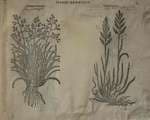
Icons of Plants
Matthias de Lobel; pub. Christophe Plantin, 1581First Translation
This monumental work represents the pinnacle of Renaissance botanical illustration, departing from ancient tradition to organize plants by their natural affinities rather than medicinal uses.
The Plants of Egypt
Prospero Alpini, 1592First Translation
This work performs a daring "botanical autopsy" on Egyptian flora, challenging ancient authorities like Dioscorides through direct observation and detailed descriptions of exotic plants.
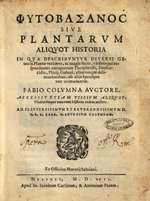
Plant Touchstone (Phytobasanos)
Fabio Colonna, 1592First Translation
Driven by personal health crisis, Colonna transforms botany into a discipline of rigorous physical observation, critically examining classical descriptions against living specimens.

Hortus Eystettensis
Basilius Besler, 1640First Complete Translation
More than a botanical catalog, this lavishly illustrated work captured the height of 17th-century horticulture, preserving a magnificent record of garden plants.

The English Physitian Enlarged
Nicholas Culpeper, 1653
A landmark of populist medicine, this text aimed to democratize healing knowledge by translating medical texts into English and making herbal remedies accessible to the common person.

The Ambonese Herbal, Vol. 3
Georg Eberhard Rumphius, 1743
A monumental feat of scientific resilience, this volume documents the flora of the East Indies, moving beyond mere classification to explore plant ecology and local uses.

The Aztec Herbal
Martin de la Cruz / William Gates, 1552
This text reveals the highly developed, empirical medical science of the Aztec civilization, showcasing a sophisticated understanding of plants that predates European systems.
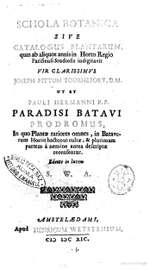
Botanical School
Joseph Pitton de Tournefort, 1689First Translation
This monumental effort sought to synchronize Enlightenment botanical knowledge, reconciling disparate names and advancing systematic plant classification.
Also Notable
A New Distribution of Umbelliferous Plants
Robert Morison, 1672First Translation
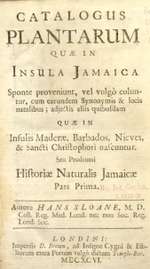
Catalogus plantarum Jamaica (Prodromus)
Hans Sloane, 1696First Translation
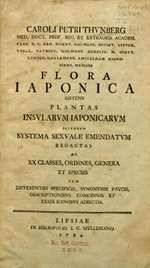
Flora of Japan
Carl Peter Thunberg, 1784First Translation

The Metamorphosis of Plants
Johann Wolfgang von Goethe, 1790
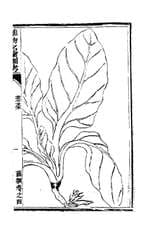
Illustrated Investigation of the Names and Realities of Plants, Volume 4
吳其濬, 1848First Complete Translation

Supplement to the Compendium of Materia Medica, Volume 1
趙學敏, 1765First Translation
All Books
Browse Full Catalog→388 books in this collection
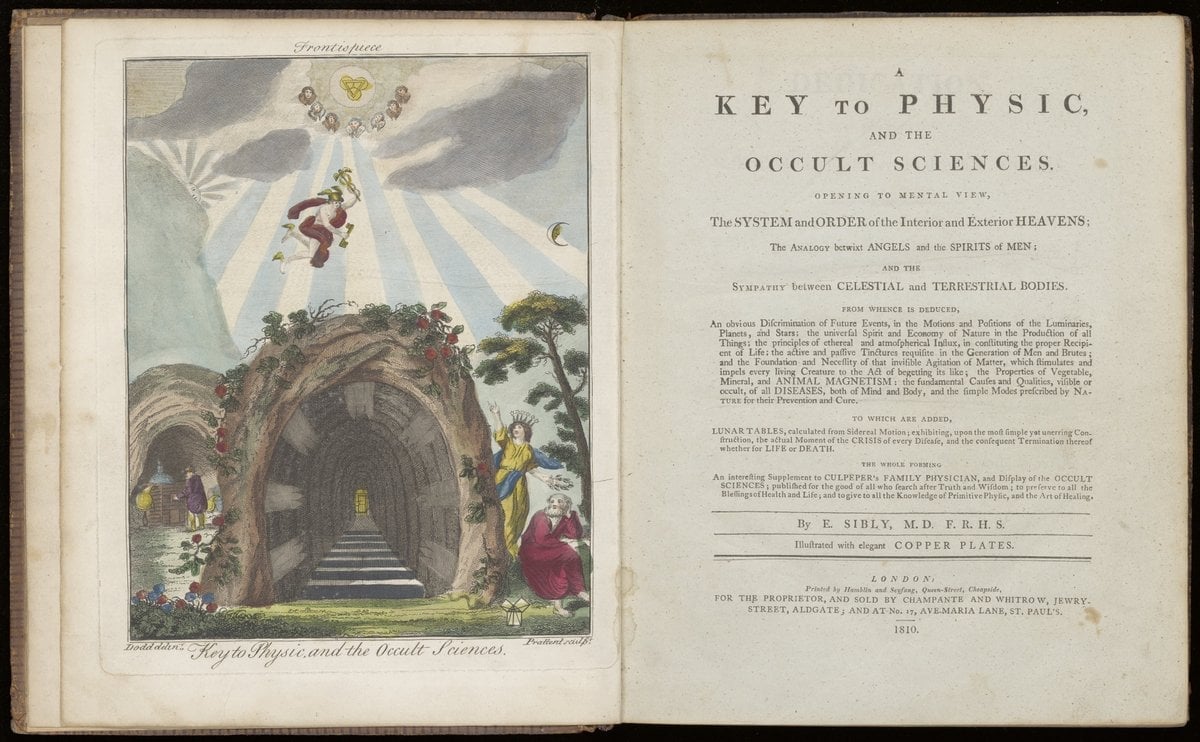
A key to physic, and the occult sciences
Sibly, Ebenezer
Causes and Cures (Causae et Curae)
Hildegard of Bingen

Physica - Hildegard von Bingen
Hildegard of Bingen
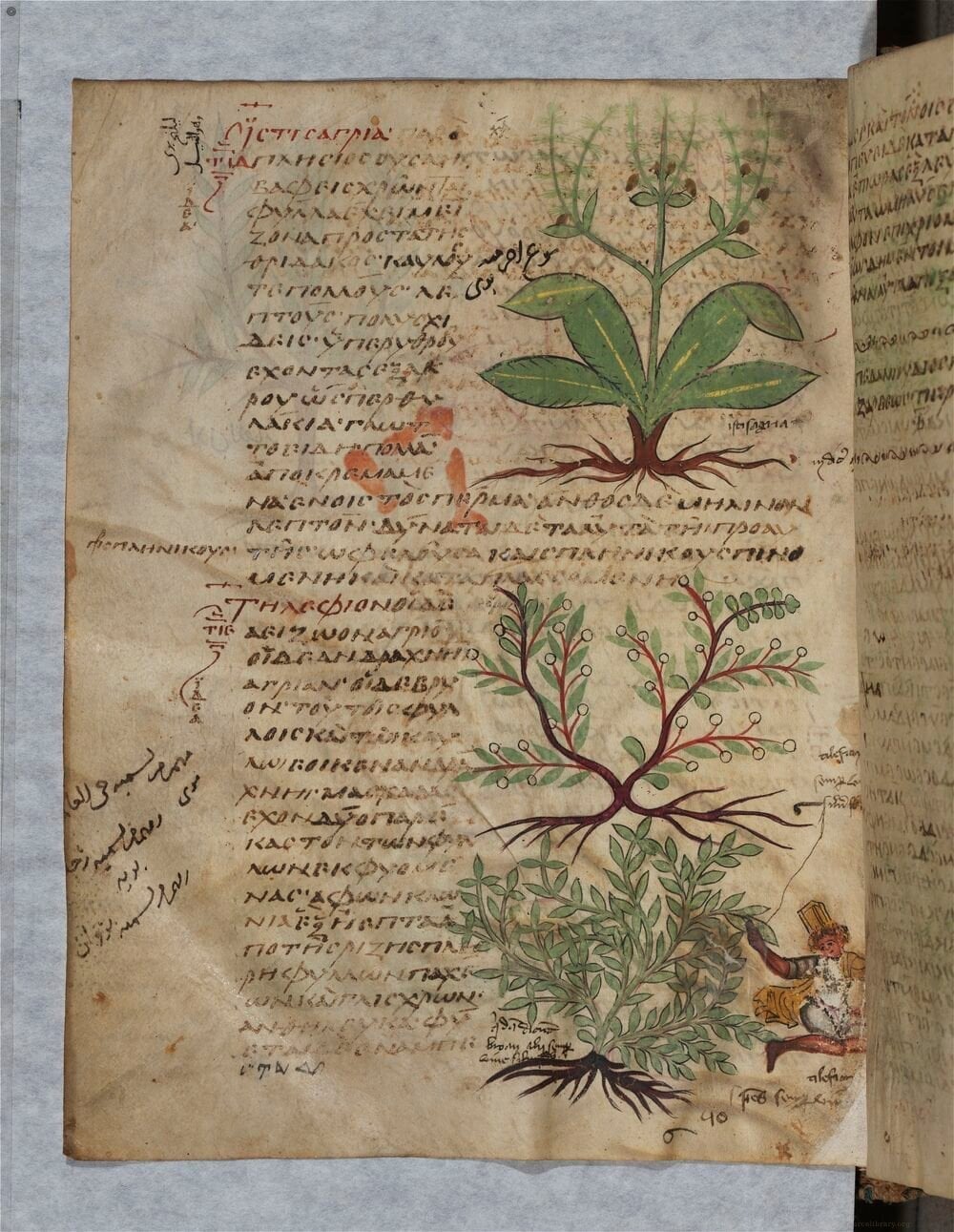
De materia medica (Greek manuscript Grec 2179)
Dioscorides
The Visible World
Jan Amos Comenius
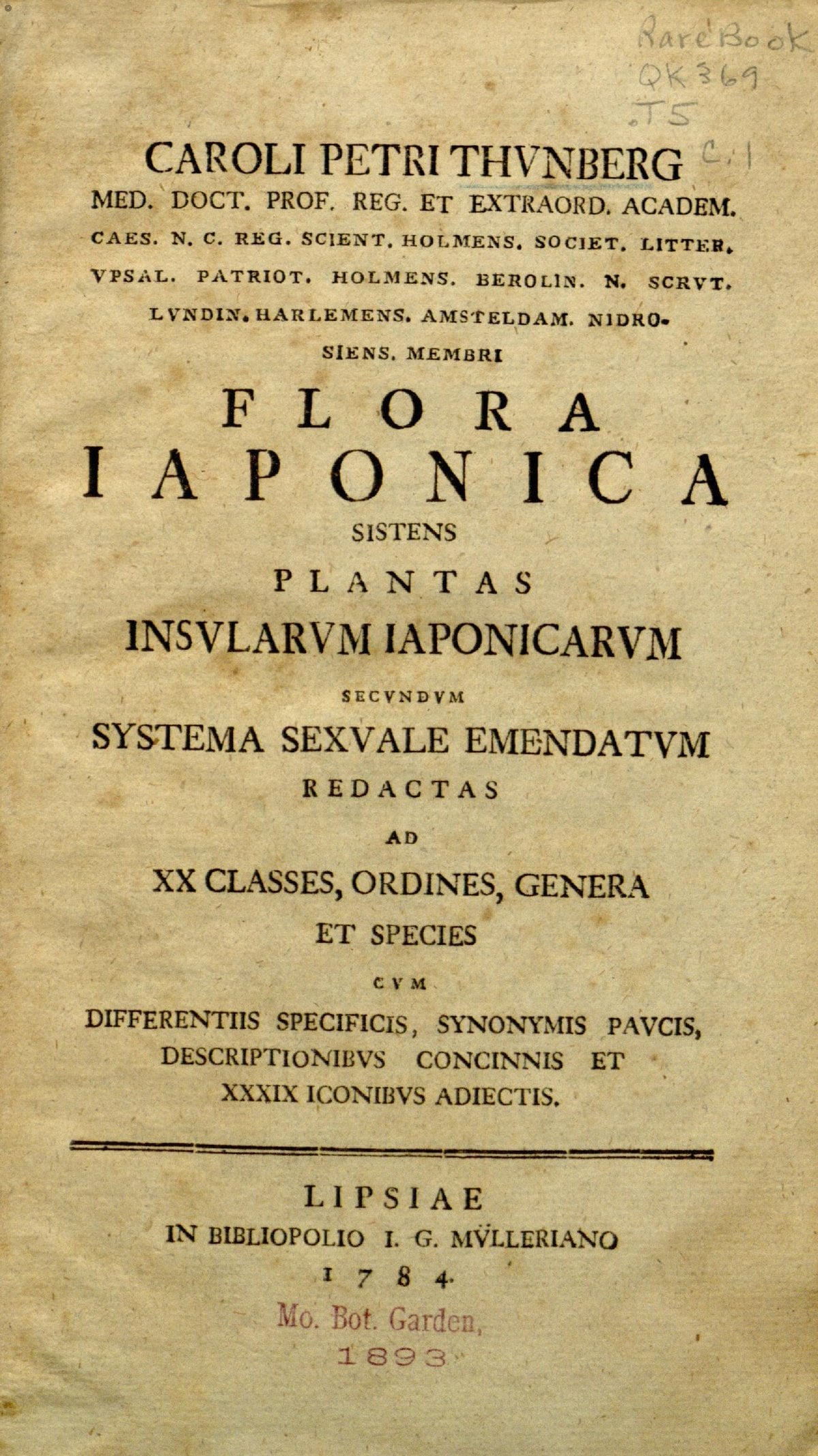
Flora of Japan
Carl Peter Thunberg

Natural Magic
Giambattista della Porta
Natural Magic
Giambattista della Porta
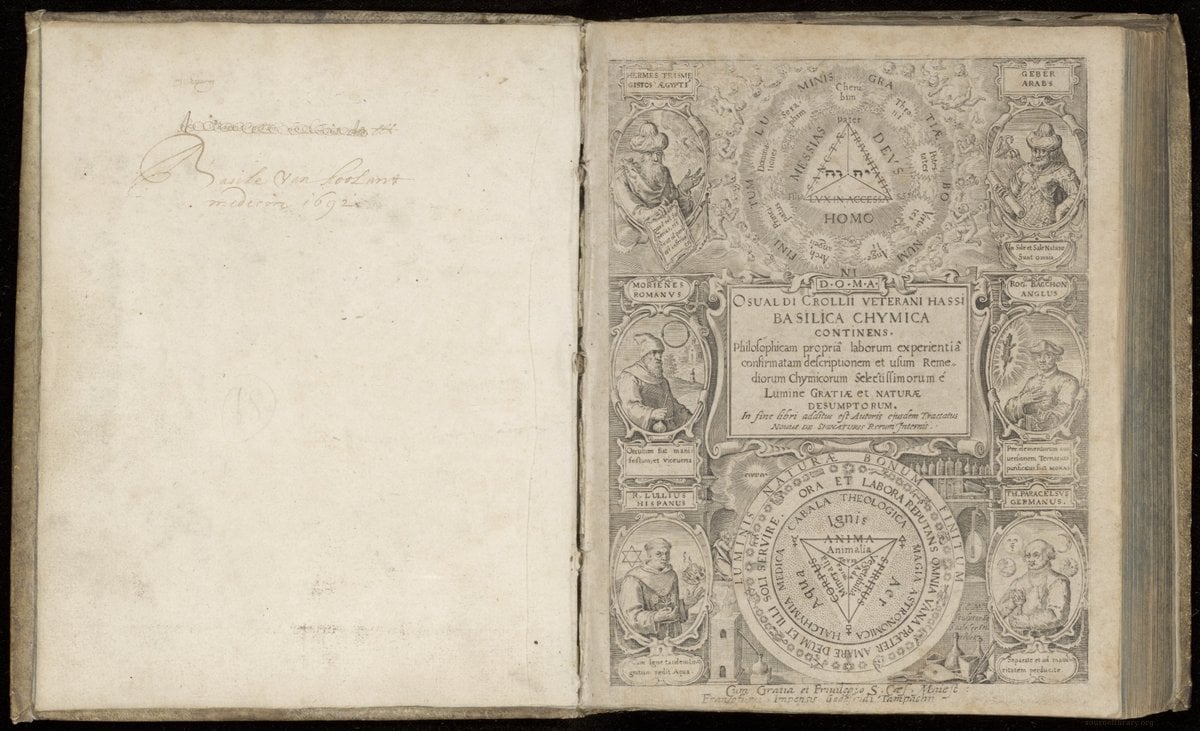
The Chemical Basilica and Treatise on Signatures
Crollius, Oswaldus
On the secrets of women. On the virtues of herbs, stones, and animals. On the wonders of the world. On falcons, goshawks, and hawks.
Albertus Magnus

Sylva Sylvarum (Latin edition)
Bacon, Francis
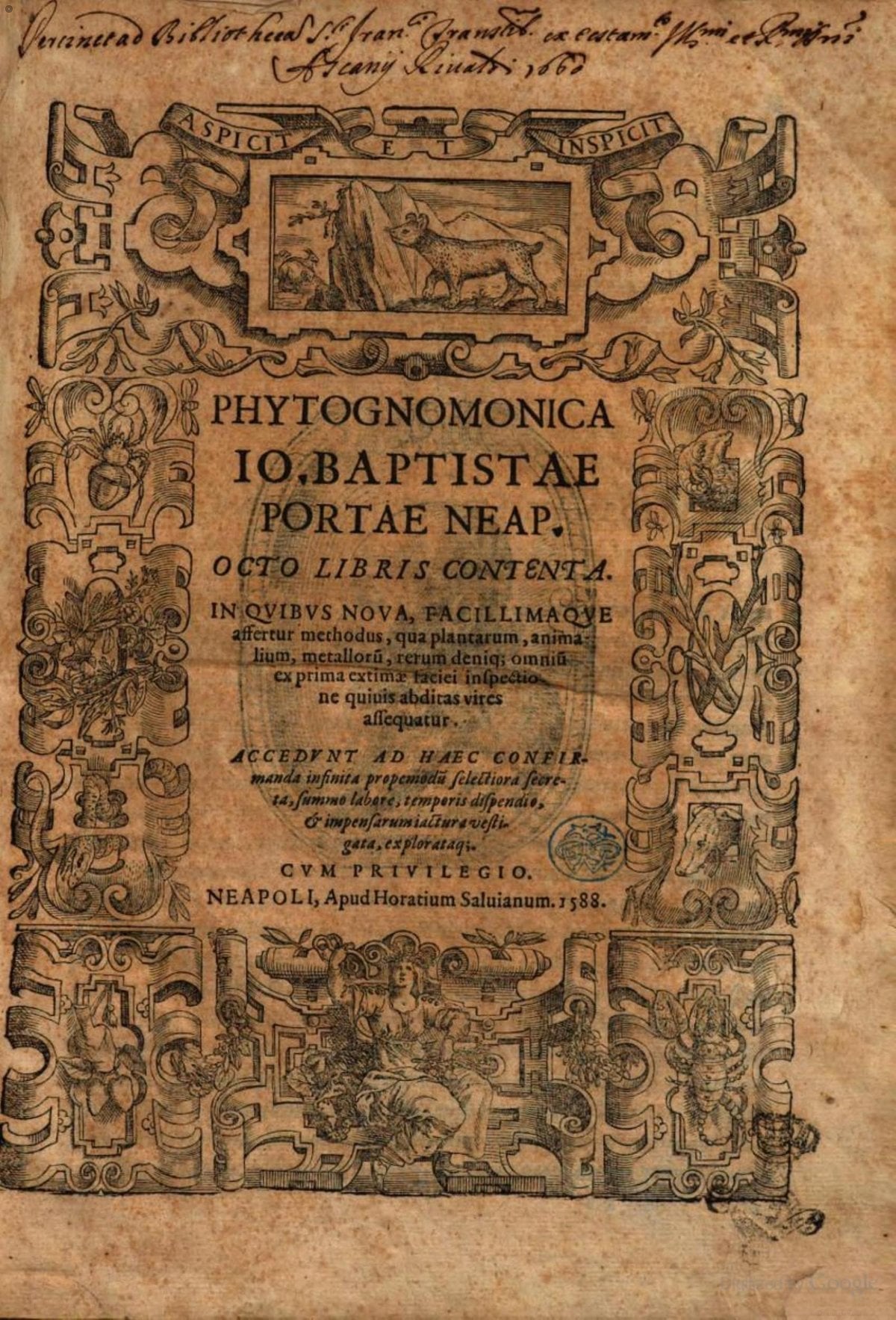
Phytognomonica
Giambattista della Porta

Sylva Sylvarum (1631 English edition)
Bacon, Francis

The Aztec Herbal
Martin de la Cruz / William Gates